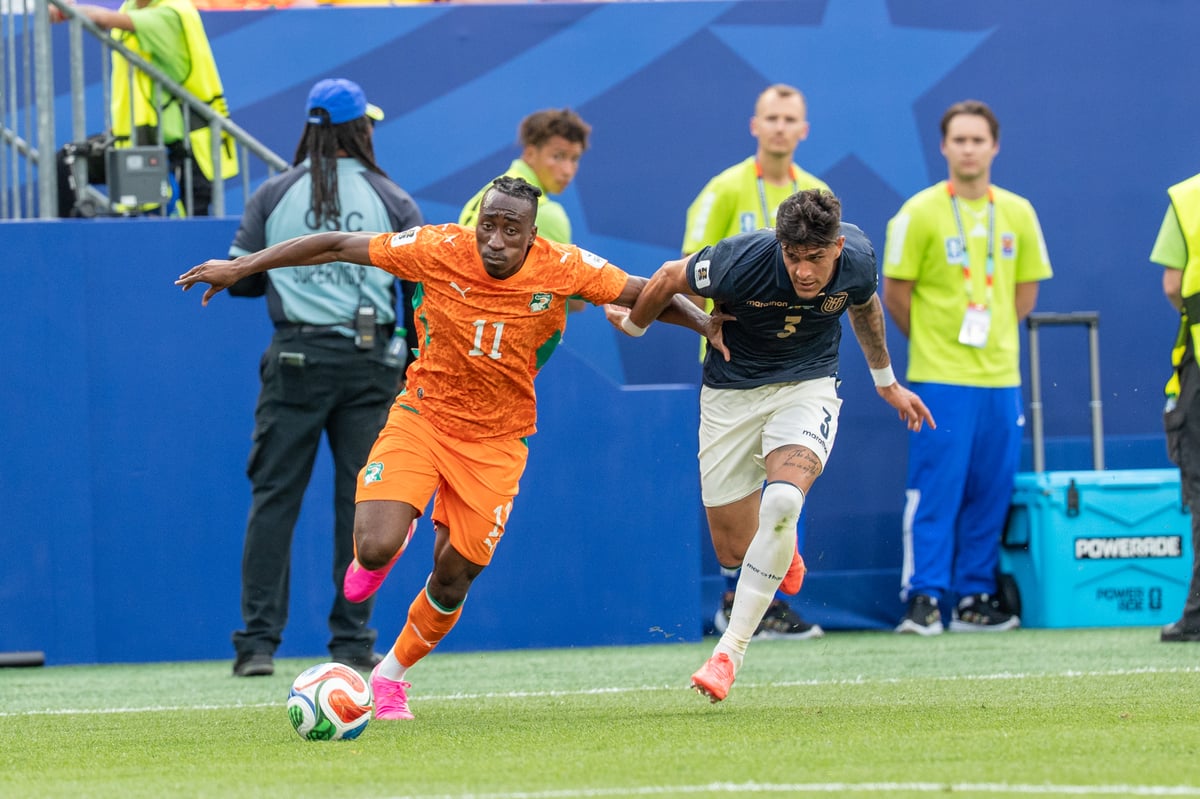
Somewhere between a TikTok dance routine and a viral Instagram Reel, Yan Diomande became Real Madrid’s record signing. Not because he scored forty goals last season. Not because he dismantled defences with the precision of a master tactician. But because the algorithm decided he was funny, and the internet agreed, and somehow that translated into €180 million in hard cash.
This is the fever dream of modern football: a player can go from complete anonymity to the verge of club history based entirely on how well he moves his hips to a trending audio clip. Diomande’s rise is so perfectly absurd it reads like a Silicon Valley startup pitch. Unknown winger. Zero Champions League pedigree. Suddenly the subject of a bidding war between Europe’s elite. The only missing ingredient is a venture capitalist describing him as “disrupting the traditional transfer market.”
Real Madrid did not sign him because their scouts watched him dissect a top-flight defence. They signed him because seventeen million people watched him do a choreographed shimmy in a training kit, and the engagement metrics told Florentino Pérez that this was the future. The future, apparently, is just TikTok with a Bernabéu attached.
The surreal part is not that it happened. The surreal part is that nobody is shocked anymore. We have collectively agreed that virality is a legitimate pathway to sporting immortality. A dance video is now a valid credential. The internet has not just changed how we consume sport—it has weaponised perception itself, turning a winger into a superstar before he has actually played a meaningful match.
Welcome to football in 2026, where the algorithm is the scout, and nobody knows what any of this means anymore.