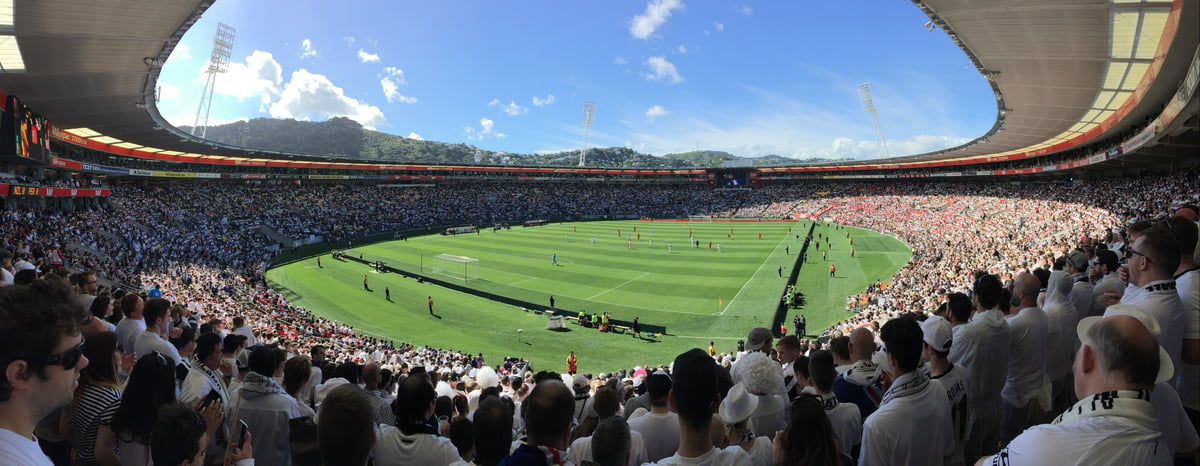
Tyler Fletcher was supposed to be a fan this summer. A spectator. Someone who buys an overpriced pint at the stadium, argues with his mates about formations, and goes home to complain that the midfield lacked cohesion. That was the plan. That was the contract he had with reality.
Then Scotland called. Seventeen minutes of notice. Seventeen minutes to transform from “bloke who watches football” to “bloke who might play in the World Cup.”
This is the moment where the absurdity of modern football reaches peak ridiculous. Not because Fletcher isn’t good enough—he clearly is, or Scotland wouldn’t have called. But because the sport has become so utterly unmoored from logic that a player can go from checking his phone at a cafe to packing his passport for Qatar or wherever we’re pretending to care about this time around. The margin between spectator and participant is now measured in coffee breaks.
Think about what that 17 minutes entails. First, the call comes in. Fletcher probably thinks it’s a scam. “Hello sir, we’re calling about your car’s extended warranty—” No. It’s Steve Clarke. Steve Clarke wants him to play for Scotland. At the World Cup. In 17 minutes.
What do you even do? Do you sit down? Do you stand up? Do you call your mum? Fletcher presumably did all three, then grabbed whatever was in his kitchen—a packet of crisps, a half-eaten sandwich, some dignity—and rushed toward his car. This is his “intense training camp.” A sofa. A television. Maybe a motivational text from his mate who still thinks he’s joking.
The conditioning routine? Non-existent. The tactical briefing? There’s no time. The team chemistry building? Mate, he doesn’t even know if he’s bringing the right socks. This is not preparation. This is conscription with better PR.
And yet—and this is where football reveals itself as the beautiful, stupid sport it has always been—it might actually work. Fletcher might step onto that pitch and play well. He might score. He might become a national hero. The narrative writes itself: “Unknown player thrust into spotlight delivers when it matters.” It’s the fantasy every fan secretly harbors, the reason we all think we could make it if someone just gave us 17 minutes’ notice and a plane ticket.
But let’s be honest about what this really is. It’s not a testament to Fletcher’s preparation or mental toughness. It’s evidence that football has become so chaotic, so dependent on luck and circumstance, that the distance between the stands and the pitch is now measured in how quickly you can silence your phone and board a flight. A decade ago, you’d need months of preparation, tactical integration, fitness assessments. Now? Seventeen minutes. A coffee break. A decision made by people in suits who realized they needed bodies on a field.
This is what peak football looks like in 2026. Not the tactics. Not the technology. Not the billions spent on analytics and sports science. It’s the moment when a fan becomes a player because someone with a clipboard made a phone call, and that fan said yes instead of asking sensible questions like “Are you sure?” or “Don’t you want to check my fitness levels?” or “Shouldn’t I at least know where we’re playing?”
Fletch is either about to have the best story of his life or the worst. There is no middle ground. There is no “I played a few minutes off the bench and people forgot about it.” If he’s getting called up with 17 minutes’ notice, he’s either going to be brilliant or catastrophic. The football gods don’t do mediocre in these scenarios.
So here’s to Tyler Fletcher, professional spectator turned accidental international. May your crisps have been salty enough to keep you hydrated on the flight. May your sofa have been firm enough to maintain your core strength. May your 17 minutes of notice have been the best preparation you never got.
Because in modern football, that’s all you need.