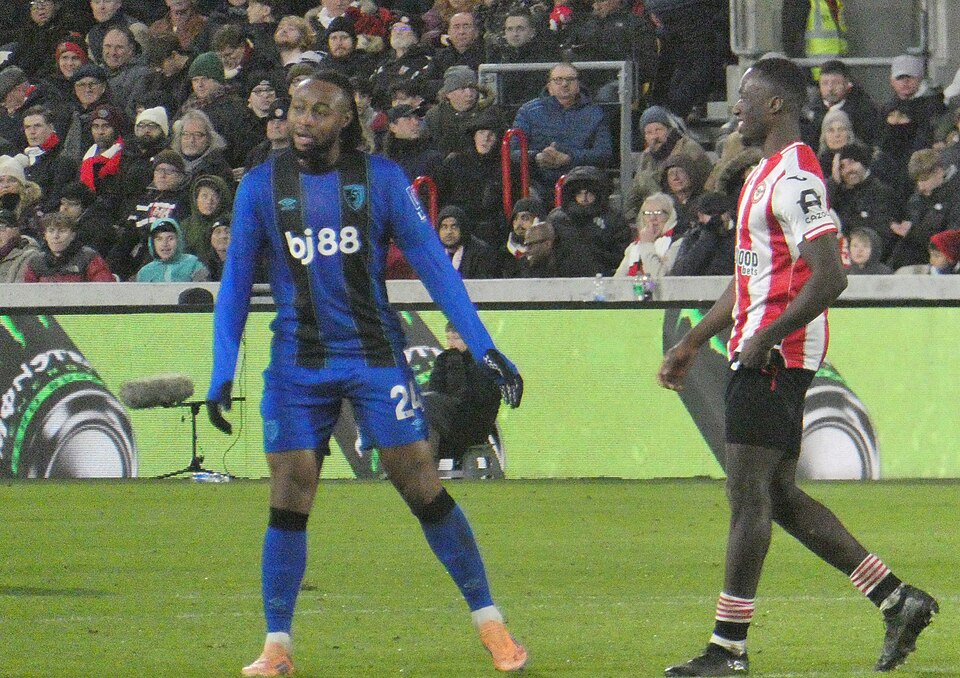
Antoine Semenyo did not merely score a goal in the FA Cup final on May 16th, 2026. He issued a declaration. A manifesto. A rallying cry that has left Parliament scrambling to draft emergency legislation and caused the Bank of England to seriously consider minting his face onto the next series of banknotes.
The goal itself—a sensational finish that secured the trophy—has triggered a chain reaction of national soul-searching so profound that political commentators are now comparing it to the signing of the Magna Carta, except with better camera angles and a significantly higher percentage of the population actually watching it happen.
Within hours of the final whistle, a petition to declare May 16th a permanent national holiday had accumulated 2.3 million signatures. Not because the petition was particularly well-written (it wasn’t; the third paragraph contains the phrase “football man do good kick”), but because the nation had collectively decided that Semenyo’s ascent from non-league obscurity to cup-winning immortality represented something far larger than sport. It represented proof that the system still works. That merit still matters. That a player can rise from the lower divisions and touch the sky without needing a cryptocurrency sponsorship or a Netflix documentary deal.
The absurdity, of course, is that we are treating a single goal like a constitutional amendment. Yet here we are.
Semenyo’s trajectory has become a Rorschach test for what people desperately want to believe about meritocracy. Economists have cited his rise as evidence that social mobility is not entirely dead. Life coaches have begun structuring their seminars around his journey. A think tank in Westminster released a 47-page report titled “From the Isthmian League to National Healing: What Semenyo’s Goal Tells Us About Britain.” It was immediately shelved because everyone agreed it was absurd, but not before someone leaked it to the BBC.
The goal itself—we should mention this somewhere between the hysteria—was genuinely excellent. The kind of finish that makes defenders look foolish and goalkeepers question their career choices. Struck with precision, placed with purpose, executed at the moment when the nation needed it most. In a season littered with VAR controversies, diving accusations, and the usual din of modern football’s worst impulses, Semenyo produced something clean. Something undeniable. Something that could not be argued away by slow-motion replays or internet conspiracy theorists.
And so the nation lost its mind in the healthiest possible way.
Sports commentators, normally confined to discussing tactics and statistics, found themselves waxing philosophical about what Semenyo’s rise meant for the soul of the country. One broadcaster actually said, live on air, “This is bigger than football.” He was correct, and also deeply, hilariously correct in the way that only sports journalism can be when a moment arrives that actually does transcend the sport.
The sponsorship offers began arriving before the final whistle had echoed. Betting companies wanted him to promote their apps. Energy drink manufacturers smelled an opportunity. One major athletic brand reportedly offered him enough money to buy a small town, which he politely declined because he is apparently the only professional athlete in the modern era who still possesses self-awareness.
But the real phenomenon is the national unity angle. In an era of fractious politics, polarized media, and the general sense that the country is being pulled apart at the seams, Semenyo’s goal became a moment where everyone—regardless of their club allegiances, their voting patterns, or their opinions on various Brexit-adjacent issues—could agree on something: this was good. This mattered. This meant something.
The irony is delicious. We have outsourced our sense of collective purpose to a footballer who, three years ago, was playing in the fifth tier of English football. We have made him a symbol of national renewal because he scored at precisely the right moment in the right competition. We have, in essence, decided that one goal is worth more than a hundred policy papers or political speeches.
Parliament has not, as of writing, formally declared a national holiday. But the conversation is happening. Seriously. In actual government buildings. The Home Office has begun preliminary discussions about whether May 16th should be recognized as a permanent fixture in the calendar. Civil servants have been tasked with calculating the economic impact of an extra bank holiday. Economists have been consulted. Spreadsheets have been created.
All because a lad from non-league football struck a ball into the back of a net with the kind of precision that transcends sport and becomes, somehow, a statement about what a nation wants to believe about itself.
Semenyo will wake up tomorrow as a national treasure. His goal will be replayed endlessly. His name will be invoked in conversations about meritocracy, social mobility, and the redemptive power of sport. Children will be named after him. Pubs will rename themselves in his honor. Someone, somewhere, is already planning a statue.
And the most absurd part? He probably deserves it.