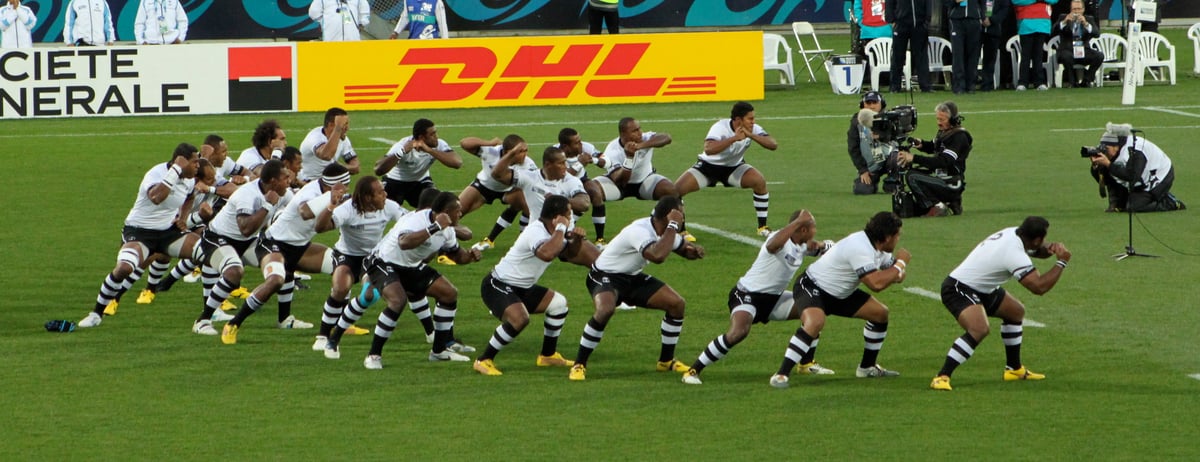
England won 145–0 in spirit, though the scoreboard read something slightly less apocalyptic. What transpired in Liverpool was not a rugby match but a historical reenactment, one where Fiji’s fourteen players—reduced by a red card—were cast as the noble few defending the gates of Thermopylae against an English phalanx that simply would not stop scoring.
Henry Pollock, naturally, became Leonidas, notching a hat-trick as though collecting destiny itself. Eleven tries. Eleven. The kind of number that makes statisticians weep and forces post-match analysts into the vocabulary of Homeric epics.
But the real theatre unfolded in the press conference, where Fiji’s coaching staff apparently decided the scoreline was not the story—the meaning was. Comparisons tumbled forth like dominoes: Masada. The Alamo. The last stand at Rourke’s Drift. One could almost hear the violins as a fourteen-man team was reframed not as outmatched, but as heroic. The English had not won; Fiji had simply lost while achieving something greater than victory: the transformation of defeat into myth.
England’s losing streak ended. Fiji’s mythology began. In the absurdist theatre of modern sport, where every loss must be narrativized into something grander, something more meaningful, perhaps that press conference understood the assignment better than anyone. Why accept a thrashing when you can accept a legend?