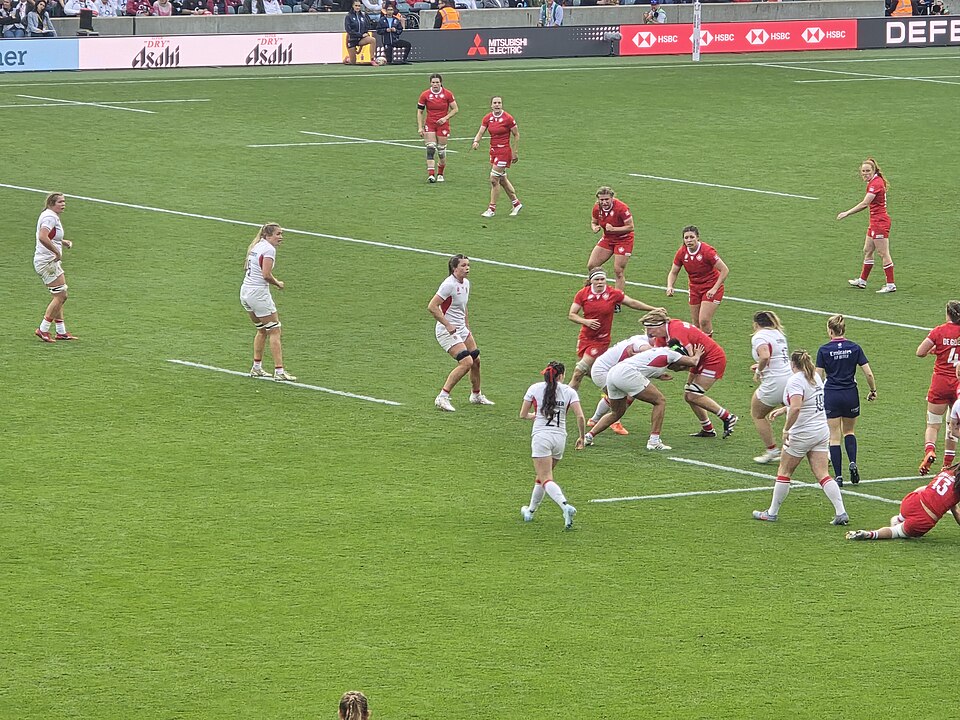
England’s defence has entered a state of organised chaos so complete it makes you wonder if someone accidentally hired a group of teenagers to organise a school dance instead of a professional sporting unit. With a winning streak on the line and France waiting in Bordeaux on Sunday, the question is no longer whether England’s leaky backline will cost them—it’s whether they’ll even remember which end of the field they’re supposed to be protecting.
Let’s be honest: watching England defend right now is like watching a game of musical chairs where the music never stops and everyone forgot the rules halfway through. Players are moving, yes. They are making decisions, technically. But the coordination suggests they learned their positions from a group chat that kept autocorrecting the tactics into something resembling a shopping list. One defender commits. Another one doesn’t. A third one commits so hard he ends up three postcodes away from the action. By the time the ball arrives, there is nobody home except the goalkeeper, who is now having an existential crisis about his life choices.
The winning streak—that beautiful, fragile thing that makes the nation believe for a moment that we have finally cracked it—sits perched on top of this defence like a trophy balanced on a Jenga tower. Every match is a held breath. Every opposition attack is a reminder that we are not so much defending as we are hoping the other team scores inefficiently. France, naturally, do not score inefficiently. They score like people who have spent the last four weeks specifically studying how to exploit the gaps in England’s backline, because they have.
Here is the thing that makes this genuinely absurd: England have the talent. The players exist. They have played well for their clubs. Some of them are genuinely excellent at their jobs. But put them in an England shirt and it is as though a switch flips in their collective brain marked “forget everything you know about positioning.” It is not tactical confusion—confusion implies there was a tactic to begin with. This is more like watching people try to assemble IKEA furniture while the instructions are in a language nobody speaks and someone keeps shouting conflicting directions from the sideline.
The irony is that winning streaks are built on confidence, and confidence is built on not conceding. England are doing the opposite. They are winning despite themselves, which is like winning a baking competition while your kitchen is on fire. Sure, the cake came out fine, but nobody is going to feel comfortable eating it.
Sunday in Bordeaux will tell us whether this is sustainable or whether the musical chairs finally stops and everyone looks around to find that England is the one standing without a seat. France will test that defence with the kind of precision that makes you realise the gap between “leaky” and “catastrophic” is often just a good team with a clear plan. England’s backline will shuffle and commit and occasionally remember what they are supposed to be doing, and somewhere in that chaos, the outcome will be decided.
The winning streak is real. The defence is also real. And the fact that they coexist is perhaps the most absurd thing about English football right now—not a tactical puzzle, not a problem to be solved with a formation change, but a genuine sporting soap opera where the plot is simply that we have no idea what happens next. That, at least, is entertaining.