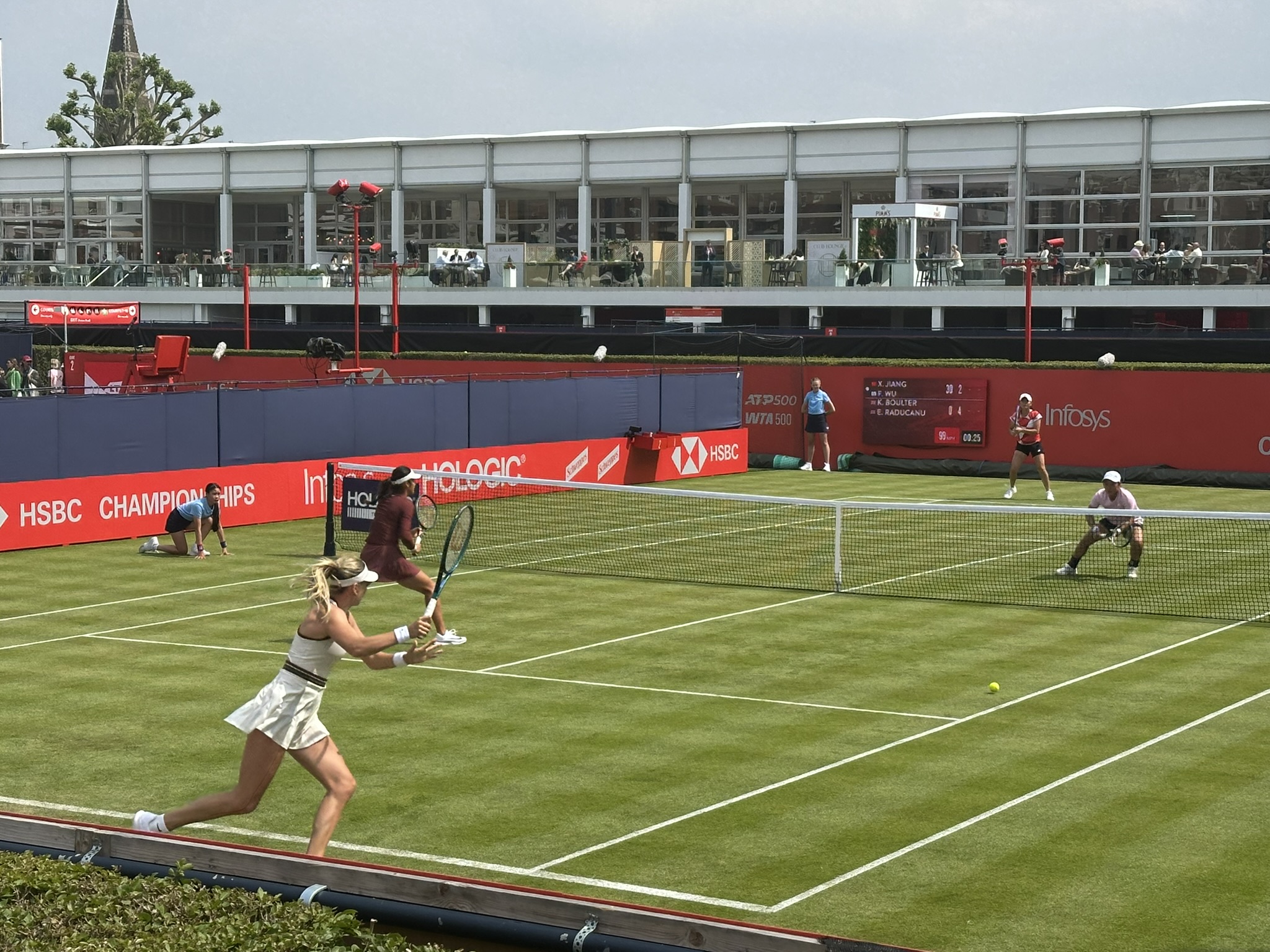
Britain has entered a state of collective delirium. Emma Raducanu won two matches in a single day to reach the Queen’s Club final, and somewhere in Westminster, a minister is drafting legislation to make this a bank holiday.
Let us be clear about what happened here: a 23-year-old tennis player beat two opponents on grass on the same afternoon. This is not, by any reasonable measure, the storming of the Bastille. Yet the national temperature has risen as if she has personally reclaimed the Falklands.
The real tragedy, we are told, is Katie Boulter’s semi-final exit. Another British player, eliminated. The newspapers have already begun composing elegies. One can almost hear the funeral march playing in the background as commentators solemnly inform us that Boulter “gave everything” — a phrase that suggests she left her actual body on the court rather than, say, lost a tennis match.
This is what British sport has become: a theatre where every victory is destiny, every defeat is national catastrophe, and the Queen’s Club tournament carries the emotional weight of a World Cup final. Raducanu’s run is genuinely impressive. Her tennis is sharp, her movement crisp, her composure under pressure legitimate.
But the absurdity lies not in her performance. It lies in our collective insistence on treating a grass-court tournament as though it determines the fate of the realm. We have built an entire mythology around whether one British woman can beat another British woman for a trophy. We have made it impossible for either to simply play tennis. One must carry the hopes of 67 million people.
Raducanu will either win or lose on Saturday. Either way, Britain will survive. Though you would not know it from the headlines.