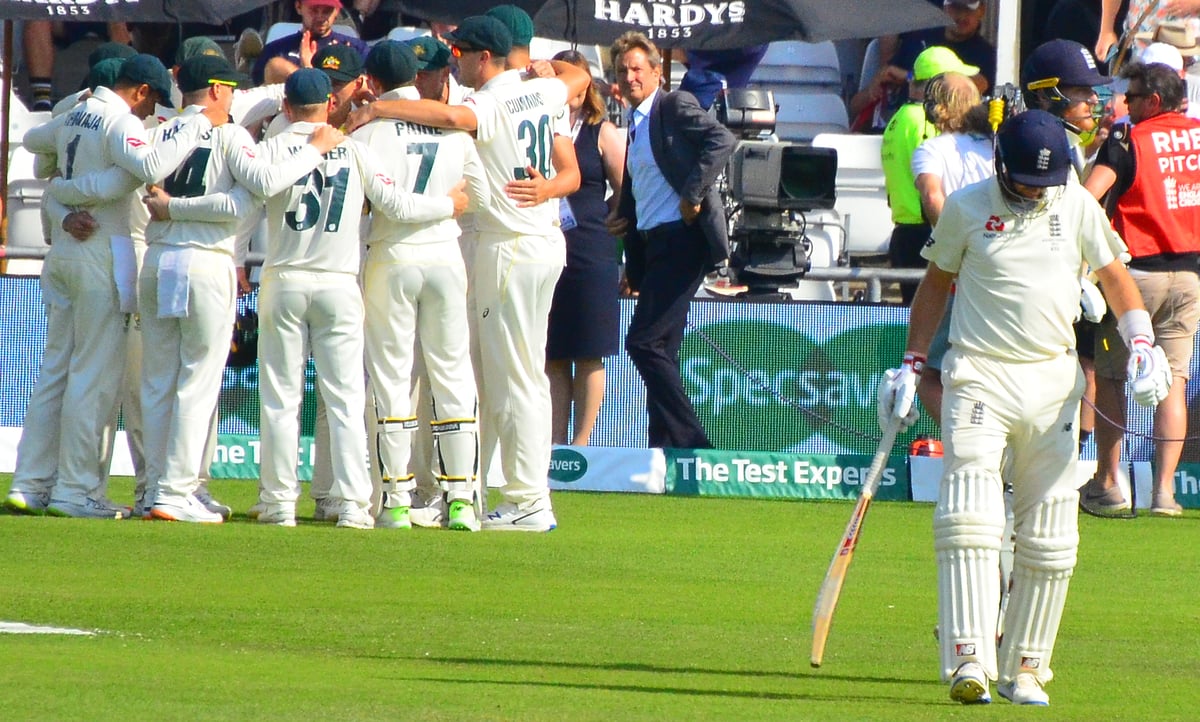
Joe Root was dead. Bowled. Finished. Mohammed Ali had sent the England captain’s stumps cartwheeling backwards at Edgbaston, a dismissal so complete it felt like a small death — the kind that ends Test careers, haunts sleep, gets replayed in the highlight reel of your worst professional moment.
Then the cricket gods intervened. Or rather, a no-ball did. The delivery was illegal. Root lived. England’s chase lived. The entire narrative of the third Test pivoted on a technical infraction so marginal that most of the ground didn’t even register it had happened.
This is where modern cricket finds itself: a sport that claims to value tradition and clean competition, yet increasingly decides its fate on the kind of technicality that would make a tax lawyer blush. Root’s reprieve wasn’t earned through skill or courage. It was gifted by a bowler who overstepped by what, six inches? A foot? The exact measurement barely matters. What matters is that a man given out was suddenly un-given out, and everyone just carried on as if the universe hadn’t momentarily broken.
The no-ball rule exists for good reason — to prevent bowlers from gaining unfair advantages by delivering from beyond the crease. But when it saves a captain from oblivion in a Test match, when it rewrites the scoreline and the momentum and the entire emotional tenor of a chase, it exposes how fragile our standards have become. Cricket used to be about the contest between bat and ball. Now it’s increasingly about whether someone’s toe was behind a line.
Root will score runs today. He’ll probably bat brilliantly. And somewhere in England, fans will credit divine intervention rather than acknowledge the uncomfortable truth: we’ve built a sport that lets infrastructure errors rewrite destiny.