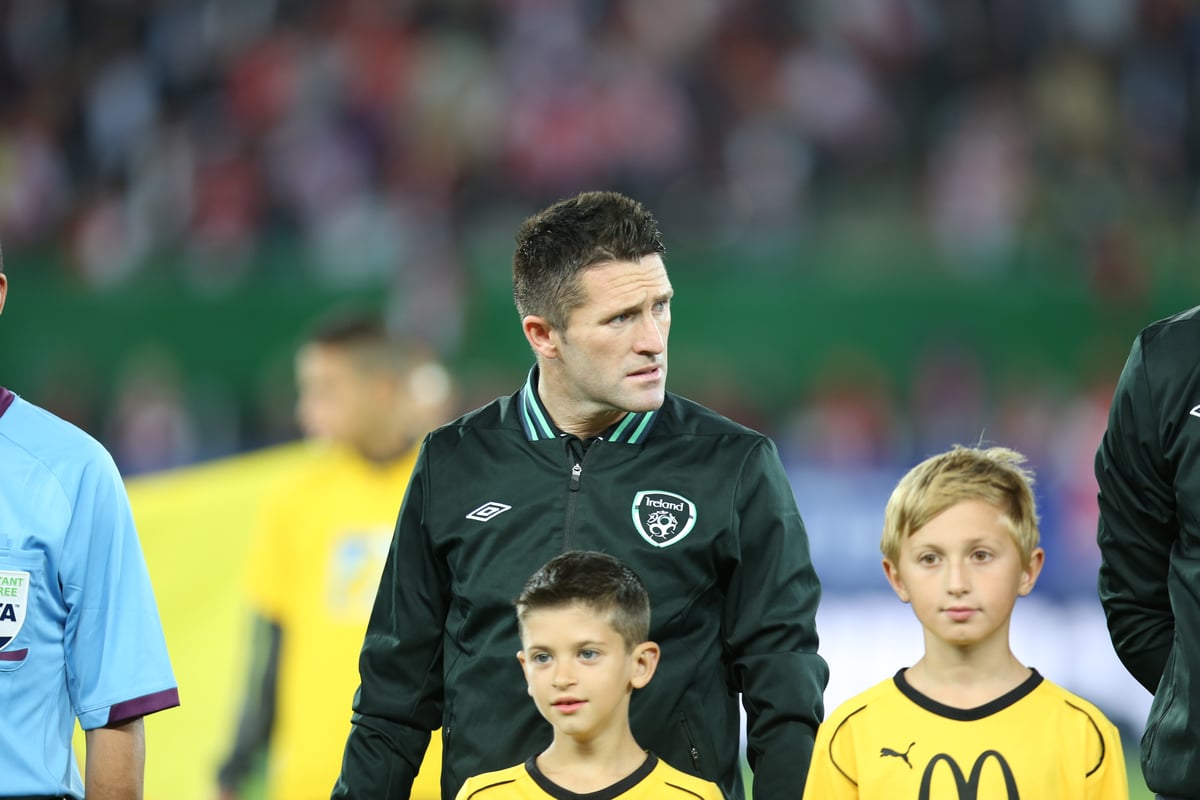
GLASGOW — A coalition of Celtic supporters clubs has escalated what began as routine managerial speculation into a full-blown international incident, complete with protest banners, emergency statements, and what can only be described as a call for diplomatic intervention at the highest levels of global governance.
The trigger: Robbie Keane’s potential appointment as Celtic manager. The problem, according to the fan groups: his previous role as head coach of Israeli club Maccabi Tel Aviv.
What started as a straightforward political objection has metastasized into something resembling a Cold War standoff. Fan groups have mobilized with the coordination of a NATO task force. Banners have been prepared. Statements have been issued. Someone, somewhere, is almost certainly drafting a letter to the Scottish Parliament that begins with “To Whom It May Concern.”
One supporter told reporters that the situation had reached such critical mass that surely the United Nations Security Council would be convening within the hour. Another suggested that perhaps Celtic’s board should be referred to the International Court of Justice. A third fan group spokesperson, speaking on condition of anonymity, wondered aloud whether the Geneva Convention covered this particular scenario. It does not.
The absurdity here is not that fans have political convictions. It is that the intensity of the response suggests Keane has been nominated to lead the club, not manage it — as if he would be issuing foreign policy statements from the technical area instead of, say, organizing defensive shape and addressing the midfield’s pressing triggers.
One banner, reportedly in production, reads: “Keane Out: A Matter of Principle.” Another, still in draft form, says: “We Demand a Mediator.” A third group is apparently considering whether to appeal to Amnesty International, though it remains unclear on what grounds.
What makes this genuinely brilliant, in a completely unhinged way, is the escalation curve. The original statement from the fan groups was serious, measured, and politically coherent. The response from other sections of the fanbase, however, has been to treat this as though Celtic are about to sign the Prime Minister of Israel as a striker, rather than consider hiring an Irish football coach with prior employment history.
Social media has become the arena for increasingly baroque takes. One fan account posted a thread comparing the situation to the Cuban Missile Crisis, except the missiles are coaching credentials and the crisis is entirely self-inflicted. Another suggested that perhaps this could be resolved through binding arbitration, as if Keane and the club’s board were warring nations rather than two parties in a straightforward employment negotiation.
The Maccabi Tel Aviv connection is, to be clear, a legitimate point of political contention for supporters with strong views on Middle Eastern politics. But somewhere between “we have concerns about this appointment” and “this requires international mediation,” the discourse has entered the realm of beautiful, unhinged parody.
Celtic’s board, for its part, has not confirmed Keane as a candidate. This has not stopped the emergency mobilization. It is as if fans are pre-emptively declaring war on a decision that may never actually be made.
The beauty of this moment is that it reveals something true about modern football fandom: the capacity to treat managerial appointments with the gravity usually reserved for actual geopolitical crises. A job interview has become a matter of state. A coaching decision has become a constitutional question.
If Keane does get the job, the scenes at Celtic Park will be extraordinary — not because fans lack conviction, but because they have chosen to express it with the theatrical intensity usually reserved for actual emergencies. Banners will wave. Statements will be issued. Someone will definitely write to their MSP.
If he doesn’t, the fan groups will claim victory, having successfully mobilized what they will describe as “international pressure,” when in reality they simply made enough noise that the club decided to go in a different direction for reasons that may have nothing to do with their campaign whatsoever.
This is modern football fandom in its purest, most absurd form: the capacity to turn a managerial decision into a geopolitical standoff, complete with all the rhetoric and gravitas of actual diplomacy, while knowing full well that the entire thing will be forgotten the moment a new manager is announced and wins a cup final.
The UN, mercifully, has not yet responded to requests for comment.