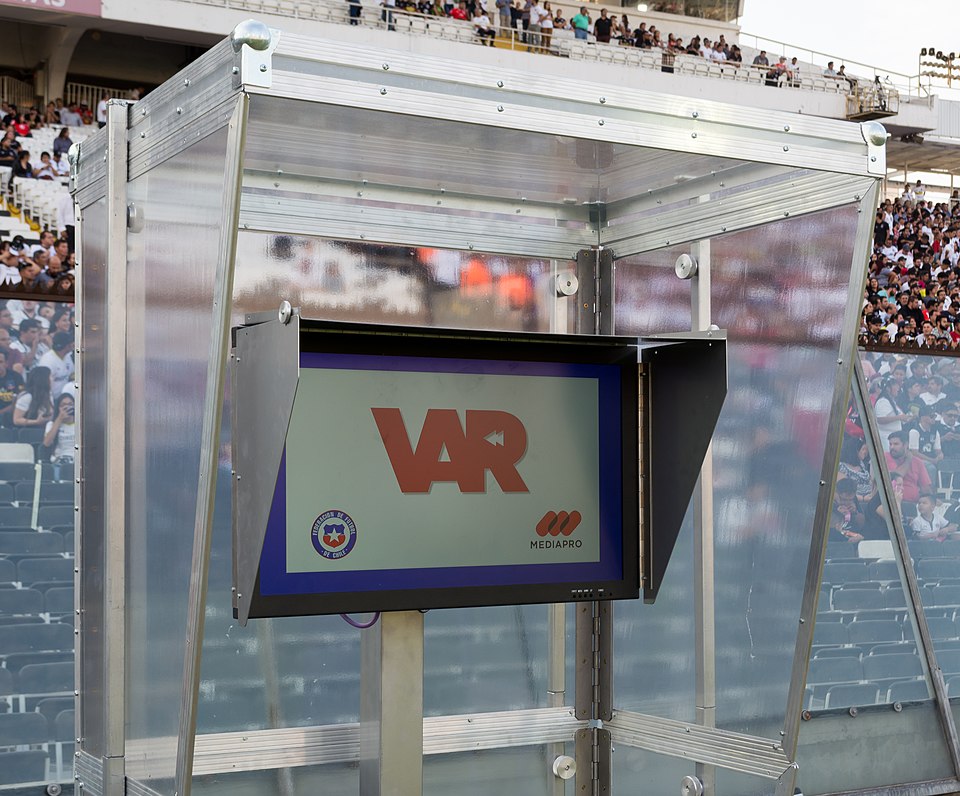
Scottish football has finally solved its identity crisis. It is no longer a sport. It is a lottery with shin guards.
Last weekend, Celtic received a gift wrapped in whistle blasts and VAR indecision: a 99th-minute penalty against Motherwell that nobody on earth — including the penalty taker — saw coming. The decision was so late it arrived with a timestamp from next Tuesday. Motherwell players stood on the pitch like they’d been told the game was over. The referee, apparently, had other plans. He had one final dramatic moment to deliver before the credits rolled.
And it worked. Celtic’s title hopes, which were gasping for air like a fish on the Clyde, suddenly inflated into a final-day showdown with Hearts. The narrative, which had been written in permanent marker, was now being rewritten in crayon by a man in a black shirt with a whistle.
This is not a complaint about the decision itself — though it should be. This is an observation about what Scottish football has become: a sport where the outcome is no longer determined by ninety minutes of football, but by the referee’s mood in minute ninety-nine. It is appointment television for the wrong reasons. People tune in not to watch skill or tactics or the beautiful game, but to witness chaos. To see if the referee will invent a penalty. To see if VAR will confirm something nobody saw. To see if history will be rewritten in real time.
Celtic, to their credit, have leaned into this absurdity with the kind of sponsor announcement that only makes sense if you’ve watched Scottish football recently. They are now officially backed by ‘99th-Minute Penalties — Always a Safe Bet!’ — a fictional betting syndicate that understands the assignment. The sponsorship deal is worth more than their actual playing budget, because in modern Scottish football, drama is currency.
The real scandal is not that the penalty was awarded. The real scandal is that we’ve all become numb to it. A decade ago, a 99th-minute penalty would have sparked three weeks of debate, inquiry, and soul-searching. Now it’s just another Tuesday. Or rather, another Sunday. The only thing that changes is which team benefits and which team’s supporters will spend the next month explaining why their anger is justified but also why they’ll be back next season anyway.
Motherwell, naturally, are furious. Their manager has already submitted his formal complaint, which will be filed in the same cabinet where all complaints go to die. The Scottish Football Association will investigate. They will find that technically, a decision was made. That decision may or may not have been correct, but it was made with conviction, and that is apparently enough. Conviction is the new competence.
Heart of Midlothian now face Celtic in a final-day decider. Hearts have played ninety minutes of football. Celtic have played ninety-nine minutes of football plus one minute of refereeing roulette. One team earned their position through consistency and skill. The other earned theirs through a lottery ticket that came in the post on Sunday.
This is not to say Hearts cannot win. They can. They probably will, if the referee decides that Hearts deserve a 99th-minute penalty too. That is how Scottish football works now. The winner will not be the team that played the best football. The winner will be the team that the referee liked more in the final minute.
So Celtic’s new sponsorship is not a joke. It is a documentary. It is a statement of fact disguised as satire. In Scottish football, 99th-minute penalties are indeed a safe bet. They are the safest bet in the sport. Safer than corners. Safer than free kicks. Safer than actual football.
The real question now is whether the Scottish Premiership will eventually rebrand itself as a reality show. That would at least be honest. At least then we could all admit what we’re watching: not a sport, but a drama series where the script is written by men with whistles and the outcome is determined by whoever the director fancies that day.
Celtic will face Hearts on the final day. One team will win. One team will lose. And somewhere, a referee will be preparing his whistle for minute ninety-nine, just in case the match needs a plot twist. Because in Scottish football, the game is never over until the referee decides it’s over. And sometimes, not even then.