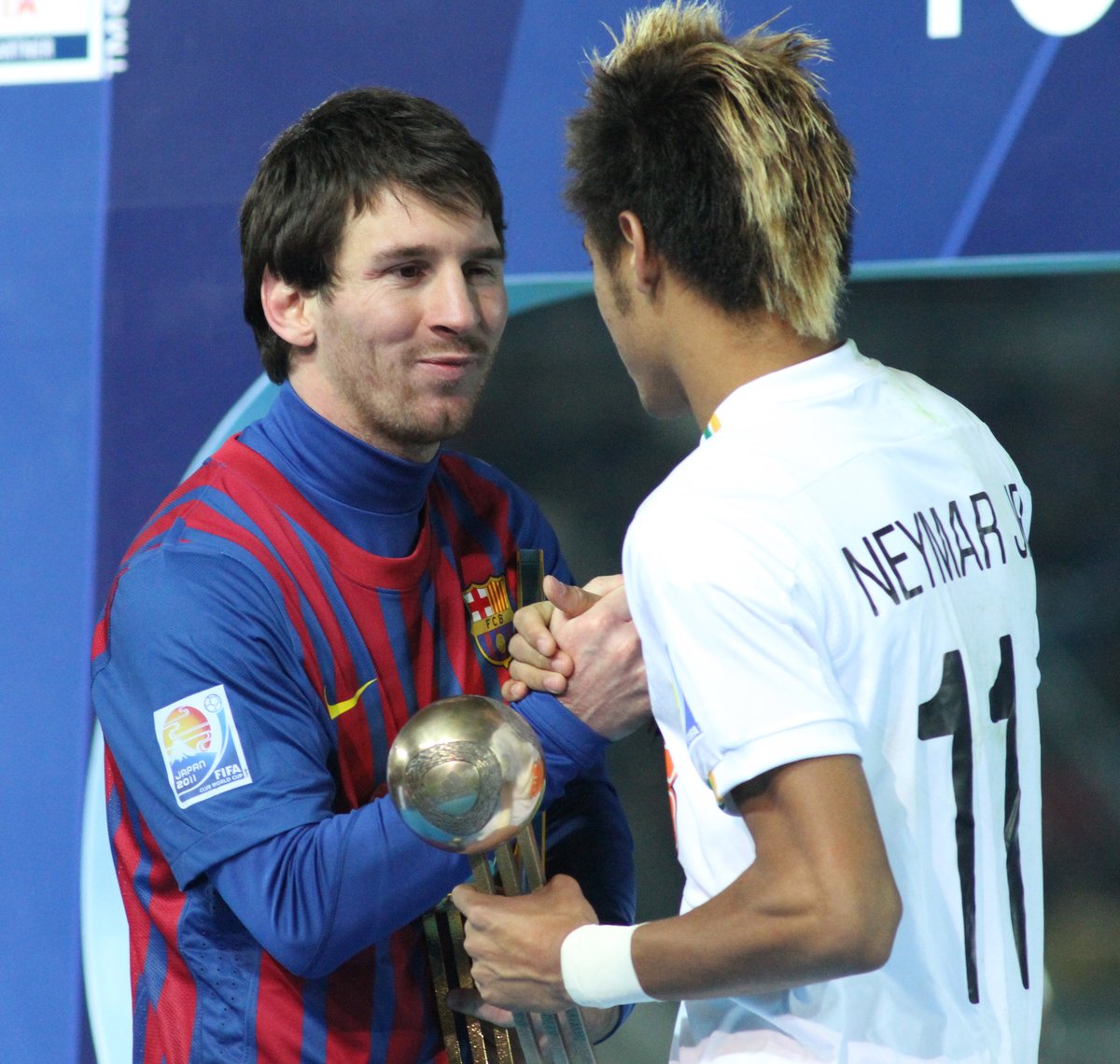
The Brazilian Football Confederation has announced plans to drape the Christ the Redeemer statue in black crepe. The Senate is in emergency session. Meteorologists report that the sky has become noticeably grayer. A two-to-three-week absence from one man’s left ankle has, somehow, become the defining crisis of the nation.
Neymar is injured. Not dead. Not retired. Not even ruled out of the World Cup opener—merely sidelined for friendlies against Panama and Egypt while his ankle undergoes the kind of medical attention that would normally be reserved for a sitting president. And yet the response from Brazilian sports media suggests that the country has collectively decided to treat this as a civilizational turning point.
This is not hyperbole born from nothing. This is what happens when a nation’s entire sense of self becomes, over the course of two decades, synonymous with one player’s ability to perform tricks with a football. Brazil won the World Cup in 2002 without Neymar being born yet. Brazil won it in 1994 without him. Brazil has a documented history of football excellence that predates his existence by half a century. And yet somewhere between his emergence as a teenage prodigy and his current status as a 34-year-old veteran, the collective consciousness decided that Brazilian football could not survive without him.
The math here is simple enough. Neymar has 128 goals in 124 appearances for the national team. He is their all-time leading scorer. He is also, by virtue of constant media saturation and Instagram documentation of his every movement, the only Brazilian footballer that casual fans in Europe and North America can name. He is not just a player. He is a brand. He is a lifestyle. He is the answer to the question: what does modern Brazil look like when it plays football?
And so when his ankle—a joint, let us remember, that humans have been rolling and spraining since before the invention of the World Cup itself—decides to rebel, the entire nation goes into existential freefall.
The friendlies against Panama and Egypt are meaningless. Everyone knows this. They are the football equivalent of a rehearsal dinner—technically necessary, practically irrelevant. No points are awarded. No trophy is at stake. The only thing lost is the opportunity for Neymar to play 120 minutes of football that will be forgotten by September. And yet the coverage suggests that Brazil has been robbed of something sacred.
What is actually happening here is something far more interesting than a simple injury report. This is a nation confronting the reality that it has built its entire identity around a single player’s performance. It is what happens when you spend twenty years telling yourself that one man is irreplaceable, that his absence creates a void that cannot be filled, that without him you are somehow less Brazilian. Two to three weeks without that player, and suddenly the country is in mourning.
The absurdity reaches its peak when you consider the alternative narrative that could exist. Rodrygo is 23 years old and plays for Real Madrid. Vinícius Júnior is 26 and is one of the best forwards in Europe. Richarlison is a legitimate attacking threat. Brazil has options. Brazil has depth. Brazil has, in fact, won five World Cups without Neymar as a player and without any of these alternatives as starters.
But that narrative does not sell newspapers. It does not generate the kind of emotional engagement that turns a two-week injury into a national emergency. The narrative that sells is the one where Neymar is irreplaceable, where his absence creates a chasm that cannot be crossed, where Brazil without him is somehow a diminished version of itself.
The World Cup opener is still months away. Neymar will almost certainly play in it. He will almost certainly be fit and ready and performing at the level that has made him a global icon. The friendlies against Panama and Egypt will be played without him, and Brazil will win both, and no one will remember them by next week. The crisis will pass. The nation will recover. The sky will lighten.
But for now, in this moment, Brazil is allowed to mourn. Not because the stakes are actually that high. Not because the country’s football future genuinely hangs in the balance. But because we have collectively decided that one man’s ankle is the most important story of the year. And sometimes, in the theater of modern sport, the absurdity is the point.