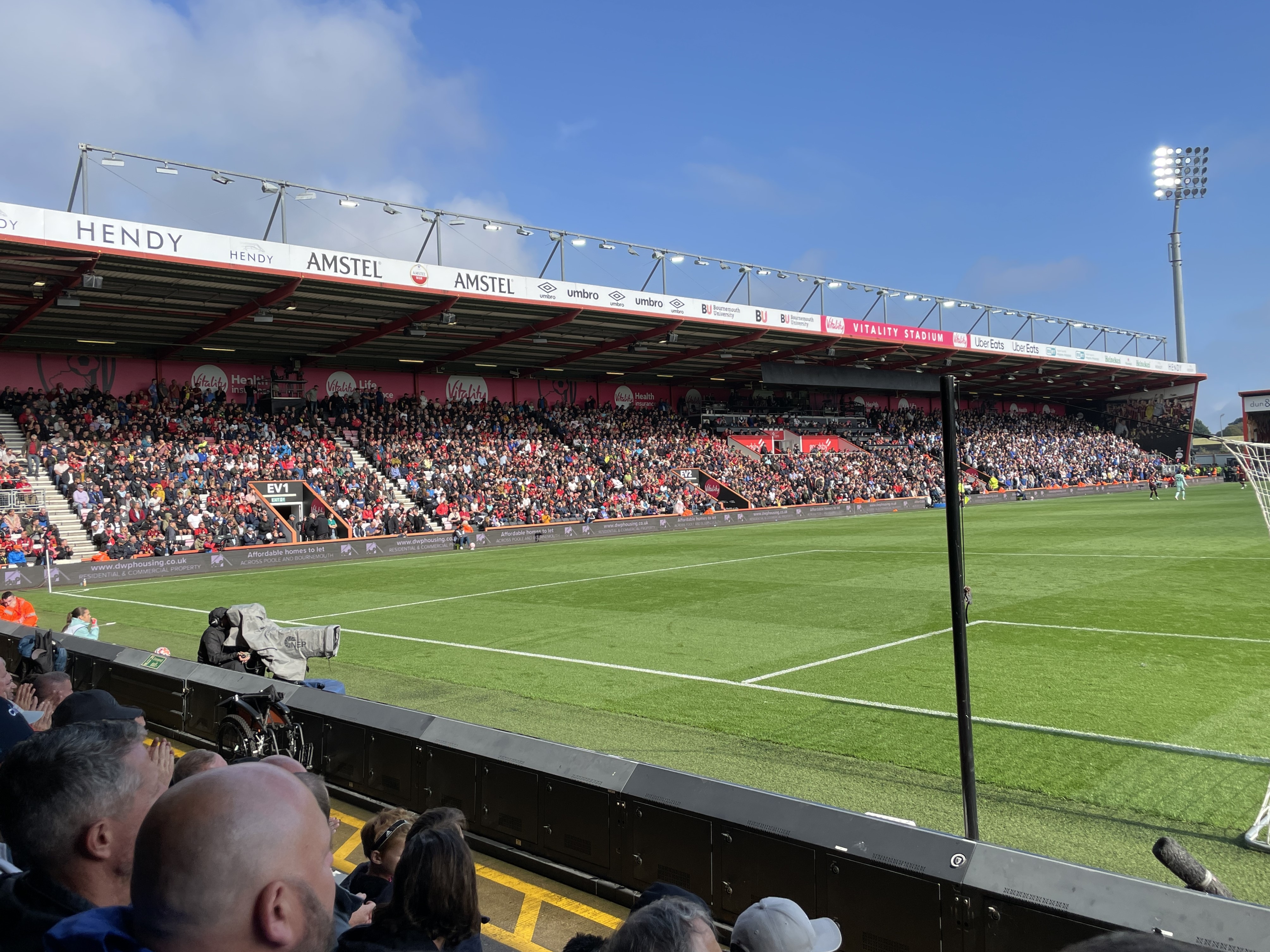
Bournemouth have done it. They have secured European football for the first time in their history. A draw against Manchester City—the defending champions, mind you—has catapulted a club that was in the Championship five years ago into the continental promised land. And now, drunk on the fumes of a single point against Pep Guardiola’s machine, they are openly discussing the Champions League as though it is not a competition designed to humiliate the ambitious.
Let us be clear about what just happened. Bournemouth drew. They did not win. They drew 1-1 against a team that has won everything. And from this modest achievement—a point, a respectable result, the kind of thing that happens to mid-table sides every weekend—the club has decided that continental glory is not merely a possibility but a destiny to be seized.
The ambition is charming. It really is. There is something almost Shakespearean about a club that played in the third tier of English football a decade ago now casually mentioning the Champions League in the same breath as their Europa League qualification. It is the sporting equivalent of a startup founder who has just received their first venture capital check immediately announcing plans to go public and disrupt the Fortune 500.
But here is where it gets interesting. Bournemouth’s path forward is not paved with tactical genius or a sudden infusion of Saudi money. No. According to sources close to the club (and by sources we mean the collective fever dream of their fanbase), the strategy for European domination involves a hotdog stand in the Vitality Stadium parking lot. Revolutionary. Transformative. The kind of thinking that makes you wonder whether someone has been breathing in too much sea air down on the south coast.
The logic, apparently, goes like this: if you sell enough hotdogs to the away supporters, you generate enough goodwill that UEFA will grant you a bye through to the quarter-finals. It is not in the rulebook, but neither was VAR, and look how that turned out. The hotdog stand becomes a symbol of Bournemouth’s commitment to hospitality-based football dominance. Every sausage sold is a small victory against the tyranny of established European order.
What makes this genuinely funny—and we use the word funny in the sense of absurd rather than humorous—is that Bournemouth are not wrong to dream. They have built something real. They have a manager who knows how to organize a team, they have been shrewd in the transfer market, and they have somehow convinced eleven players to run around a pitch in unison week after week. This is not luck. This is competence. But competence and Champions League football are not the same thing.
The Champions League is a meat grinder designed for clubs with eight-figure wage bills and a history of winning trophies. Real Madrid did not qualify for the Champions League by accident. Manchester City did not stumble into it through a hotdog stand promotion. Bayern Munich did not back into it because the parking lot concessions were excellent. They qualified because they are among the richest and most organized institutions in world football.
Bournemouth will play in the Europa League. They will probably do it competently. They might even win a game or two. But the Champions League? That is the fever dream of a club that has spent so long in the wilderness that they have forgotten what the top table actually looks like. It is not a criticism. It is an observation. The gap between Europa League regulars and Champions League contenders is not a chasm—it is an ocean, and there are very few boats.
The hotdog stand strategy, though. That might actually work. Because if there is one thing that unites football supporters across the continent, it is the universal hunger that strikes three hours before kickoff. Bournemouth could genuinely corner the market on pre-match sausages. They could become the team everyone wants to visit, not because of their football but because of their catering. That is a legacy. That is something to build on.
So congratulations, Bournemouth. You have secured your place in European football. You have drawn with the champions. You have declared your intention to conquer the continent. And you are going to do it one hotdog at a time. It is absurd. It is ambitious. It is exactly the kind of thing a club in your position should be doing—dreaming bigger than the evidence suggests you should, believing in yourself even when the statistics say otherwise.
Just do not be surprised when you meet Bayern Munich in the group stage and they remind you that the Champions League is not won in the parking lot. It is won on the pitch. Everything else is just hotdogs and hope.