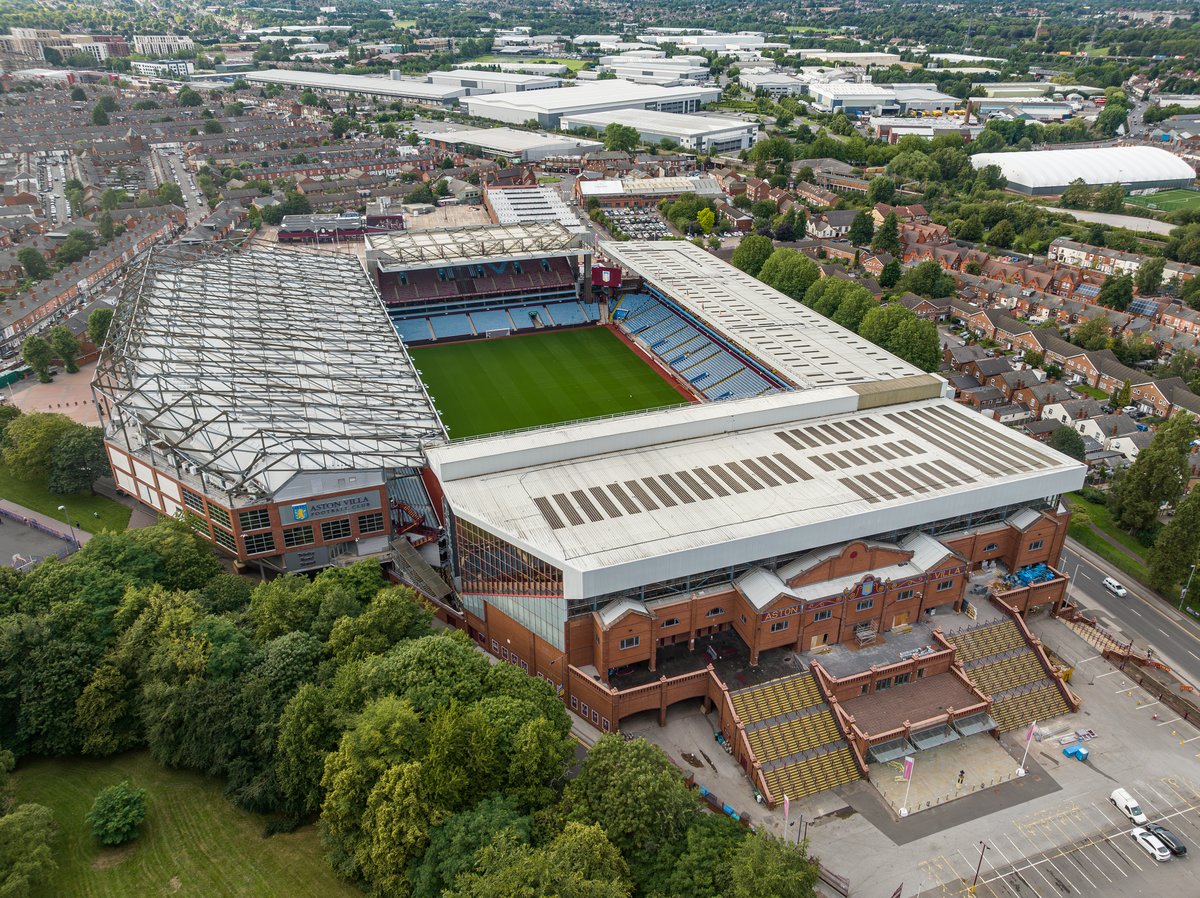
Aston Villa have done the unthinkable. They won the Europa League. Not in some alternate timeline where football makes sense, but in actual 2026, in this dimension, with real players and real matches. Now comes the hard part: what on earth do you do next?
The club sits at a crossroads that most teams dream of and none are equipped to handle. You cannot simply repeat last season—that is not how ambition works in modern football. You must transcend. You must evolve. You must, apparently, abandon all rational thought and embrace solutions so spectacularly unhinged that even Roman Abramovich would pause mid-acquisition to ask if you had lost your mind.
Let us walk through Aston Villa’s inevitable roadmap to “next level” status, because the old roadmap—“sign good players, coach them well, win matches”—is for losers who have never tasted continental glory.
First, the transfer strategy. Villa’s scouting department has done respectable work, but respectable is the enemy of obsession. The club should immediately hire a psychic. Not a sports psychologist—those are for managing egos and processing trauma. A genuine psychic. Someone who can close their eyes during transfer negotiations and tell you which 22-year-old midfielder in the Portuguese second division will have a career trajectory that peaks exactly when you need him most. Forget data analytics. Forget video analysis. The future is vibes, intuition, and reading the aura of a player’s left foot.
The psychic will work alongside a newly created Department of Unnecessary Complexity. This team’s sole job is to make every decision harder than it needs to be. Want to sign a striker? Do not simply offer money. Create a bidding war between yourself and a fictional club. Negotiate against a ghost. Tell the player he can only join if he can recite the club’s entire 1982 fixture list backwards. Complexity signals seriousness. Everyone knows this.
Second, the managerial evolution. The current manager has done well—too well, in fact. Success breeds complacency, and complacency breeds mediocrity. Villa must hire a manager from outside football entirely. A chess grandmaster, perhaps. Or a conductor. Someone who understands that football, at its highest level, is really about orchestrating eleven separate egos into a symphony of occasionally coordinated movement. The chess grandmaster will implement a revolutionary tactic: playing with only nine outfield players and two goalkeepers. The opposition will be so confused that they will score own goals just trying to understand the formation.
Third, the stadium experience must be weaponized. Villa Park is lovely, but lovely does not win European titles. The club needs to install a organ that plays only in minor keys when the opposition has the ball. Every corner kick should be accompanied by a fog machine that makes it impossible for anyone to see anything, creating an atmosphere of pure chaos that somehow benefits Villa because they have memorized where everyone is standing. Introduce a rule that opposing players cannot use the bathroom during the match. Psychological warfare is not dirty—it is strategy.
Fourth, the player development program requires a complete overhaul. Young players should be trained by robots. Not because robots are better coaches—they are not—but because robots do not have feelings, and feelings are inefficient. Every training session should be conducted in zero gravity. Okay, that is logistically impossible, but the point stands: comfort breeds weakness. Villa should build a training ground inside a sensory deprivation chamber. Players will develop an almost supernatural ability to play by sound alone.
Fifth, the nutrition department needs to embrace pseudoscience wholesale. Forget sports nutritionists. Hire someone who believes in the healing power of crystals and the importance of eating foods that are the same color as the shirt they will wear. Tuesdays should be an all-asparagus diet. Thursdays, only foods that rhyme with “goal.” The players’ bodies will be so confused that their muscles will forget how to get tired.
Sixth, Villa must create a psychological warfare division dedicated to undermining opposing teams before they even arrive at Villa Park. Send them playlists of slightly off-key versions of their national anthem. Have a team of people follow their manager around the week before the match, whispering doubts into his ear. Not threatening—just subtle. “Your formation is interesting,” whispered by a stranger in a café. “I have never seen that before,” muttered by someone in the supermarket queue. The psychological toll will be immeasurable.
Seventh, and most importantly, the club must embrace the absurdity of their own success by creating a monument to it. Not a statue of the manager or the captain—that is pedestrian. Build a 200-foot bronze sculpture of the entire squad in a single moment of perfect celebration, frozen in time, positioned so that it casts a shadow directly onto any opposing manager’s dugout during afternoon matches. Every time they look up, they see their own failure reflected in the eyes of eleven bronze Villans who have already beaten them.
The path forward is clear. Aston Villa have proven they can win at the highest level. Now they must prove they can win while being absolutely, irredeemably ridiculous about it. That is the next level. That is world domination. That is the only way forward when you have already done the impossible and need to do it again.