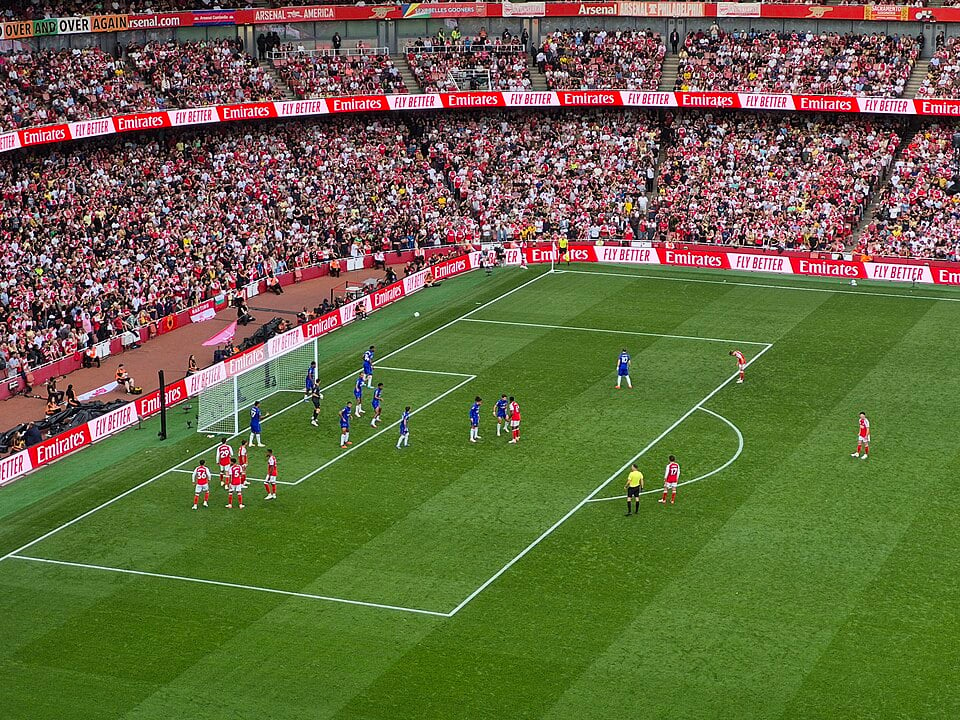
Mikel Arteta has looked at the scoreboard after yet another stalemate and concluded that the problem is not tactics, not finishing, not the referee, but a shortage of luck. Arsenal, he says, need more of it to kill off games. Having watched his side settle for a draw against Borussia Dortmund, the manager now believes the club’s future lies not on the training ground but in the hands of a fortune teller.
This is not a metaphor. Luck, in Arteta’s world, is a physical asset, as tangible as a trophy cabinet or a bag of match-day kit. You can count it, and you can stock it. Arsenal have apparently been running a deficit for years, and the obvious response is a recruitment drive. Scouts will be dispatched to every lucky rabbit’s foot in Europe. A lucky charm will be bolted to the dressing room door. The back four will huddle around a horseshoe before kickoff, and the number seven shirt will be sent to a psychic in Lisbon for a blessing.
The more ambitious plan is to hire a full-time fortune teller who reads the bounce of the ball in the penalty area and warns the coaching staff when a corner is about to ricochet off a Dortmund shin and drop to nobody. Her salary would be considerably less than a striker’s, and her predictions would be just as reliable as the xG model, which at least has the decency to be honest about its failures.
The satire is in the premise, not the people. Arteta’s frustration is entirely real, and anyone who has watched a match slip from a win to a draw in injury time understands it. The joke is that the modern game has spent a decade quantifying everything, and when the numbers refuse to cooperate, we reach for the crystal ball. Arsenal may yet discover that the most valuable transfer of the winter is a woman who can see the future, and that she charges by the draw.