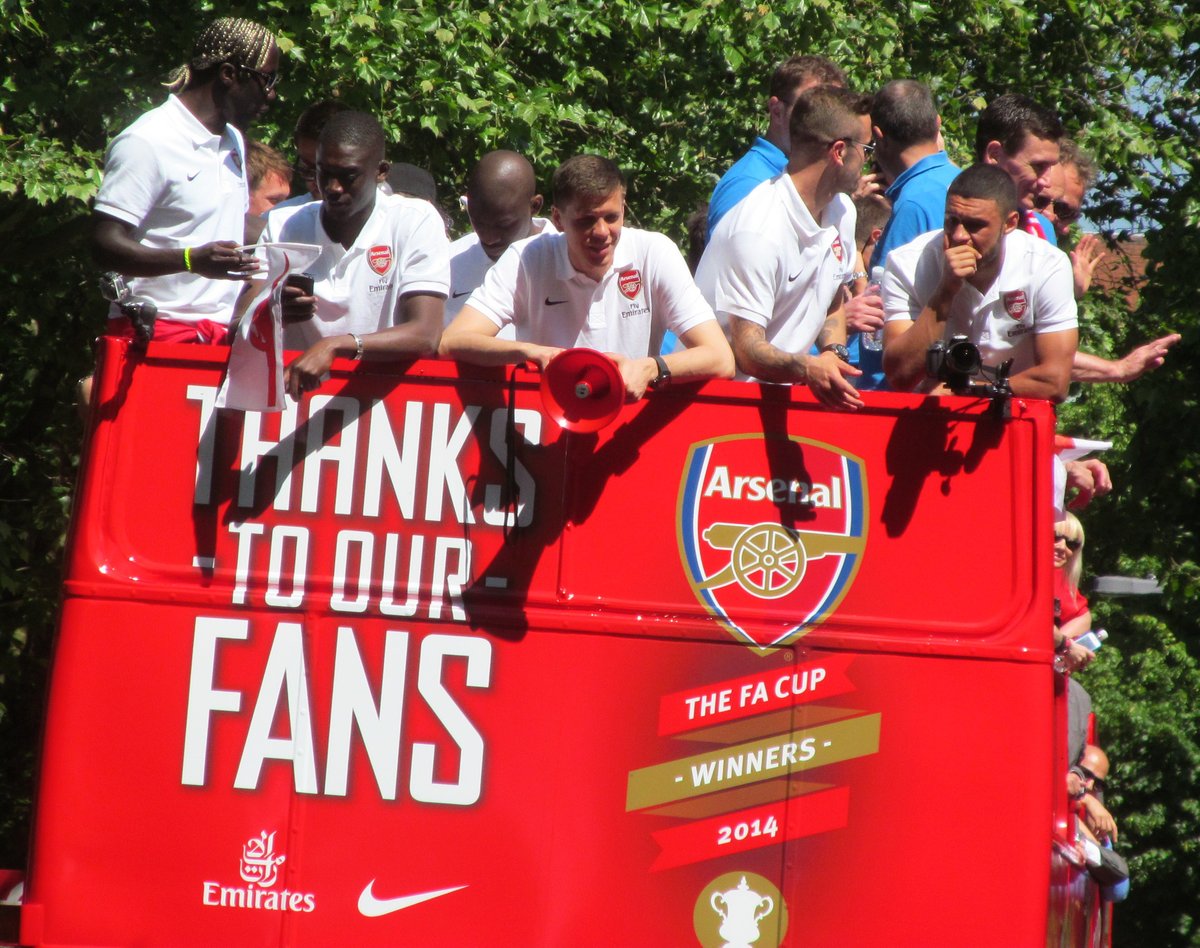
LONDON — In a historic decision that will reshape the constitutional order of the United Kingdom, Parliament has unanimously voted to retroactively classify Sunday’s Arsenal victory parade as a national event of such magnitude that all prior democratic processes must now be considered secondary to its cultural significance.
The motion, tabled at 3 a.m. on Monday morning by a cross-party coalition of MPs who had apparently not slept since the parade ended, establishes that the 22-year drought-breaking Premier League title win and the subsequent bus journey through north London constitutes a watershed moment in British history equivalent to the signing of the Magna Carta, the Industrial Revolution, and the invention of the tea break combined.
“We have reviewed the footage,” said one unnamed civil servant, speaking from what appeared to be an undisclosed location surrounded by empty coffee cups. “The scale of the thing. The sheer volume of people. The chants. We have concluded that nothing — and we mean nothing — that happens in Westminster can ever again be taken seriously. Elections? Legislation? Budget cycles? These are now merely ceremonial distractions from the real business of governance, which is apparently just waiting for Arsenal to win things.”
Historians are already struggling to make sense of what they’re calling the “Great Recalibration.” The standard timeline of British history — which previously ran from 1066 through the present day — has been reorganized into two eras: “Before the Parade” and “After the Parade.” All dates are now being recalculated accordingly. The Queen’s coronation, previously considered significant, has been downgraded to “a nice event that happened before Arsenal won the league, so basically irrelevant.”
The economic implications are staggering. The Bank of England has announced that it will no longer peg sterling to gold reserves or market fundamentals, but instead to the emotional resonance of Arsenal’s midfield performance. Financial analysts report that any mention of the parade during quarterly earnings calls causes stock prices to move erratically in all directions simultaneously, as traders simply give up and refresh their streaming apps to watch highlight reels instead.
Educational institutions have already begun restructuring their curricula. Oxford and Cambridge have jointly announced that their entrance exams will now consist primarily of essay questions about whether the parade was “genuinely the best thing that has ever happened” or “possibly the best thing that will ever happen.” One philosophy tutor was found muttering about Plato’s cave allegory while watching bus footage on repeat.
The implications for future elections are profound. Political strategists are in open panic. One campaign manager was overheard saying, “We can’t compete with this. Our best strategy is to schedule the next general election for exactly 22 years from now and hope that by then people will have forgotten about the parade enough to care about tax policy again. Spoiler: they won’t.”
International observers are baffled. The French government has issued a statement expressing “concern about the stability of our nearest neighbor,” while the German Chancellor simply asked, “Is this what happens when you finally win something after two decades?” (The answer, according to British officials, is yes. This is exactly what happens. Accept it. There is no going back.)
The parade itself, for those who somehow missed it despite the fact that it was apparently more important than democracy, featured players on a bus, fans in the streets, and what witnesses described as “the kind of atmosphere that makes you understand why people write poetry.” One attendee, a 67-year-old grandmother from Islington, was quoted as saying, “I have lived through several prime ministers, two coronations, and the invention of the internet. This was better than all of those things.” She has since been appointed as an advisor to the government on matters of national importance.
The official government report on the parade’s significance runs to 847 pages and concludes with the sentence: “We have no idea what to do with this information, but we are certain it matters more than anything else we will ever do.” The document has been classified as Essential Reading for all civil servants, and failure to watch the parade footage is now grounds for immediate dismissal.
Legal scholars are already debating whether the parade constitutes a binding constitutional amendment. One Oxford don suggested that the parade might actually supersede Parliament itself as the supreme authority in the land. “If the people gathered in those streets and cheered that loudly,” he reasoned, “then technically they were exercising the will of the nation more authentically than any vote ever could. I’m not saying we should abolish elections. I’m just saying we should probably check with Arsenal before we do anything important from now on.”
When asked for comment, the Arsenal players appeared confused by the level of institutional upheaval their parade had triggered. One midfielder simply said, “We just won the league. People were happy. We got on a bus.” This statement has since been framed and hung in the House of Commons as a reminder of what actually matters.