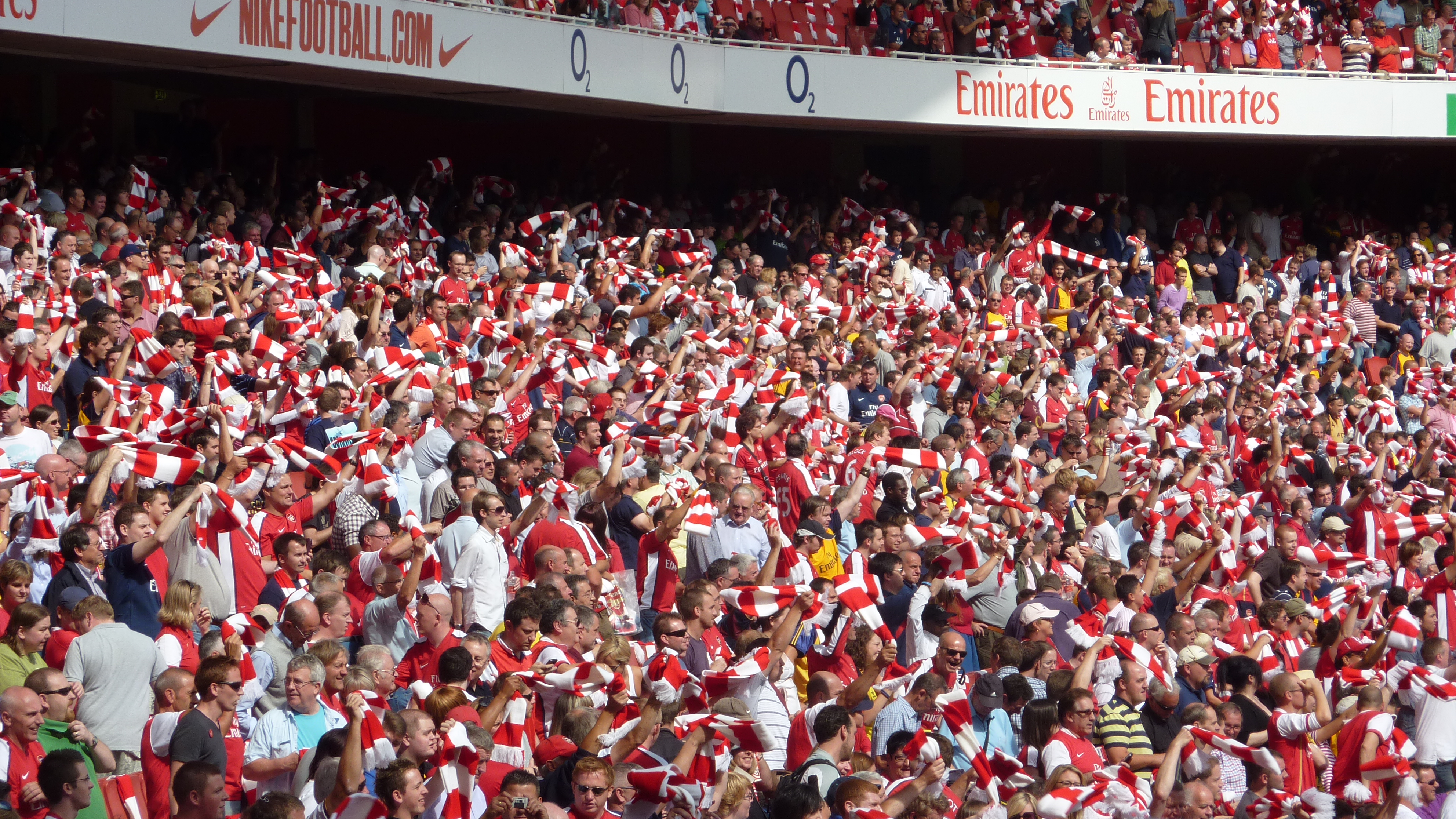
After three consecutive seasons of finishing second—a run so consistent it could have been mistaken for a strategic business model—Arsenal fans have collectively decided that May 20th, 2026, will henceforth be celebrated as the day the club’s collective nervous system finally stopped short-circuiting.
The Premier League title is theirs. Not a Europa League participation trophy. Not a ‘moral victory’ narrative crafted by commentators paid to make losing sound philosophical. An actual, tangible, silverware-based championship.
Fans are not simply pleased. They are operating at a frequency of joy that suggests someone has finally given them permission to exhale after holding their breath for a decade. Social media has become a monument to the absurdity of relief—grown adults posting photographs of their television screens as though they have just witnessed the invention of electricity. One supporter reportedly spent forty minutes explaining to their cat why this time, this specific time, it was different. The cat was not convinced. The cat was right to be skeptical.
But here is the thing about being branded a ‘bottler’ for long enough: the label calcifies. It stops being about individual matches and becomes a personality trait assigned to an entire fanbase. You finish second once, and you are unlucky. Twice, and people start asking questions. Three times, and you are not a club experiencing competitive misfortune—you are a psychological case study. The ‘bottler’ tag does not describe what happened on the pitch. It describes who you are supposed to be.
Arsenal fans have spent years absorbing this characterization with the weary acceptance of people who have learned that arguing against a narrative only reinforces it. They have watched rivals celebrate their own titles while pundits casually noted that Arsenal, for all their talent and resources, simply did not have ‘the mentality’ to finish the job. As if mentality were a purchasable commodity, like a left-back or a defensive midfielder. As if three consecutive second-place finishes were not already the evidence of a team that was, in fact, mentally strong enough to compete at the highest level—just not quite strong enough to win.
Now that it is done, now that the title is secured, the relief among the fanbase has an almost manic quality to it. This is not the measured satisfaction of a team that has simply done what was expected. This is the unburdening of people who have been holding something in for so long that they had forgotten what normal breathing felt like.
The victory is not just about the Premier League trophy sitting in the cabinet. It is about the permission to stop apologizing. It is about the right to talk about the team without immediately bracing for the inevitable comeback: ‘But they bottled it three times before.’ It is about the ability to simply be a fan of a good team without that goodness being perpetually qualified by past failures.
Young Arsenal supporters—those who came of age during the three-year second-place run—are describing this as ‘the first in my lifetime.’ That phrase, repeated across interviews and social media, carries a weight that extends far beyond football. It suggests that for an entire generation of fans, the club’s inability to finish the job had become foundational to their experience of supporting it. They did not know what it felt like to win. They only knew what it felt like to be close enough to taste it, then watch someone else drink it.
The irony, of course, is that finishing second three times is not actually a failure. It is a sign of sustained excellence at a competitive level. Most clubs would trade their entire recent history for three consecutive runners-up finishes. But the modern football conversation does not operate in shades of grey. You either won, or you did not. You either have the mentality, or you do not. You are either a winner, or you are a bottler. There is no middle ground where you can simply be a good team that was not quite good enough.
Arsenal fans are not interested in that nuance right now. They are interested in the simple, uncomplicated fact that their team won the league. The bottler narrative, which had metastasized into something that felt almost biological, has finally been excised. Whether it stays excised will depend on what happens next season. But for now, the fanbase is allowing itself something that has been in short supply: the ability to enjoy something without immediately waiting for the other shoe to drop.
The national holiday declaration is, of course, hyperbolic. But it is the kind of hyperbole that only makes sense when you understand what has been released. After three years of finishing second, of being told you did not have what it takes, of carrying a label that had stopped being about results and started being about character—Arsenal fans have earned the right to be a little bit ridiculous in their celebration.
They have earned the right to declare May 20th, 2026, as the day the curse broke. Whether that curse was real or simply a story the football world told itself about who Arsenal were—well, that is a conversation for another season. For now, the bottlers have won the title. And if that is not absurd enough to deserve a national holiday, nothing is.