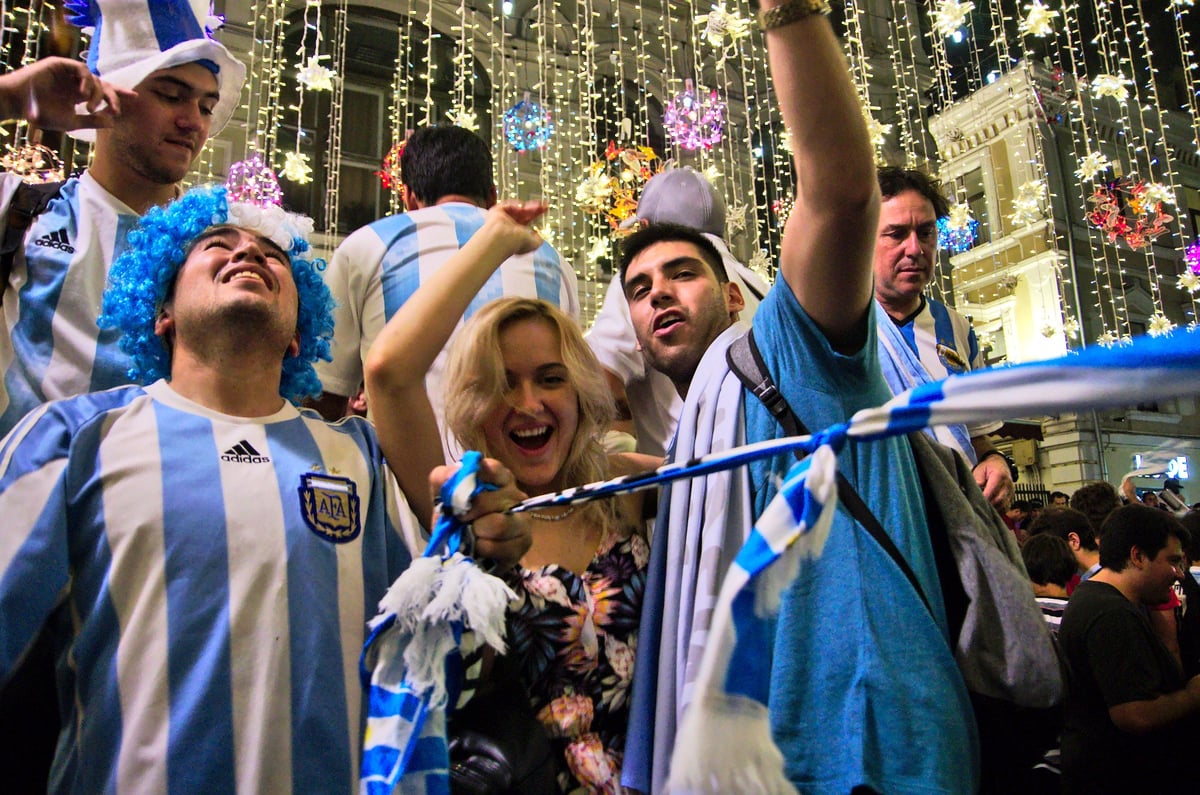
Three men from Gualeguaychu, Argentina have arrived in Kansas City after cycling 10,500 miles. Not because commercial aviation was banned. Not because they lost a bet. Not because their carbon footprint needed to be negative enough to offset a small nation’s emissions. They did it because somewhere along the way, sport fandom stopped being about watching your team and started being about out-suffering everyone else who claims to love them.
This is what we have become. This is what we deserve.
Let’s be clear about what happened here. These three men looked at the World Cup schedule, looked at a map of North America, looked at their bicycles, and made a decision that would have gotten them sectioned in any other context. “You know what would be a fun weekend?” one of them probably said, standing in a kitchen somewhere in the Argentine interior. “Let’s spend months pedaling through deserts and across state lines so we can sit in a stadium and watch people we don’t know kick a ball around.”
The others nodded. They bought supplies. They trained. They committed to a journey that would test their knees, their cardiovascular systems, and their ability to explain to their families why they weren’t just flying like normal people.
Here’s the thing that makes this so perfectly, exquisitely absurd: they weren’t the only ones. They were just the ones who made it to the news cycle. Somewhere right now, another Argentina fan is probably swimming to the tournament. Another is hitchhiking backwards. Another is walking it, one step at a time, documenting the whole thing on social media because the journey itself has become more important than the destination—which, let’s remember, is a stadium where they will sit in the stands and watch the match on a screen like everyone else.
This is the logical endpoint of fan culture. We used to have superstitions. You wear your lucky shirt. You sit in the same seat. You don’t shave during a winning streak. These were manageable forms of delusion. Now we’ve scaled up. Now dedication means cycling across a continent. Now we measure fandom in miles traveled, money spent, and bodily suffering endured.
And the worst part? It works. Because the moment those three Argentines rolled into Kansas City on their bikes, they became a story. They became more of a fan than the person who flew in business class. They became more dedicated than the guy in Section 12 who bought his ticket at face value and drove for six hours. The hierarchy of fandom is now determined by how much you’re willing to destroy your legs for the privilege of watching your team play.
Someone, somewhere in that stadium, will definitely mention it. “Did you hear? Those guys cycled here. From Argentina.” And there will be a moment of respect, followed immediately by the creeping realization that they’ve been out-suffered. They’ve been out-committed. They’ve been out-memed by three men on bicycles.
This is what sport does to us. It takes normal people—people with jobs, families, mortgage payments—and gradually convinces them that the only way to prove their love is through increasingly insane acts of physical endurance. It’s not enough to watch every match. You have to travel to watch it. Not enough to travel—you have to travel in the most difficult way possible. The bar keeps rising. The madness keeps escalating.
And the beautiful, terrible thing is that it will inspire others. There will be fans next World Cup who don’t just cycle—they’ll skateboard, or roller-skate, or inline-skate. They’ll find new and creative ways to make the journey more difficult, more painful, more visible. Because visibility is the point now. Suffering is the currency. The most dedicated fan isn’t the one who understands the tactical nuances of the game. It’s the one who can say, “Yeah, I cycled here,” and watch everyone else’s commitment look suddenly, shamefully insufficient.
So welcome to Kansas City, three Argentine cyclists. You’ve won. You’re the most dedicated fans in the stadium. You’ve proven it. You’ve earned it. You’ve pedaled it into existence across 10,500 miles of American landscape.
Now go watch the match. And try not to think about what someone else might be doing for the next tournament. Because they’re already planning. They’re already training. They’re already looking at maps and calculating distances and thinking about what form of self-inflicted athletic torture will finally, finally prove that they love their team more than you do.
This is sport fandom in 2026. This is what we’ve made it. And honestly? It’s exactly as ridiculous as it deserves to be.