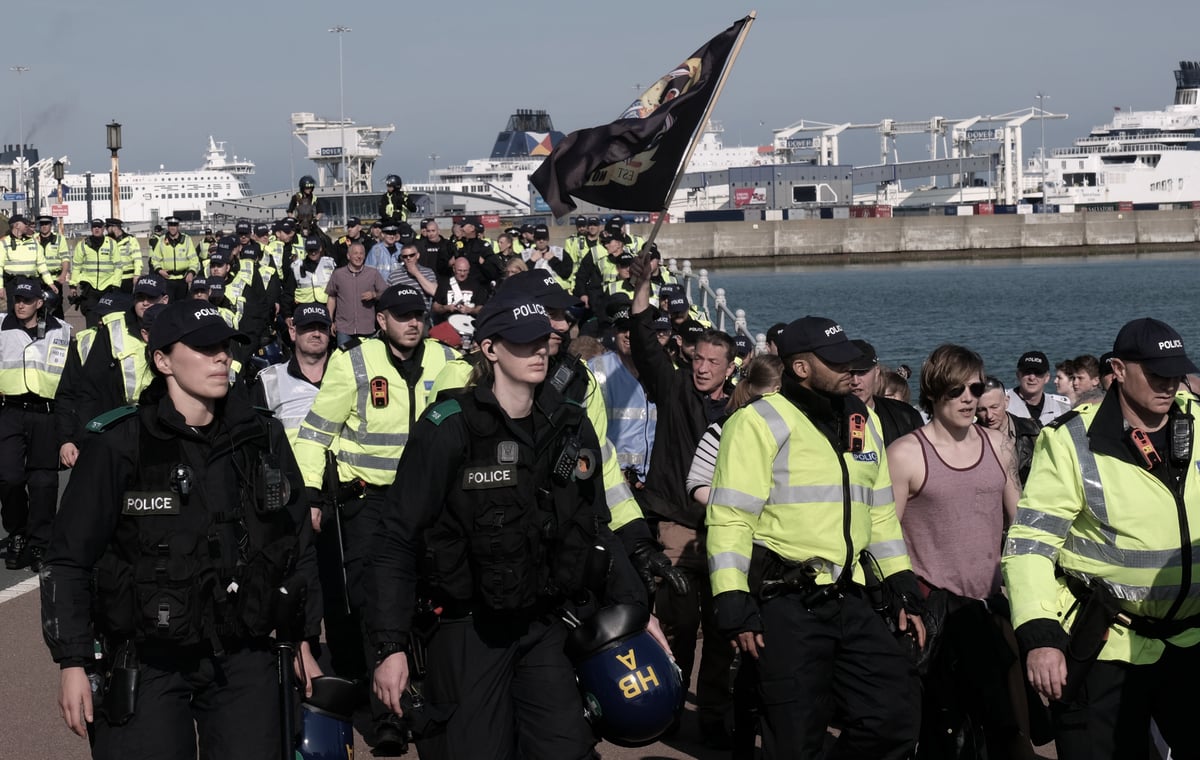
Reform UK has discovered the one policy that makes protest movements more visible while claiming to make them less organized. Masked demonstrators gathered in Dover, so the solution is obvious: ban the masks. This will definitely stop people from protesting in coordinated groups. It will not, in fact, simply shift them to wearing matching armbands, coordinated outfits, or hand-painted signs that read ‘ANONYMOUS BLOCK 7.’ None of that is happening.
The logic here is airtight. Masks hide identity, therefore masks cause protests. Remove masks, therefore remove protests. This is the same reasoning that led to banning umbrellas because rain happens. The masked men in Dover were organized because they wore masks, not because they had a specific political position they wanted to express. Definitely not that.
What actually occurred: a group showed up, wore face coverings, and made their presence known. The response from politicians is to legislate the covering away, as if the masks were the organizing principle rather than the symptom. They were not. The masks were just the uniform. The next protest will simply find a different uniform—and it will be even more coordinated, because now everyone knows exactly what the government considers threatening enough to ban.
Reform UK has successfully weaponized the Streisand Effect into policy. By announcing that masked protests are the problem worth banning, they’ve guaranteed that the next organized demonstration will be twice as visible, twice as coordinated, and now with the added benefit of knowing exactly what triggered the previous government’s panic.
The masked men won without saying a word. The politicians banned an object and called it governance.