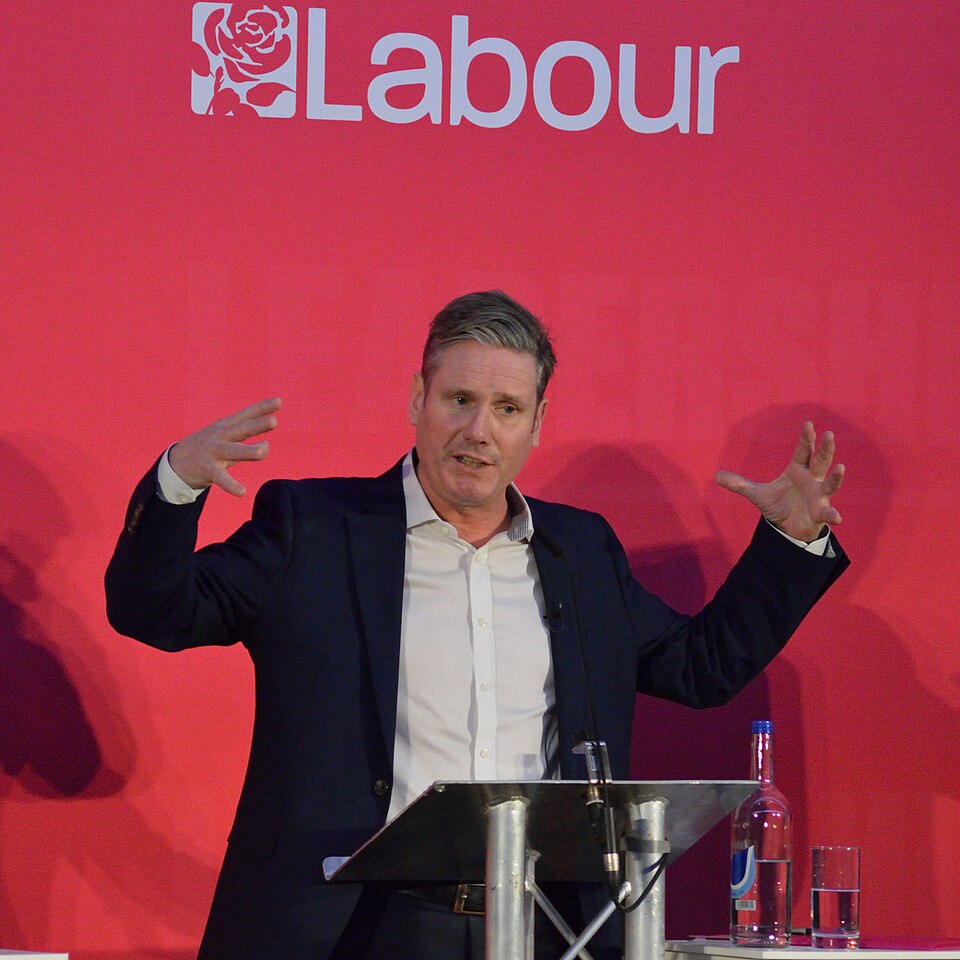
Keir Starmer is still prime minister, technically, in the way a captain remains at the helm while the crew is actively voting on whether to throw him overboard. The difference between a leadership challenge and a slow-motion mutiny is apparently just timing and the willingness to say it out loud in the BBC News ticker.
Angela Rayner, who used to be deputy prime minister before the election results suggested she should have been deputy somewhere else, has issued what she’s calling a ‘last chance’ warning to Starmer. This is the political equivalent of your partner saying they’re leaving while still living in your house and commenting on your cooking. She’s also backing Andy Burnham to return — not to challenge Starmer directly, mind you, just to be available as a backup plan in case the current arrangement becomes any more obviously broken.
Catherine West, a Labour MP and former minister, has gone further. She’s not issuing warnings. She’s threatening to challenge Starmer herself. This is the moment when you know things have stopped being an internal disagreement and started being a game show where everyone has a clipboard and a producer in their ear. The fact that she’s a former minister who already knows how the job works makes this less ‘ambitious backbencher’ and more ‘experienced operator who has decided the current guy is finished.’
Bridget Phillipson, still a current minister, has backed Starmer to stay. Someone had to, apparently. The optics of the entire cabinet sitting in silence while Rayner and West take turns at the microphone would have been worse, which tells you everything about where this sits on the scale of ‘minor disagreement’ to ‘complete institutional collapse.’
Starmer has vowed to fight on. He’s using the exact language you’d use if you were determined and not at all worried, which is the universal tell that someone is both determined and extremely worried. Downing Street is trying to ignore the challenge from a former minister, according to reporting that exists specifically because it’s impossible to ignore. The strategy appears to be: say nothing, hope it goes away, and definitely don’t acknowledge that your own deputy and several MPs are publicly suggesting your time is up.
Then there’s Rhun ap Iorwerth, leader of Plaid Cymru, who has announced he will ‘take the fight’ to Starmer and ‘call out’ the UK government if needed. This is technically a different fight from the internal Labour one — it’s a Welsh nationalist leader promising to oppose the British government, which is his job and also not news — but the timing makes it feel like everyone in Westminster has suddenly realized they can say whatever they want about Starmer without consequences.
The BBC has already published a feature called ‘Seven scenarios for what might happen next,’ which is what news organizations write when they have no idea what’s actually going to happen but need to fill the space where certainty used to live. Scenario one: he stays and everything is fine. Scenario two: he doesn’t. Scenarios three through seven are variations on ‘someone else becomes prime minister at some point.’
What’s remarkable isn’t that Starmer is facing pressure — all prime ministers face pressure. What’s remarkable is that the pressure is coming from people who are supposed to be on his team and are doing it in public while still technically working for him. Rayner isn’t whispering to journalists. She’s issuing formal statements. West isn’t texting allies. She’s threatening a leadership challenge to the newspapers. This isn’t backbench grumbling. This is the front row of the bench saying they’ve noticed the captain has steered directly into a rock and wondering if anyone else wants to try the wheel.
Starmer’s vow to fight on will probably work for another week or two, until the next election results come in or the next minister decides they’d prefer to work for someone else. The Labour Party has become a reality show where the contestants are all too polite to actually vote anyone off, so instead they just keep threatening to and then showing up to work the next day to see if the threat worked. It hasn’t. Not yet. But everyone’s watching the clock.