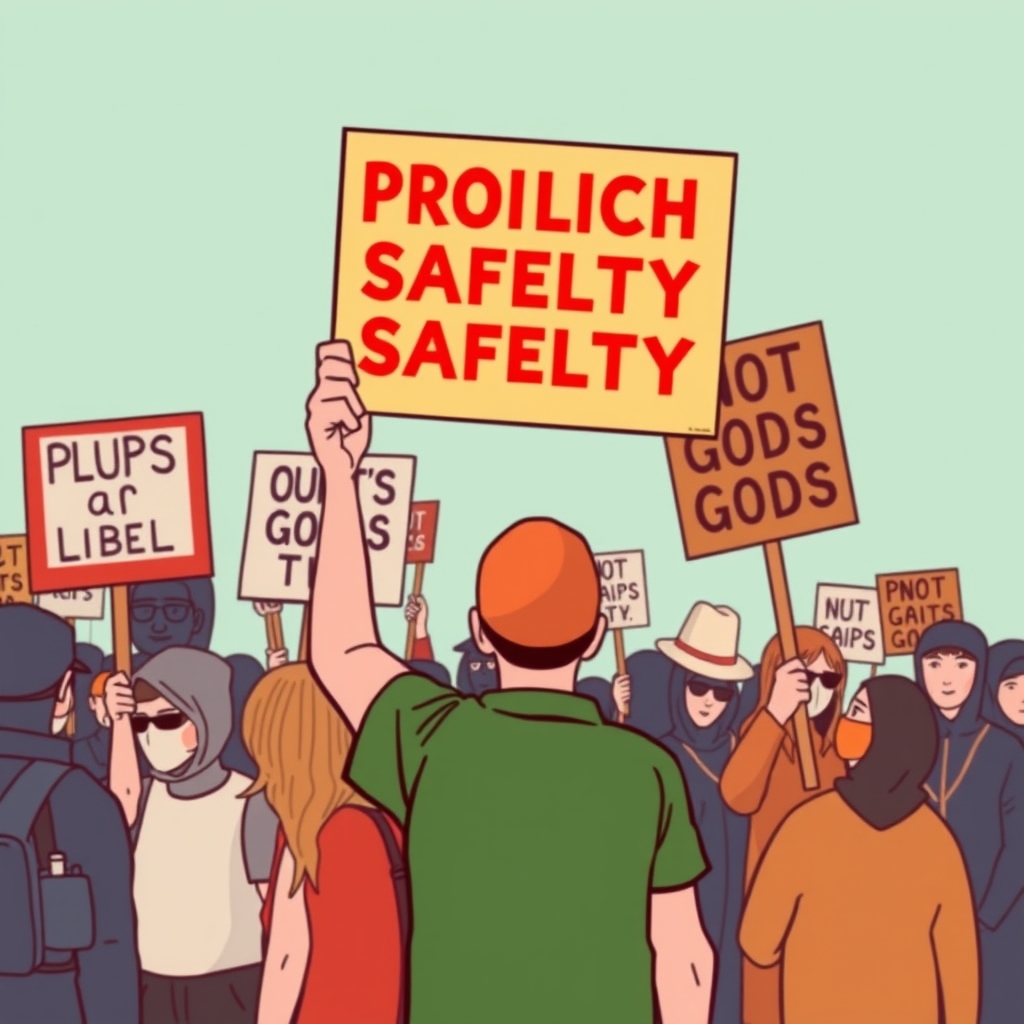
The British government has discovered a solution to the protest problem that would make a medieval siege engineer weep with envy: make the marches so miserable that nobody shows up. The Prime Minister is concerned about the ‘cumulative effect’ of demonstrations on various communities. A minister worries the marches have been ‘hijacked’. Another senior figure warns that certain chants are leaving people scared. The response? Introduce safety equipment and keep asking whether protests should be stopped altogether.
This is not a safety measure. This is performance art masquerading as governance.
Let’s be clear about what’s happening here. The government wants credit for caring about public safety—Jews feeling intimidated by marches, the cumulative psychological toll of repeated demonstrations, the general unease that comes with thousands of people in the streets expressing views the Prime Minister finds objectionable. These are real concerns, or at least concerns the government has decided to voice loudly and repeatedly. The solution, however, is not to make protests safer. It’s to make them so administratively burdensome, physically uncomfortable, and legally precarious that the inconvenience outweighs the political message.
Safety helmets are the Trojan horse here. Nobody opposes safety equipment. Safety equipment is the policy equivalent of ‘nobody hates puppies.’ But mandatory helmets at marches don’t protect against the actual threats—intimidation, harassment, counter-protests designed to provoke violence. They protect against the optics of injury, which is a completely different thing. A protester in a safety helmet is a protester who looks like they’re preparing for a riot, not a rally. The visual narrative shifts instantly. The crowd becomes a mob. The march becomes a threat.
Meanwhile, a man was arrested for allegedly trying to hire Ukrainian nationals to commit arson attacks on properties linked to the Prime Minister. This is actual violence, actual terrorism, actual public safety threat. The government’s response to this was to arrest him. The government’s response to people marching with signs was to introduce helmets and discuss whether marches should be stopped altogether.
The contradiction is so perfect it barely needs commentary. The government says it’s concerned about safety. It demonstrates this concern by making the legal and physical barriers to peaceful assembly so high that only the most committed activists will bother showing up. Then, when fewer people march, the government can claim victory—not over extremism, but over the concept of public protest itself. The cumulative effect of marches becomes the cumulative effect of restrictions on marches. The problem solves itself by disappearing.
A minister did mention that further restrictions must be balanced against the ‘fundamental right to protest.’ This is the moment where someone acknowledges the contradiction and then immediately ignores it. The right to protest is not the right to protest in a safety helmet under threat of arrest if someone shouts the wrong slogan. The right to protest is the right to be uncomfortable, to make others uncomfortable, to say things the government finds objectionable. Once you’ve made that uncomfortable enough, you haven’t balanced rights—you’ve eliminated them.
The Prime Minister has made his position clear: some marches may need to be stopped. Not because they pose a direct physical threat, but because they have a ‘cumulative effect.’ This is the language of slow-motion suppression. Not a ban, but a series of restrictions so comprehensive that the practical outcome is indistinguishable from a ban. Safety helmets. Designated routes. Police liaison committees. Counter-protest permits. Each individual measure seems reasonable. Together, they transform protest from a right into an ordeal.
By May 2026, the government will have successfully reframed the debate entirely. It will no longer be about whether people have the right to march. It will be about whether marches are worth the administrative nightmare, the physical discomfort, the legal risk. The answer, for most people, will be no. The cumulative effect will be cumulative indeed—cumulative suppression dressed up as cumulative safety.
The arson plot will be prosecuted. The marches will continue, smaller and more exhausted. The government will declare both victories. Nobody will notice that one of these things is not actually a win.