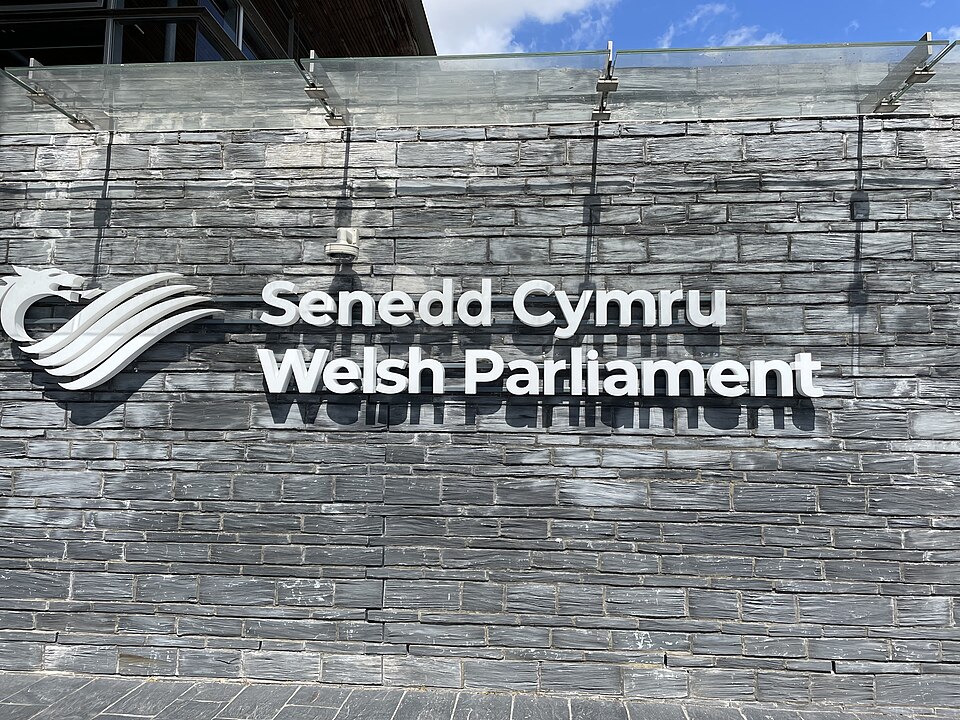
Rhun ap Iorwerth, the broadcaster-turned-politician currently positioned to become Wales’ first minister, stood on the Senedd steps last week and delivered what his team is calling a visionary address on the nation’s future. The audience consisted of approximately zero people who were not on the payroll or contractually obligated to be there.
This is the political equivalent of recording a TED Talk in your bathroom and citing the shower tiles as your demographic. Ap Iorwerth spoke with the kind of gravitas usually reserved for addresses that people actually attend. His words about Wales’ future echoed across the steps with all the resonance of a man shouting into a well he built himself.
The move came as Plaid Cymru positioned itself on the brink of power, with Ap Iorwerth’s party potentially kingmaking in Welsh politics. This is where the calculation gets interesting: you can either give a speech to actual voters, journalists, and constituents who might ask difficult questions, or you can stand outside the legislature, speak to the architectural features of government buildings, and control exactly which three-second clip gets released to the press. One of these options allows you to claim mandate without the inconvenience of evidence.
Why deliver a major policy address to an empty plaza when you could deliver it to a camera crew and let the algorithm do the distribution? Because democracy still requires the appearance of democratic process, even when the actual democratic participation has been optimized away. The speech happened. It was delivered. The fact that it was delivered to pigeons and the echo of institutional power does not technically disqualify it from being a speech about the future of democratic governance.
Meanwhile, north of the border, John Swinney’s SNP just won their fifth consecutive Scottish election victory. That’s the kind of dominance that usually comes with either a cult of personality or the opposition being so comprehensively useless that winning becomes inevitable. Swinney will return as first minister, which is what happens when you’re the only party that shows up consistently and the other lot keep eating themselves on live television.
The pattern is clear: when you’re close to power, the rules of engagement change. You don’t need a crowd. You don’t need questions. You need a steps, a camera, and the confidence to call silence consent. Ap Iorwerth’s empty-plaza speech is the political equivalent of a startup founder presenting quarterly results to an empty Zoom call and claiming the lack of attendees proves everyone’s too busy celebrating the success.
The broadcaster in him understands production value. The politician in him understands that the actual audience — the voters, the media, the people who will decide whether he gets the job — will only ever see the edited version. The Senedd steps were just a location shoot. The real speech happens in the algorithm, in the carefully cropped video, in the press release that will describe it as a major address without mentioning that the only attendees were the ones holding cameras.
Wales’ future, apparently, is being decided by a man giving speeches to empty squares. Which is either the most honest thing Welsh politics has done in years, or the most absurd.