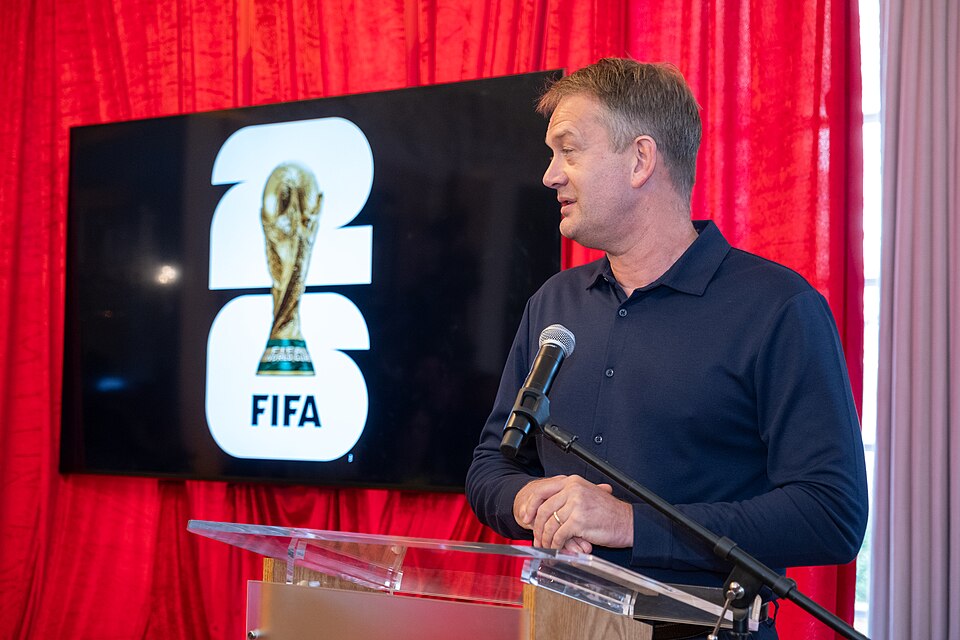
Hotel owners across America’s World Cup host cities have discovered something remarkable: empty rooms are actually a feature, not a bug. A recent industry survey found that hoteliers now view the tournament as a “non-event”—a term that, in the language of modern business, means “we spent millions preparing for something that is not happening.”
This is not a problem. This is a lifestyle choice.
Consider the elegance of the minimalist hotel room. One bed. Silence. The absence of a screaming soccer fan at 2 a.m. singing about his country’s defense strategy. Hotel owners have accidentally stumbled upon what luxury wellness retreats charge $400 a night to deliver: emptiness. Vacancy, it turns out, is just aggressive minimalism with better margins.
The irony is delicious. For years, hotel chains in host cities invested heavily in the assumption that World Cup spectators would flood their lobbies. They hired staff. They upgraded mattresses. They printed new brochures with soccer balls on them. They did all the things you do when you believe demand will exist.
Demand did not exist.
But here is where the real genius emerges: nobody is panicking. Instead, hoteliers have reframed the entire situation. Low bookings are not disappointing—they are aspirational. They are proof that the hotel industry has evolved beyond the crude metric of “people staying in rooms.” That is so 2015.
The larger economy has been teaching this lesson for a while now. When earnings disappoint, call it “strategic recalibration.” When growth slows, it is “sustainable expansion.” When your core business does not work, you are “exploring adjacent opportunities.” Hotel owners are simply applying the same vocabulary. Why acknowledge that nobody showed up when you can celebrate that nobody had to wait for the elevator?
The World Cup itself—one of the largest sporting events on the planet—has become what economists call a “demand miscalculation,” which is a polite way of saying “we got this completely wrong.” But American hotels have learned from the broader playbook: when reality contradicts your projections, the solution is not to admit error. The solution is to insist that the error was actually the plan all along.
This is not pessimism. This is rebranding.
Some might observe that hotel owners gambled on foot traffic and lost. Some might note that empty rooms represent sunk costs that will never be recovered. Some might point out that the entire premise—that international soccer fans would overwhelm American hospitality infrastructure—was always optimistic to the point of absurdity.
But those people are not thinking creatively.
Instead, imagine the narrative: “We have successfully executed a counter-programming strategy. While competitors chased the World Cup mirage, we invested in operational excellence and staffing flexibility. Our low occupancy rate is a testament to our discipline.” The hotel owner says this while staring at a spreadsheet that looks like a ski slope in summer.
Meanwhile, the economy at large is having the same conversation with itself. Stock valuations are soaring despite slowing growth because the market is pricing in future optimism. Unemployment is low but wage growth is modest because productivity gains are “coming.” Inflation is cooling but prices are not because, well, that is just how the world works now.
Everyone is embracing the minimalist approach: fewer customers, fewer earnings, fewer reasons for things to work—but maximum confidence that this is exactly what was supposed to happen.
The World Cup hotel situation is not a failure of forecasting. It is a triumph of narrative. And in an economy where the gap between what is promised and what is delivered has become so wide that it has its own zip code, that is actually the most honest thing anyone has said all year.