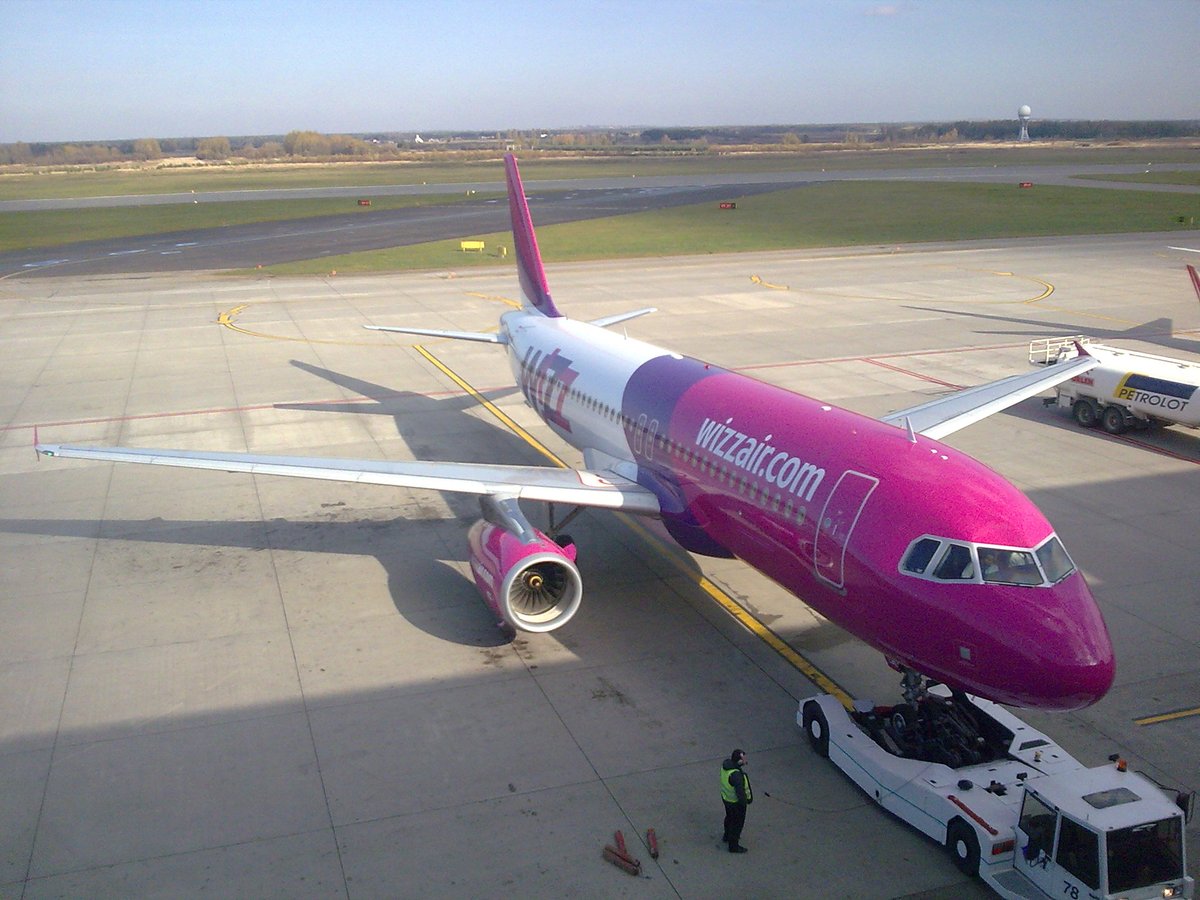
Yvonne Moynihan, CEO of budget airline Wizz Air, has solved the perennial problem of airport delays with a solution so elegant it makes you wonder why nobody thought of it before: just don’t go home.
Or more precisely, start your vacation three years before you actually need to leave. Moynihan’s advice to UK holidaymakers—arrive three hours early for domestic flights, longer for international ones—is not a suggestion for better time management. It is a tacit admission that the modern airport has become a place where normal temporal rules no longer apply.
The CEO’s additional guidance that passengers pack portable chargers and water bottles for the ordeal of reaching the gate reveals something important about contemporary air travel: we have collectively accepted that getting to your flight is now itself a destination. A grueling one. One that requires provisions.
This is not a minor inconvenience we are discussing. This is the airline industry’s most senior figures essentially saying: the experience of trying to fly has become so arduous that you should budget an entire extra vacation just to survive the queuing infrastructure required to access your actual vacation. The absurdity has achieved a kind of perfect symmetry.
What makes this remarkable is not that airports are slow—we knew that. It is that a major airline executive has abandoned the pretense that this is fixable through normal means. She is not promising faster check-in. She is not pledging to hire more staff. She is recommending that you mentally prepare yourself as though you are about to cross the Sahara, except the Sahara is Terminal 2 and the oasis is a gate that will probably be changed twice while you are walking toward it.
The portable charger recommendation is particularly telling. Your phone battery will die before you reach your flight. This is not speculation. This is now considered inevitable enough that airline leadership treats it as a packing essential, like shoes or a passport. Bring water too, because you will be standing so long that dehydration becomes a legitimate concern. We have gamified survival.
There is a perverse logic here worth examining. Budget airlines have built their entire business model on razor-thin margins—they make money by flying planes constantly and charging almost nothing per seat. The airports, however, are not budget operations. They are owned by local authorities or private companies with zero incentive to move passengers quickly. More people in the terminal means more people buying £8 sandwiches and £12 bottles of water. Congestion is not a bug; it is a feature.
So when Moynihan advises arriving three hours early, she is not really solving a problem. She is acknowledging that the system works exactly as designed—just not for passengers. It works beautifully for the people selling overpriced snacks and phone chargers to increasingly desperate travelers.
The truly dark comedy is that her advice will probably help. If everyone took it, if we all collectively agreed to treat the airport as a three-hour endurance test rather than a 90-minute transition, the lines might actually move slightly faster because expectations would align with reality. We would stop showing up 90 minutes before flights expecting to actually make them. We would arrive with the resigned acceptance of someone entering a medieval siege.
This is what happens when an industry becomes so dysfunctional that the solution is not to fix the dysfunction but to expand your buffer for it. It is the airport equivalent of a software company shipping buggy code and recommending that users restart their computer every 20 minutes. It works. It is insane. But it works.
For travelers, the math is simple: Moynihan is right, and that is depressing. If you are flying Wizz Air out of the UK, arriving three hours early is no longer paranoia. It is the baseline assumption you should operate under. Bring your charger. Bring your water. Bring a book. Bring your dignity—you will need all of it.
The real innovation would be an airline that moved people through terminals efficiently. But that would require investment, coordination, and prioritizing passenger experience over terminal concession revenue. So instead we get this: a CEO’s frank admission that the airport experience has become so degraded that the solution is to arrive early enough to watch the sun rise over the duty-free shop.
Welcome to modern travel. Your flight departs in 180 minutes. You should have left home 72 hours ago.