Phillips Distilling just proved that when governments decide to wage economic war, sometimes the best strategy is to simply relocate your entire operation across an imaginary line on a map and call it a day.
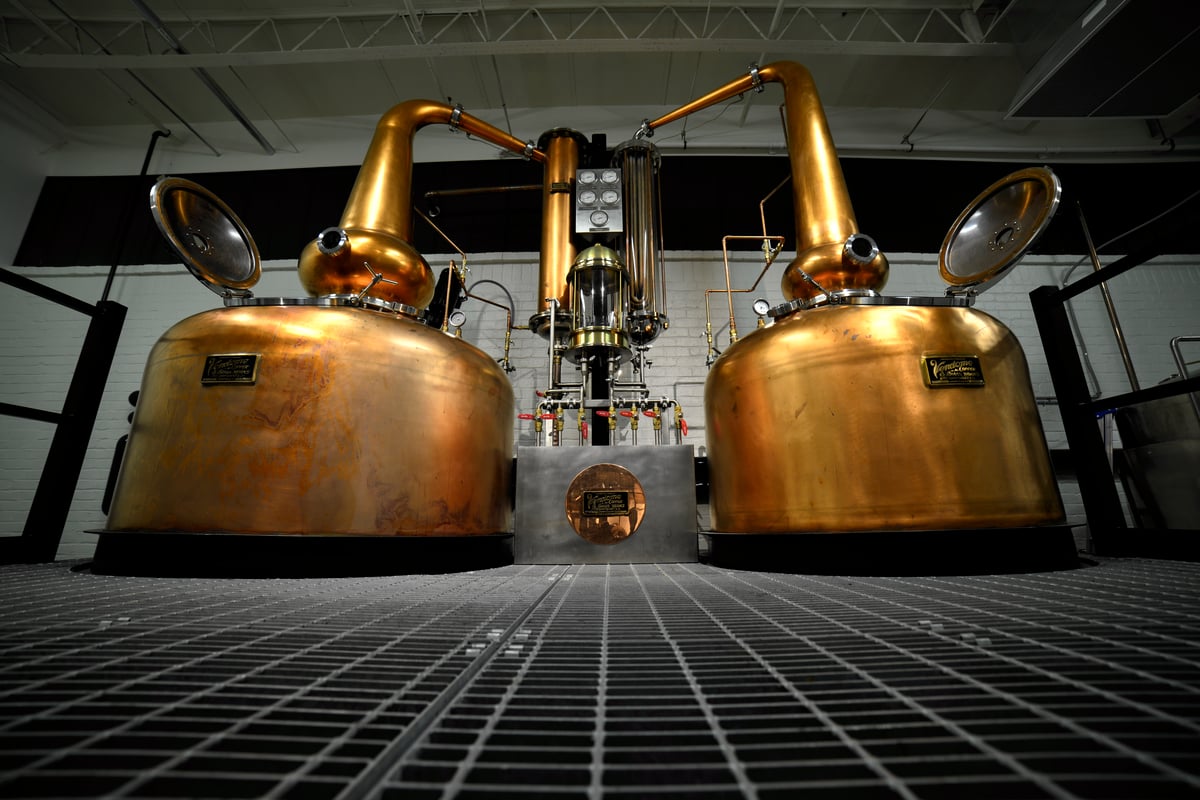
The Minnesota-based spirits maker watched 70 percent of its Canadian business evaporate after Canadian provinces—in what can only be described as a fit of protectionist pique—banned the sale of US liquor. This was the kind of trade escalation that makes headlines in economics textbooks: two countries, one beloved commodity, zero chill. But instead of lobbying Congress or writing angry letters to trade officials, Phillips did what any reasonable business would do when faced with a tariff wall. It built a distillery on the other side of it.
Now Phillips sells its products in Canada again, which is either the most pragmatic move in modern commerce or the most elaborate “fine, I’ll do it myself” moment in the history of spirits. Probably both.
Here is what makes this genuinely funny: the company did not invent a new product or revolutionize its supply chain. It simply moved production north and, from a Canadian perspective, now sells “Canadian” whiskey to Canadians. The provinces got what they wanted—Canadian-made liquor—and Phillips got what it needed: market access. Everyone won by pretending the previous arrangement never existed. It is the business equivalent of two people having a fight, walking to opposite ends of a room, and then one of them building a new room in the middle.
The real absurdity lies in what this reveals about modern trade policy. Governments impose tariffs and bans supposedly to protect domestic industries and workers. But what actually happens is that multinational companies with enough capital simply relocate production and call it innovation. The tariff wall that was meant to keep American liquor out of Canada did exactly that—it kept American liquor out of America and relocated it to Canada instead. The jobs moved. The tax base moved. The only thing that did not move was the actual product, which still ends up in the same bars and liquor stores serving the same customers.
This is not unique to Phillips. It is the standard playbook for any company large enough to afford a spreadsheet. Impose a trade barrier, and watch as manufacturing hops borders faster than a migrating bird. The difference here is that Phillips did it with whiskey, which gives the whole thing a kind of poetic inevitability. Of course liquor would refuse to respect trade boundaries. It is literally a product designed to blur judgment.
What makes this story work as a mirror held up to modern absurdity is that nobody actually loses here—except the original policy goal. Canadian provinces wanted to protect Canadian liquor makers. They succeeded by accident: Phillips is now a Canadian liquor maker. American workers lost jobs in Minnesota. Canadian workers gained jobs in Canada. Trade officials on both sides can point to the outcome and claim victory. The only entity that actually got hurt was the coherence of the entire trade policy framework, which is now operating on the understanding that borders are more like suggestions than actual impediments to commerce.
The liquor industry has always been good at this kind of thing. Whiskey, rum, gin—these are products that have spent centuries ignoring political boundaries. They smuggled themselves across oceans during Prohibition. They navigated colonial trade routes. They survived empires. A provincial ban in 2026 is not going to stop them any more than it stopped their ancestors. Phillips simply found the path of least resistance, which happened to point north.
So what does this mean for anyone actually paying attention to trade policy? It means that tariffs and bans work great if your goal is to move jobs around and create the appearance of protectionism without actually protecting anything. They work less well if your goal is to actually shield domestic industry from competition. Once a company is large enough and liquid enough (pun intended), it can simply relocate production and laugh at your policy.
Phillips Distilling did not defeat trade protectionism. It did not argue its way past provincial bans or lobby for exemptions. It simply acknowledged that borders exist, moved across one, and came back to sell you the same product under slightly different paperwork. In doing so, it revealed the fundamental truth about modern trade wars: they are not actually about protecting anything. They are about moving things around and pretending you won.
Meanwhile, somewhere in a Minnesota warehouse, there is probably a bottle of Phillips whiskey that was supposed to be banned, wondering how it ended up as a Canadian export. If it could talk, it would probably just laugh.