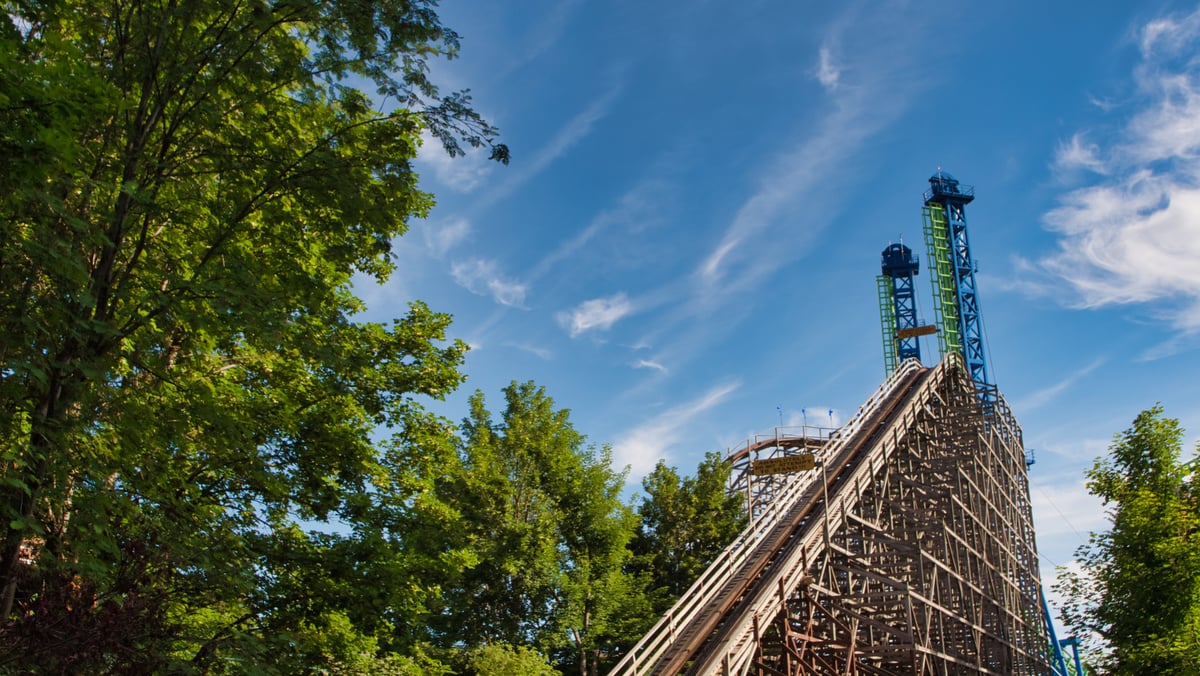
In what can only be described as a masterclass in priorities, the UK government has announced a £1.3 billion commitment to Universal UK, a sprawling theme park planned for Bedfordshire. While the NHS waits for funding that never quite arrives and local councils decide which libraries to close this quarter, the government has decided that what Britain really needs right now is a place to pay £80 for a hamburger while standing in a queue for three hours.
Let’s be clear about what is happening here. This is not a private company betting its own money on entertainment. This is public money—the kind that could theoretically fix a pothole, staff a school, or keep a care home open—being redirected toward a facility where the main economic activity will be separating families from their savings while they wait for a ride that lasts ninety seconds.
The government’s logic, as near as anyone can tell, is that theme parks create jobs and boost regional development. This is technically true in the way that hiring someone to dig a hole and another person to fill it creates employment. Yes, there will be construction work. Yes, there will be operational roles. But the opportunity cost—what else that money could have done—has simply been filed under “not our problem right now.”
What makes this particularly amusing is the timing. We are in a period where the government regularly insists it has no money for various public services. Teachers are leaving the profession because wages have not kept pace with inflation. The social care system is being held together with duct tape and the goodwill of exhausted workers. Public transport in most regions outside London is either nonexistent or costs more than a small car payment. But sure, let’s build a theme park.
The argument, naturally, will be framed around “economic stimulus” and “visitor numbers” and “international reputation.” These are the words you use when you want to sound like you have thought about something without actually defending why you chose to spend money on it instead of something else. Every pound spent on Universal UK is a pound not spent on something that might actually improve the lives of people who are not on holiday.
There is also something darkly funny about the name itself. “Universal UK” suggests a park for everyone, a democratic entertainment space. In reality, it will be accessible to families who can afford the ticket prices, the travel, the accommodation, and the eye-watering food costs. It will be universal in the way that private healthcare is universal—technically available to everyone, practically available to people with disposable income.
The government will point to job creation figures and tax revenue projections, and these numbers will probably be real in the way that all projections are real: they will exist on paper, and reality will do something else entirely. Theme parks have a habit of underperforming forecasts, especially when the surrounding economy is not exactly booming and families are cutting discretionary spending.
None of this is to say that theme parks are inherently bad or that entertainment has no value. People deserve joy. But there is a difference between a society that produces joy and a government that spends public money on a single entertainment venue while claiming poverty when it comes to everything else.
The truly absurd part is that this will probably work politically. The park will be built. There will be a ribbon-cutting ceremony with politicians smiling in front of roller coasters. The media will cover the opening day with breathless enthusiasm. And in the background, somewhere in a council office, someone will be calculating which swimming pool to close to balance the budget.
This is not economics. This is theatre—and not even the fun kind that happens at a theme park.