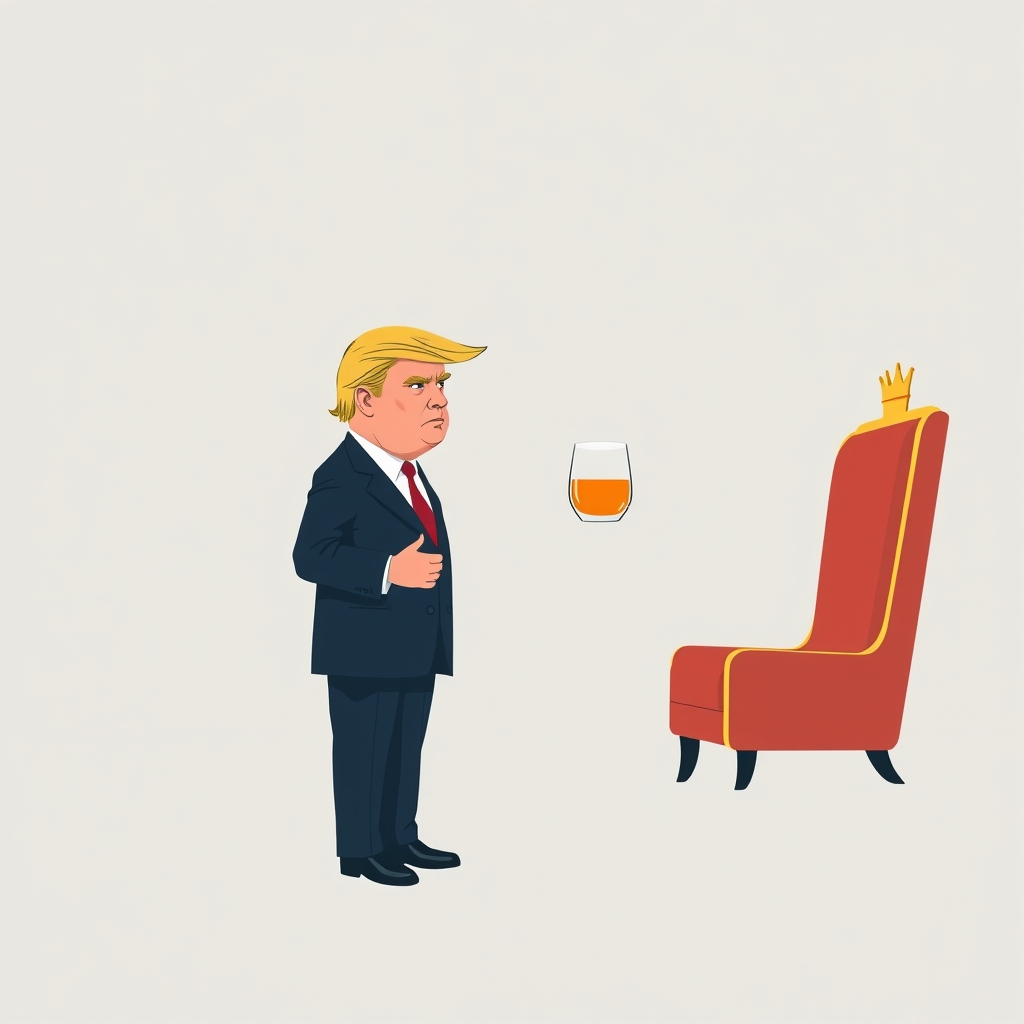
In a stunning display of diplomatic prioritization, the US president announced he would lift tariffs on Scottish whisky — a move that required a royal visit to unlock, suggesting that international trade policy is now apparently stored behind a velvet rope at Mar-a-Lago.
The restrictions, which had made Scottish single malts and Kentucky bourbon a logistical nightmare to trade across the Atlantic, will be removed. This is good news for anyone who has spent the last few years paying an effective “I am angry at you” tax every time they wanted a decent dram.
What makes this particular trade resolution noteworthy is not that it happened — trade wars eventually end when someone decides they are tired of them — but the mechanism by which it happened. A royal visit apparently carries more weight than, say, years of economic data showing that tariffs hurt both sides, or the fact that Scottish distillers and Kentucky bourbon makers have been quietly going broke. But a king shows up, shakes hands, and suddenly the entire apparatus of trade policy moves.
This is not actually a criticism. It is just an observation that we have built a global economic system where the most efficient path to removing self-inflicted trade wounds is still “wait for a monarch to visit.” We have spreadsheets. We have economists. We have entire departments dedicated to this. And yet here we are.
For people who actually drink whisky, the math is straightforward: tariffs made imports more expensive. Removing them should make them cheaper, or at least stop making them more expensive than they would be otherwise. The supply chain unclogs. Prices normalize. Life goes on.
For Kentucky and Scotland, the upside is that they can now actually work together on something both regions are genuinely good at, without the federal government charging admission. Bourbon makers have been watching their export market get smaller. Scottish distillers have been watching their margins compress. Neither side wanted the tariffs; they were collateral damage in a broader trade argument that had nothing to do with whisky.
The timing is also worth noting. Trade disputes do not usually resolve because someone finally thought to invite the other side’s royalty over. They resolve when the economic pain becomes big enough that someone in power decides the cost of the fight exceeds the benefit. That this particular resolution required a state visit suggests either that the pain threshold was very high, or that the decision-maker simply responds better to pageantry than to policy briefs. Possibly both.
None of this changes the fundamental absurdity that tariffs — a tax on imports designed to protect domestic producers — often end up hurting the domestic producers they are supposed to protect. Scottish whisky makers did not ask for this. Kentucky bourbon makers did not ask for this. But they paid for it anyway, because trade policy is often made by people thinking about something else entirely.
The removal of these tariffs is not a victory for free trade, though it looks like one on paper. It is a victory for the specific combination of economic pressure and ceremonial leverage that finally made someone pay attention. The system worked, but only after exhausting every other option first.
For anyone tracking this from the outside, the real lesson is simpler: if you want trade policy changed, apparently you need a king. Or at least someone who thinks a king’s opinion matters more than three years of tariff damage. In the meantime, Scottish and Kentucky producers can finally get back to what they do best — making whisky — without the government taking a cut just for letting them do it.
Whisky tastes better when nobody is angry about it. Sometimes it takes a crown to remember that.