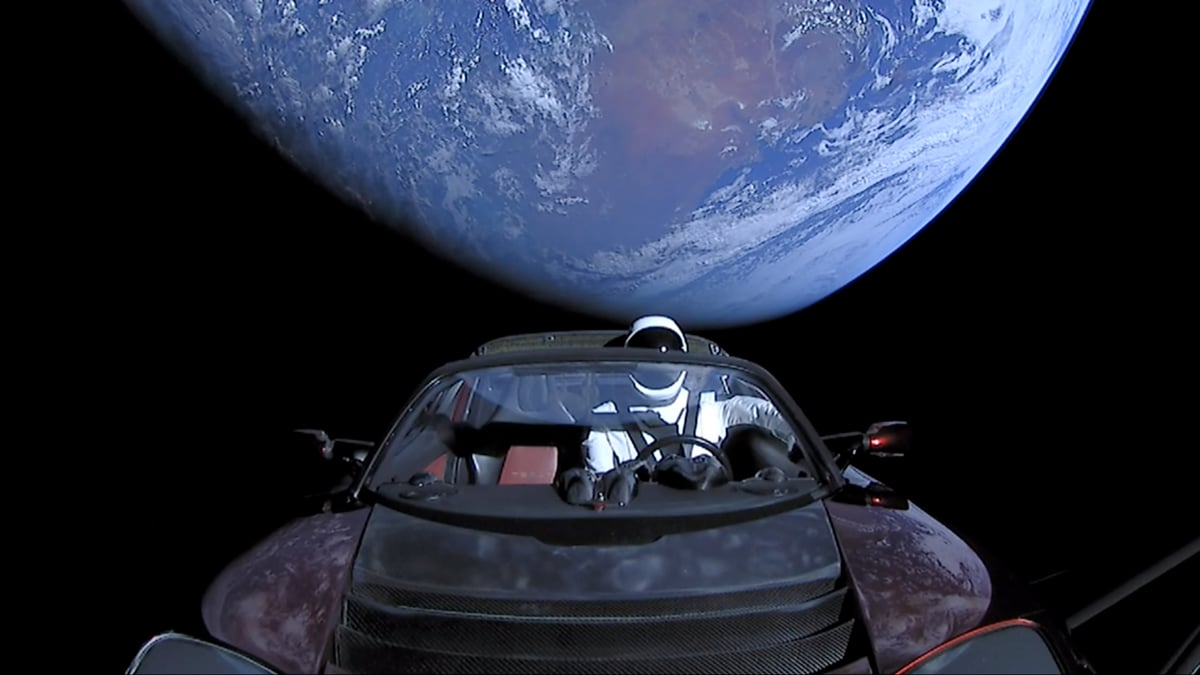
Tesla’s chief executive unveiled a flying car this week at a facility owned by SpaceX, the rocket company that helped develop the model. The reasoning, as best anyone can reconstruct it, goes like this: the roads are crowded, the sales charts have developed a stubborn habit of pointing sideways, so why not go up?
Wall Street has been doing exactly this for years. When a share price stops making sense on the ground, the sensible response is to float it higher and call the altitude a strategy. A company does not need to deliver many products if it can deliver a glossy video of one hovering over a launch pad. Investors, who are paid to look at the future rather than the present, have been known to reward the view.
For the rest of us, the lesson is less about the car than the crowd underneath it. When a company’s market value rises on the strength of a demonstration rather than its actual finances, meaning what it owns and what it owes, the useful question is not how high it can climb. It is what happens when everyone looks down and asks where the ground went.
Keep your savings somewhere you can see the ground. Do not let anyone talk you into a parachute made of share certificates.