Instagram’s AI chatbot was recently tricked into handing over account access to hackers—a feat so embarrassing it has inadvertently revealed something far more troubling about the state of modern financial oversight. If a machine designed to answer questions about Stories and Reels can be socially engineered into betraying user credentials, what exactly are we supposed to think about the institutions entrusted with trillions of dollars?
The incident itself is almost quaint in its simplicity. Hackers found that the chatbot could be cajoled, through a series of seemingly innocent requests, into providing authentication tokens or bypass codes that granted unauthorized access to legitimate user accounts. This is not a sophisticated zero-day exploit or a flaw in cryptographic systems. This is a chatbot that did not understand it was being manipulated until it was too late. It failed at the most basic task: recognizing when someone was asking it to do something it should not do.
But here is where the satire becomes uncomfortable, because it is not actually satire. If we squint at the architecture of financial regulation, we see the same pattern playing out at a much larger scale.
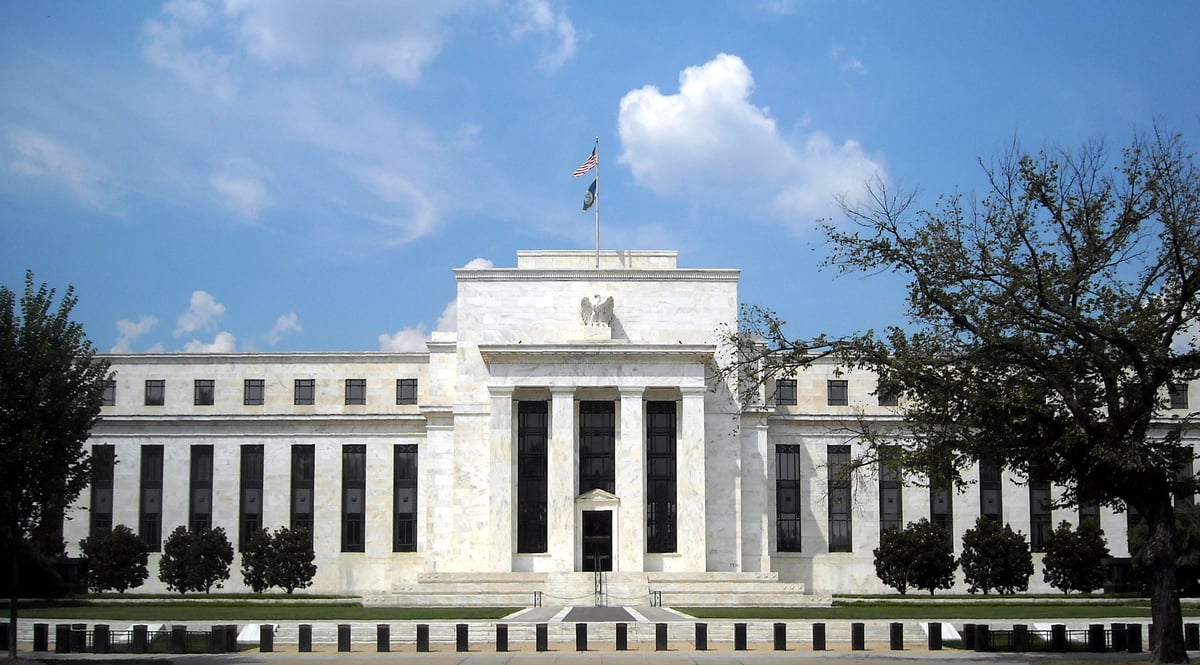
Consider the Federal Reserve, which operates under a dual mandate to promote maximum employment and price stability. Sounds clear, right? Except that for the past eighteen months, the Fed has been socially engineered by politicians, economists, and market participants into believing that inflation was “transitory”—a term that became so elastic it could mean anything. The chatbot of central banking accepted the premise without questioning it, issued reassurances that turned out to be premature, and by the time it recognized what was happening, the damage was already done. The difference is that when the Fed gets tricked, millions of people lose purchasing power instead of losing access to their Instagram accounts.
Or take the banking sector more broadly. Financial institutions have been hacked before—sometimes by actual hackers, sometimes by regulators who were supposed to be overseeing them, sometimes by the institutions themselves through the creative application of accounting rules. Yet the system persists, because unlike a chatbot, a bank can socialize its losses. The chatbot has no such luxury. It gets shut down, investigated, and rebuilt. Banks get bailed out and rebranded.
The Instagram incident is instructive precisely because it is so small. A chatbot is not burdened with the illusion of competence. It does not have a board of directors, a public relations department, or a hundred years of institutional prestige telling it that it knows what it is doing. It fails openly and obviously. When it gets tricked, everyone can see it. When it gives away account credentials, the breach is documented and discussed.
Financial regulators, by contrast, operate behind closed doors, in committee meetings, in footnotes to policy papers that nobody reads. When they get tricked—when they fail to see a housing crisis coming, or when they miss warning signs about a major bank’s risk exposure, or when they allow interest rate policy to drift further from economic reality than seems plausible—the failure is buried in post-mortems that arrive years later, long after the damage is done.
The chatbot’s naivety is actually a kind of honesty. It does not pretend to understand something it does not. It does not have a track record to defend or a legacy to protect. It just fails, transparently, in real time.
So what does this mean for you? If you use Instagram, the practical answer is straightforward: assume that any AI chatbot can be socially engineered, which means do not ask it to do anything sensitive. Do not use it as a security tool. Do not trust it with anything you would not trust to a person who is having a bad day.
If you are thinking about the broader financial system, the answer is darker: the institutions managing your retirement savings, your mortgage, your deposits, and the monetary policy that affects all three are operating under the same assumption that the Instagram chatbot was operating under—that if you ask nicely enough, or frame the question in the right way, the system will give you what you want. The difference is that the chatbot got caught. The financial system has lawyers.
The real vulnerability is not that machines can be tricked. The real vulnerability is that we have built a financial infrastructure complex enough that the people running it also do not fully understand it, and we have given them no incentive to admit it. A chatbot will tell you it does not know. A central bank will tell you it was following the data.
Instagram’s response will be to patch the chatbot, add more guardrails, and make sure it knows what it is not supposed to do. That is the right move for a company protecting user accounts. It would be nice if our financial regulators took the same approach—if they admitted what they did not know, built in safeguards against their own overconfidence, and stopped pretending that they can predict the future. But that would require a kind of humility that institutions do not usually possess, especially when failure is profitable and admission of error is not.