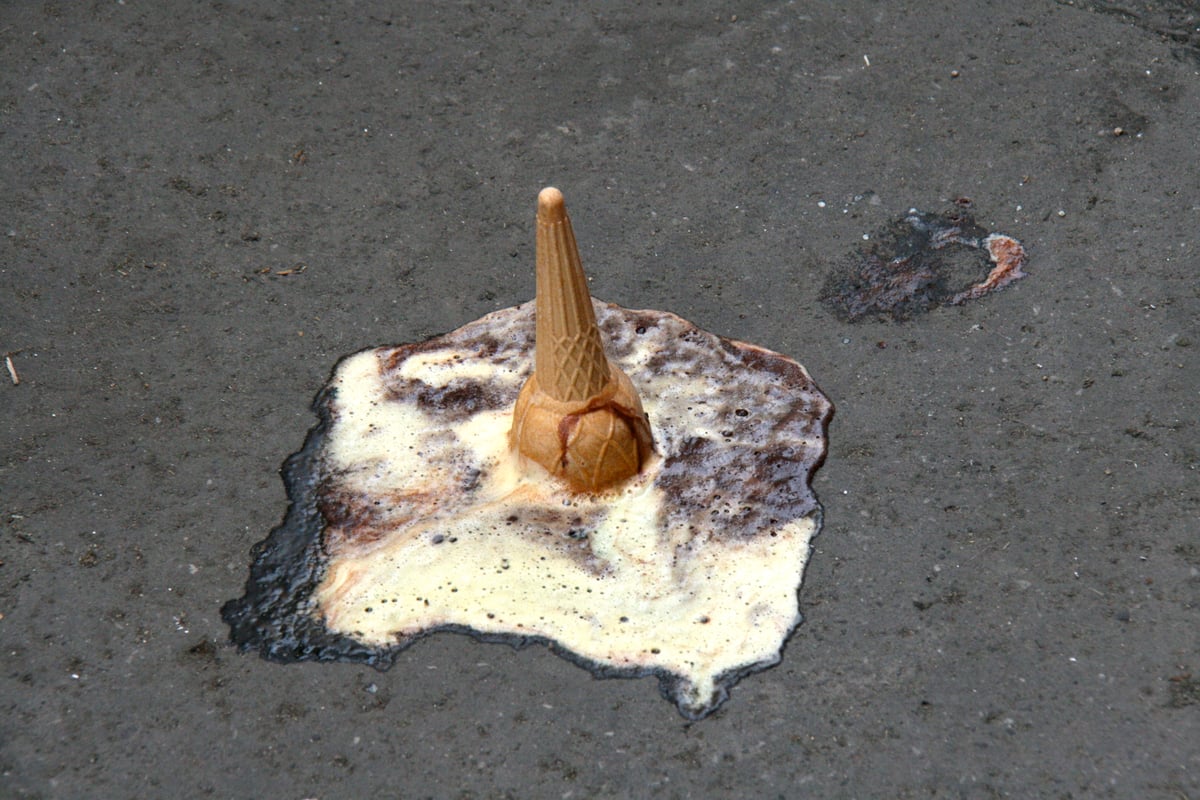
We need to talk about what is actually happening to the American economy, and it involves frozen dairy products at an alarming rate of consumption.
Temperatures are rising. Ice cream prices are rising faster. And somewhere in a financial services office, a analyst is probably drawing a line graph connecting the two and wondering if this is the leading indicator that finally breaks the system.
Let’s be clear about what is going on here: when the thermometer goes up, people buy more ice cream. This is not a market insight. This is how human beings work. We are warm. We want cold sugar. We buy it. The vendor, knowing that demand has spiked and that ice cream melts faster in heat (reducing shelf life and increasing waste), raises the price. This is called supply and demand. It has been happening since before cryptocurrency was invented to solve problems that did not exist.
But somewhere between the price of a single-scoop cone hitting $7.50 and the cable news segment about “shrinkflation” (the practice of selling you less product for the same price, which is just inflation with better marketing), we have collectively decided that ice cream prices are now a legitimate economic indicator worthy of national concern.
They are not. And yet here we are.
The absurdity deepens when you consider what we are actually measuring. Ice cream represents roughly 0.04% of the average American household’s annual spending. For context, you spend more on electricity. You spend more on internet service. You spend vastly more on actual food that keeps you alive. But ice cream — that frozen confection you buy when you are not thinking about budgets — is somehow the canary in the coal mine of economic collapse.
This is what happens when inflation becomes a cultural obsession rather than a technical problem. We stop looking at what actually matters and start inventing narratives around whatever price went up recently that we personally noticed. Last year it was eggs. The year before it was gas. Now it is ice cream. Next summer it will be something else, and we will all act shocked that a seasonal product with volatile demand has volatile pricing.
The real story — if there is one — is that consumers are still buying ice cream at higher prices, which means either they have the money to absorb the increase or they are choosing to spend their discretionary dollars on frozen treats instead of something else. Neither of those things suggests an imminent economic meltdown. If anything, it suggests that people are still willing to pay for small luxuries, which is generally a sign that they do not think the economy is actually collapsing.
But that does not make for a good headline. “People Still Have Enough Money to Buy Premium Ice Cream at Elevated Prices” does not generate clicks. It does not justify the segment on the morning show. It does not give us the satisfying sense of shared anxiety that we have collectively decided is the correct emotional response to living in the modern world.
So we have created a feedback loop: media outlets report on ice cream prices. People notice their ice cream costs more. People become concerned. People share the article. Media outlets report that people are concerned about ice cream prices. Economists are asked to comment. They do. A new data point enters the national conversation about whether we are all about to become poor.
Meanwhile, the actual price of ice cream is doing what seasonal food prices have always done: going up when demand spikes and supply is constrained. This is not a harbinger of systemic economic failure. This is just summer.
If you want to know whether the economy is actually breaking, look at employment (still relatively strong), wage growth relative to inflation (mixed but not catastrophic), and whether credit card debt is exploding because people cannot afford basics (it is rising, but not at crisis levels). Do not look at ice cream.
Ice cream prices are not a signal. They are just a price. And the fact that we have decided they are a signal is the real story — not about the economy, but about how we have become so primed for disaster that we see collapse in every price increase, no matter how predictable or minor.
So yes, your sorbet is more expensive this summer. That is not a cry for help. That is just capitalism working exactly as designed: when people want something and supply is tight, the price goes up. Buy it or do not. Either way, the economy will probably be fine.
But the cable news segment will definitely be excellent.