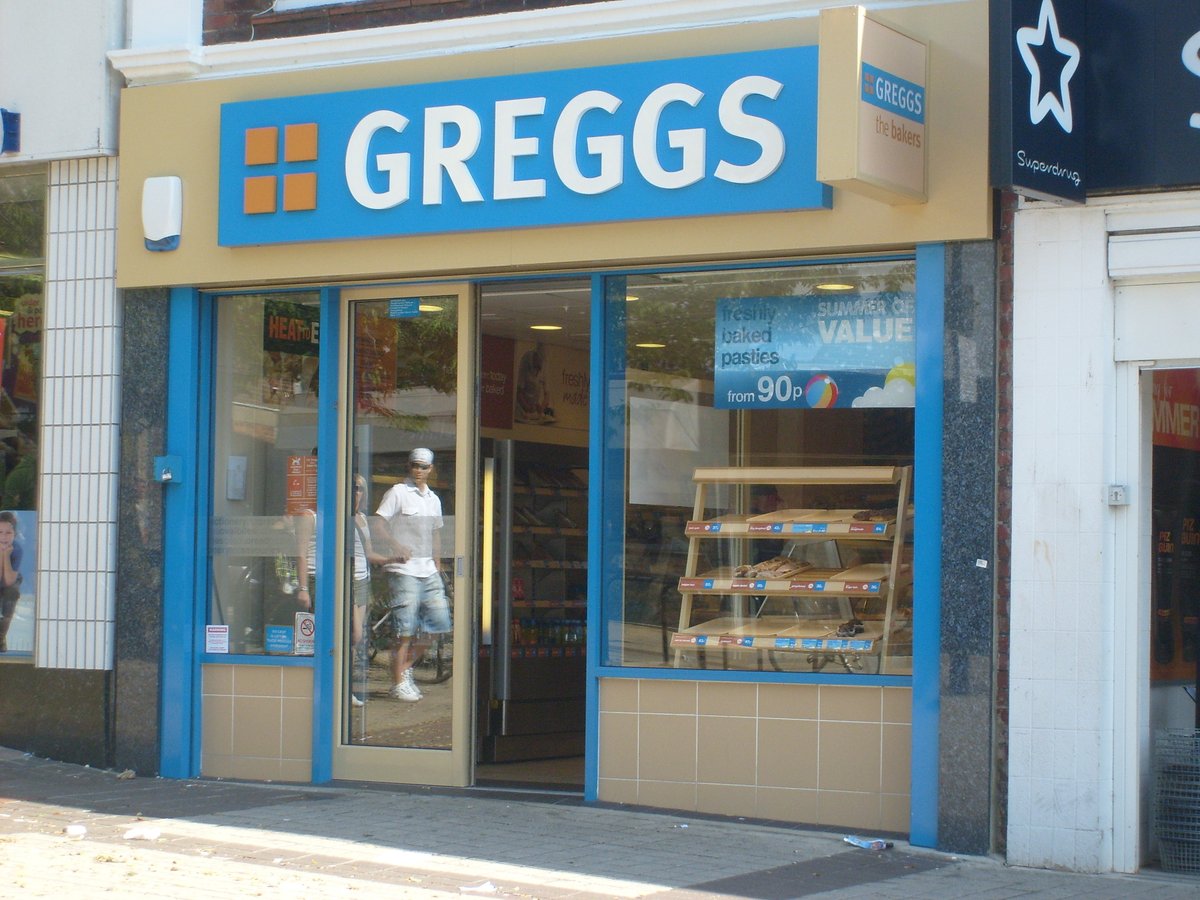
Greggs announced this week that it will close four factories and eliminate 740 jobs. The company’s official reason? They need to “keep evolving alongside changing customer expectations.” Translation: a focus group somewhere decided that humans are inefficient at baking sausage rolls.
Let us be clear about what is actually happening here. Greggs is not closing factories because demand fell off a cliff. It is closing them because the company has decided that the future of mass-produced pastry belongs to machines that can be programmed to understand what customers want before customers themselves know it.
The absurdity writes itself. A bakery chain that has thrived for decades by employing actual people who understand the relationship between heat, dough, and timing is now betting that a robot trained on customer survey data will somehow bake with more “authenticity.” The irony is so thick you could spread it on toast.
What makes this genuinely funny—in the way that makes you uncomfortable—is the corporate language doing the heavy lifting. “Evolving alongside customer expectations” sounds like progress. It sounds like innovation. What it actually means is: we found a way to make the same product with fewer humans, and we are calling it transformation.
The 740 workers losing their jobs are not casualties of market forces. They are casualties of a business decision wrapped in the language of inevitability. And somewhere in a Greggs boardroom, someone is probably presenting slides about “human-machine synergy” while the machines are literally replacing the humans.
At least the robots will never call in sick.