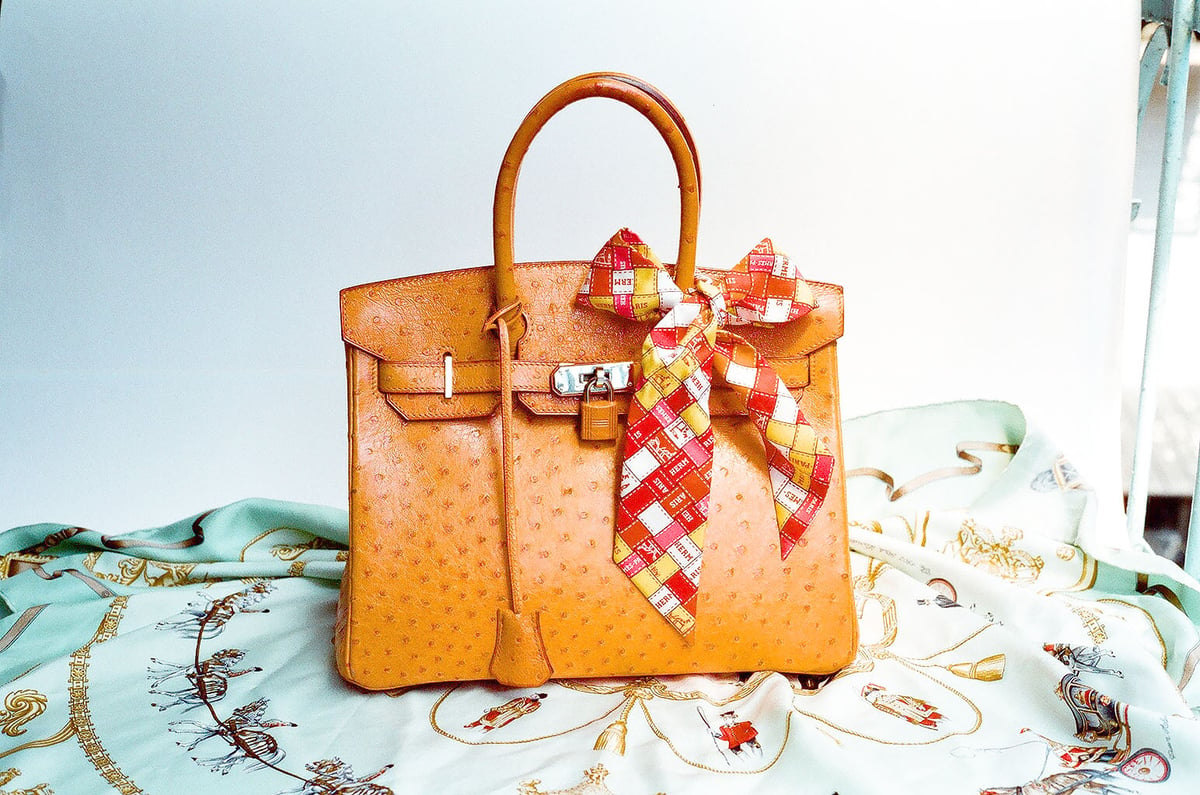
A jailed Vietnamese tycoon’s collection of luxury handbags just sold for over half a million dollars at a government auction in Ho Chi Minh City. Let that sink in for a moment. While the man sits in a cell, his Birkins are out there living their best life, appreciating faster than most people’s retirement accounts.
This is not just a story about expensive purses. This is a story about what we actually value as a society, and it is deeply, absurdly funny in a way that should make everyone uncomfortable.
The economics here are almost too on-the-nose to be real. A person commits financial crimes serious enough to land them in prison. The state seizes their assets. And then—plot twist—those assets turn out to be worth more than a year’s salary for most people, not because they are functionally superior to a twenty-dollar bag, but because a leather rectangle with the right stamp on it has become a store of value. A hedge against inflation. A better investment than index funds for people with enough money to not need index funds.
This is what happens when luxury goods become financial instruments. The Birkin is not purchased primarily to carry things anymore. It is purchased because Hermès limits supply, drives demand, and watches the secondary market do the heavy lifting of price appreciation. The bag is a financial asset that happens to be wearable. The wearer is almost incidental.
So here is the real irony: while this tycoon faces the consequences of whatever financial misconduct landed them in prison, their actual financial strategy—the one involving handbags—is working perfectly. The bags did not go to prison. The bags appreciated. The bags are now liquid. The bags are, in a very real sense, a better crime than whatever crime they committed, because buying luxury goods is legal and generates no jail time.
This is not a critique of handbags. Hermès makes excellent products. The craftspeople who make Birkins deserve their paychecks. But the fact that a government auction of confiscated luxury goods becomes a six-figure payday tells us something deeply strange about modern wealth. It tells us that we have created a system where the most reliable way to preserve and grow money is to buy things that do not depreciate because enough other wealthy people agree they will not depreciate.
Meanwhile, the person who owned these bags is in prison. The state seized them. And yet the story is not “justice served” or “assets recovered.” The story is “look at how much money those handbags are worth.” We are more interested in the monetary value of the confiscated property than in whether the punishment fits the crime or whether the victim of the original misconduct will ever see restitution.
There is also a beautiful irony in the mechanism itself. The government had to auction these bags to convert them back into cash. Because that is what luxury goods are now—they are not really consumer products. They are alternative assets. They require a specialist market to liquidate. A regular person cannot just walk into a store and sell their Birkin back to the manufacturer for a predictable price. It has to go to auction. It has to be verified. It has to be marketed to the right buyers. It is more complicated to sell than a house, and way more liquid than a Rembrandt.
This is the world we have built. A jailed tycoon’s handbag collection is a better store of value than actual currency. It is a better store of value than bonds. It is a better store of value than real estate in many markets. And it is perfectly legal, perfectly normal, and perfectly insane.
The handbags did not commit any crimes. They just sat in a closet, minding their business, becoming more valuable every year. They are the real success story here. They are the ones who beat the system. They are the ones who got away with it.
Meanwhile, somewhere in Ho Chi Minh City, someone paid half a million dollars for the privilege of carrying around a status symbol that used to belong to someone in prison. And everyone involved in this transaction—the auctioneer, the buyer, the government, the financial press—we all acted like this was completely normal. Like this is how the world should work. Like handbags are a reasonable substitute for accountability.
That is not a bug in the system. That is the feature. And the fact that we can see it so clearly now, in this one absurd story, is the only thing funny about it.