The first major holiday weekend since the EU’s new border system went fully live has delivered exactly what everyone predicted and nobody wanted: a masterclass in the art of standing still while slowly losing the will to live.
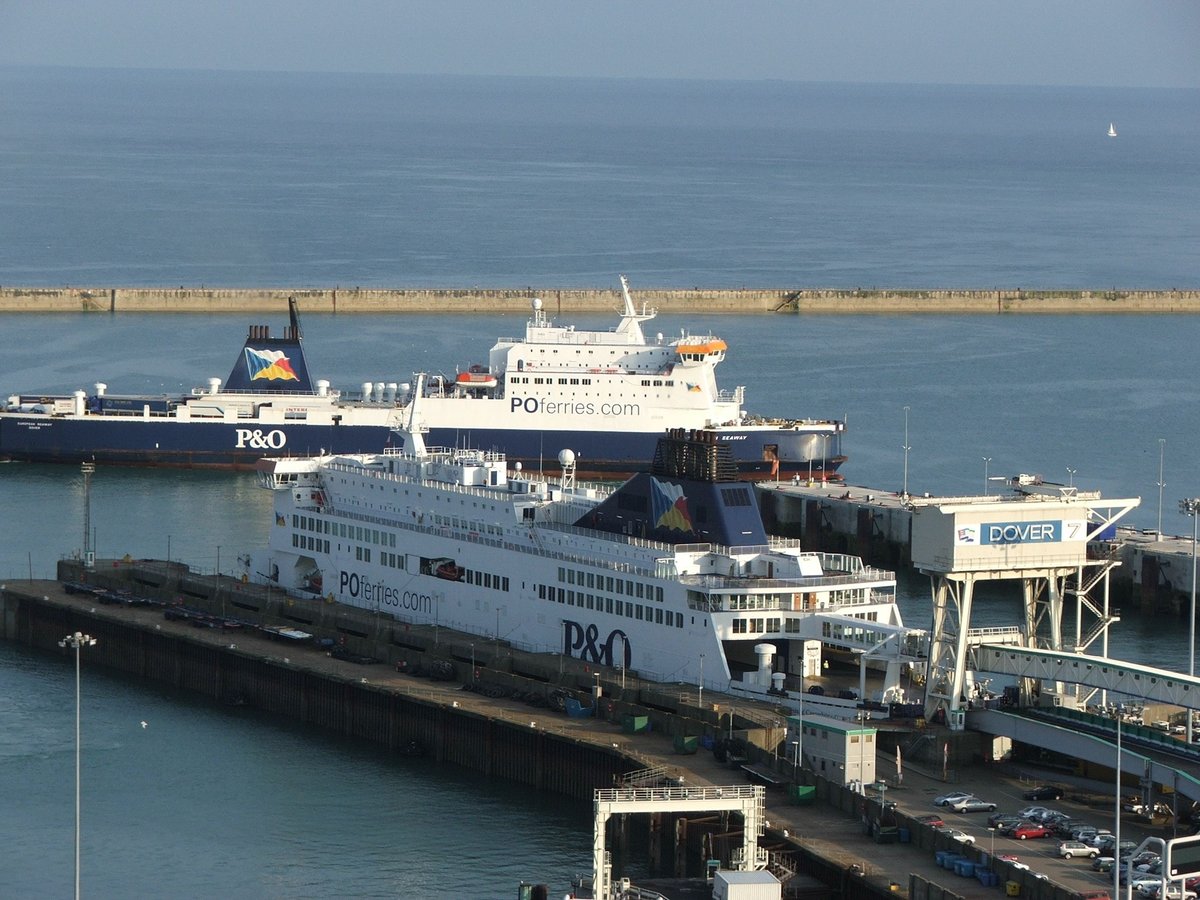
Dover, that charming English port town famous for its white cliffs and now apparently for its ability to absorb thousands of humans into a single, slow-moving organism, has become the unofficial testing ground for whether European bureaucracy can actually break people’s spirits faster than a budget airline can lose their luggage.
The new EU Entry/Exit System (EES) was supposed to make border crossing smoother. Instead, it has made Dover the world’s largest, most involuntary meditation retreat. Tourists who left their homes dreaming of Tuscan villas and Greek islands are now discovering that the real European experience is learning to appreciate the profound calm that comes from accepting you will not reach your destination today.
Here is what happened: The system requires biometric data collection—fingerprints, photos, the works—for every non-EU traveler. Sounds efficient on a spreadsheet. In practice, it means that a border checkpoint designed to process vehicles in minutes now processes them in hours. One traveler reported that they had time to read an entire book, learn conversational Spanish, and reconsider their life choices before moving forward by fifty meters.
The absurdity is not in the system itself. The absurdity is in the gap between what was promised and what arrived. Government officials assured everyone this would be seamless. Tech companies assured everyone their infrastructure could handle peak load. Reality, as always, showed up with a different opinion.
What makes this truly ridiculous is the timing. The EU did not implement this during a quiet Tuesday in February. They implemented it right before the school holidays, when every family in Northern Europe simultaneously decided that now was the time to drive to the Mediterranean. It is as if someone looked at a calendar, saw the busiest travel period of the year, and thought: perfect moment to introduce a completely new verification process.
The queues themselves have become a kind of performance art. Families sit in cars watching the clock. Children ask questions they already know the answers to. Parents contemplate whether Disneyland Paris might actually be closer than they thought. One queue reportedly stretched back eight miles—a distance that would take a healthy person two and a half hours to walk, which, given current border crossing times, might actually be faster than driving through.
The real kicker is that this is not a bug. This is the feature working exactly as designed. The system works. It checks people. It verifies their data. It just does these things at a speed that suggests it was optimized by someone who has never actually been to a port during summer holidays. Or, more charitably, by someone who believes that suffering builds character.
For the average traveler, here is what this means: if you are planning a European holiday in the next few months, budget an extra four to six hours for Dover alone. Bring entertainment. Bring patience. Bring realistic expectations about what “relaxing getaway” actually means now. It means relaxing in a stationary vehicle while slowly processing the fact that you could have driven to Scotland instead and still made better time.
The system will improve. It always does. Staffing will increase. Processes will streamline. By September, this will probably work reasonably well. But right now, in May, with schools breaking up and the sun shining and everyone trying to escape simultaneously, Dover has become a monument to the gap between how technology works in theory and how it works when actual humans need to use it.
The EU border system is not broken. It is just operating at the intersection of peak demand and new infrastructure, which is where all systems go to prove that Murphy’s Law is not actually a law at all—it is just an observation about how the world tends to work when you are in a hurry.
So if you are heading to Europe this week: leave early, expect delays, and remember that everyone stuck in that queue with you is also discovering that their holiday started the moment they realized they should have just booked a staycation.