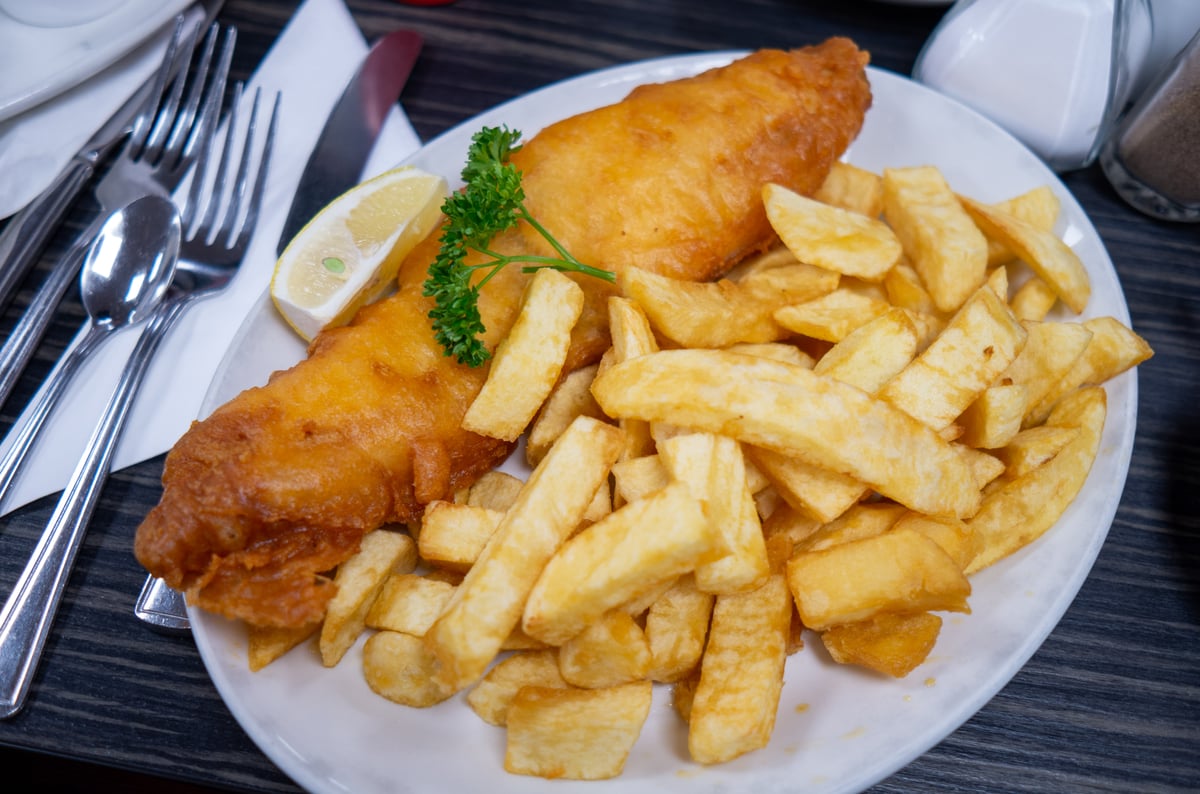
We have officially reached the point where the global financial system has become so absurd that a white fish is now a hedge against inflation.
Cod prices have climbed so steeply that British fish-and-chip shops are quietly swapping it out for cheaper species and hoping nobody notices. The price of Atlantic cod has roughly tripled in a decade, making it what industry experts are actually calling “white gold.” This is not a metaphor. This is what serious people in the seafood trade are saying with straight faces while their suppliers charge them £10 per kilogram for a fish that used to be the working-class dinner of choice.
Let’s be clear about what is happening here. We are living in a timeline where:
— Cryptocurrency exists, which is an imaginary number that you cannot eat.
— Cod exists, which is a real fish that you can eat and that your grandmother ate for sixpence.
— Cod is now more expensive than it has ever been, while cryptocurrency is, well, whatever cryptocurrency is on any given Tuesday.
— Fish-and-chip shops — the institutions that have fed working people for over a century — are now making menu decisions based on commodity price swings that would make a hedge fund manager weep.
The mechanics are familiar to anyone who has watched the economy implode and reassemble itself over the past five years. Overfishing has shrunk cod stocks. Climate change has moved the fish around. Supply chains spent three years having a collective nervous breakdown. Fuel costs went up. Fishing boats became less profitable. Fewer boats went out. Prices climbed. Demand stayed the same because humans still need to eat. And now we are here: a working-class staple has become a luxury good.
This would be funny if it were not so perfectly emblematic of how broken everything has become. We have somehow created an economic system where the solution to inflation is not to make things cheaper, but to find a cheaper fish and hope people do not notice they are eating a different one. The fish-and-chip shop owner is not getting richer. The fishing industry is not more sustainable. The consumer is paying more for less. And somewhere, a financial analyst is probably writing a report about how cod futures are a compelling value play.
The regulatory response, naturally, has been to do almost nothing. There is no government intervention to stabilize fish prices. There is no emergency subsidy for chippies. There is no serious conversation about managing fisheries in a way that keeps a staple food actually staple. Instead, we get the market solution: let prices rise until demand destroys itself, then move on to the next crisis.
Meanwhile, the people making these decisions — the ones in offices, the ones with spreadsheets, the ones who decided that “white gold” was a clever thing to call a fish — are not eating cheaper fish. They are eating the cod. They are eating it at restaurants where it costs £28 and is served on a slate tile with a quenelle of something unpronounceable.
The real absurdity is that this is not even surprising anymore. We have spent the last decade watching the price of housing become detached from reality, then cryptocurrency, then used cars, then eggs, then literally everything. Cod is just the latest thing to get caught in the updraft of a system that no longer seems capable of pricing anything based on what it costs to make or grow or catch. Instead, prices are set by whatever the market will bear, and the market will bear quite a lot when people need to eat.
So here we are in June 2026, in a world where:
— Your mortgage is unaffordable.
— Your electricity bill is mysterious.
— Your fish-and-chips are now made with a fish you have never heard of.
— And somewhere, someone is probably trying to tokenize the whole thing and sell it back to you as an NFT.
The joke writes itself. The tragedy is that it is not actually funny.