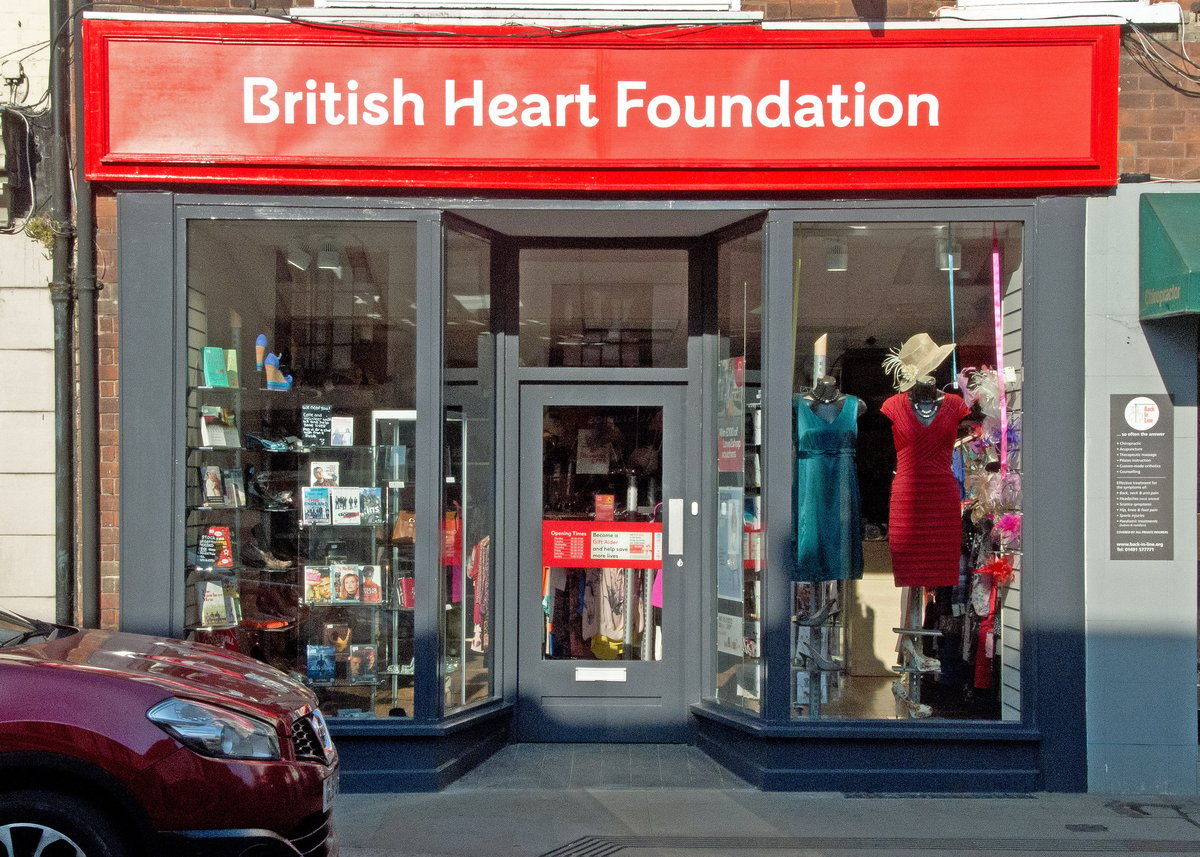
In what can only be described as the logical endpoint of late-stage capitalism meeting charitable desperation, the British Heart Foundation has announced it will close 150 charity shops and pivot to a subscription service model. Because apparently, when foot traffic dries up and donations slow, the solution is not to ask why people have stopped donating to heart disease research — it is to make them pay monthly for the privilege of receiving curated boxes of other people’s unwanted items.
The charity cited an “exceptionally challenging trading environment,” which is a polite way of saying that people are broke and also increasingly allergic to leaving their houses. Fair enough. But instead of, say, launching a digital fundraising campaign or accepting that retail is dying, the British Heart Foundation has decided that what the world needs now is another subscription box service. Somewhere between HelloFresh and Grailed, there will soon be a cardboard box arriving at your door every month containing a mystery selection of second-hand jumpers and a laminated card explaining your subscription helps fight cardiovascular disease.
The math here is genuinely interesting if you squint. A typical British charity shop generates modest revenue — enough to pay rent, staff wages, and contribute something to the parent organization’s mission. But they also serve as community hubs, places where people can browse without obligation, and crucially, they do not require anyone to commit to a recurring payment or create an online account. They are, in other words, friction-free.
A subscription box, by contrast, requires friction. It requires you to sign up, enter payment details, remember that you subscribed (because you will forget), and then either cancel or become the kind of person who pays £8.99 per month for something you stopped opening in February. The British Heart Foundation is betting that this friction is actually a feature, not a bug — that in a world where everything is a subscription, people will simply accept one more charge on their credit card if the branding is wholesome enough.
There is something almost admirable about this move if you hate yourself. The charity shops were losing money because people had less money to spend and less time to spend it. The solution: create a model that requires people to have money on a recurring basis and commit to it in advance. It is the inverse of demand-responsive business. It is demand-creating business. It is the financial equivalent of responding to “I cannot afford to eat” with “have you considered buying a meal plan?”
The real absurdity, though, is that this might actually work. Subscription services have a peculiar hold on the modern consumer. We have all paid for something we forgot existed. We have all kept a subscription active long past the point of use because cancelling requires logging into a website and clicking through three confirmation screens. The British Heart Foundation is not just closing shops — it is automating charity guilt. Why ask people to remember to donate when you can simply bill them and let inertia do the heavy lifting?
Meanwhile, the 150 shops that will close represent something harder to quantify in a spreadsheet: the loss of a place where people without much money could afford to buy things, where volunteers could feel useful, where the community could gather without needing a membership or a password. But those things do not scale. They do not have recurring revenue models. They do not generate the kind of predictable cash flow that makes accountants and board members sleep at night.
So here we are. The British Heart Foundation is not actually abandoning its mission to fight heart disease. It is just accepting that the best way to do that now is to make sure everyone’s hearts are racing with the anxiety of another subscription they vaguely remember signing up for. It is very on-brand for 2026: take something that worked reasonably well, add a subscription layer, remove the human element, and call it innovation.
The charity shops will close. The boxes will arrive. And somewhere, a spreadsheet will show improved cash flow. What it will not show is harder to measure — the person who could not afford to buy a winter coat anywhere else, the volunteer who had a reason to get out of the house, the community space that asked nothing of you except your presence.
But those things were not sustainable. Only the subscription is sustainable. Only the recurring charge is real.