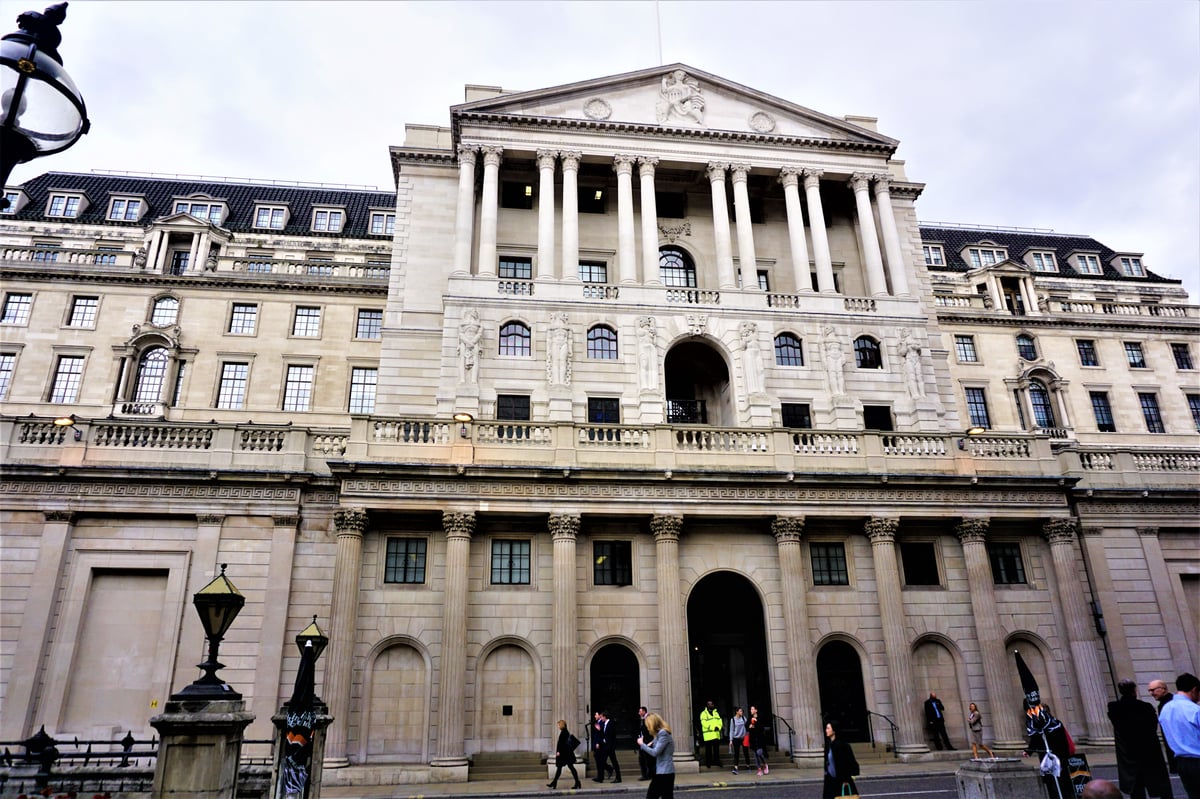
The Bank of England has decided that the best way to prevent an AI-fueled market crash is to tax the enthusiasm itself. Andrew Bailey, the central bank’s governor, announced yesterday that any investment showing signs of irrational exuberance will be subject to a new “Hype Tax”—a sliding scale levy that increases based on how many times the word “transformative” appears in a pitch deck.
The mechanism is straightforward: investors who describe their AI startup as “the next ChatGPT” will pay a modest 5% surcharge. Those claiming to have solved artificial general intelligence will face 40%. Anyone using both “blockchain” and “quantum computing” in the same sentence forfeits the investment entirely.
Bailey explained that the central bank has grown concerned watching waves of cash pour into AI companies with business models that consist mainly of expensive compute and hope. Rather than regulate the industry or let markets correct themselves naturally, the Bank of England has opted for what can only be described as a financial speed bump disguised as policy.
Economists are divided. Some argue this is sensible circuit-breaker logic. Others note that taxing optimism is essentially taxing the entire venture capital industry for doing what it has always done: bet on the future and fail 90% of the time. The real question is whether a hype tax will actually cool investment or simply create a new market for people skilled at writing boring AI pitch decks.
Experts predict a colorful recession ahead—one where the collapse happens slowly enough that everyone can see it coming, but not slowly enough for anyone to actually stop it.