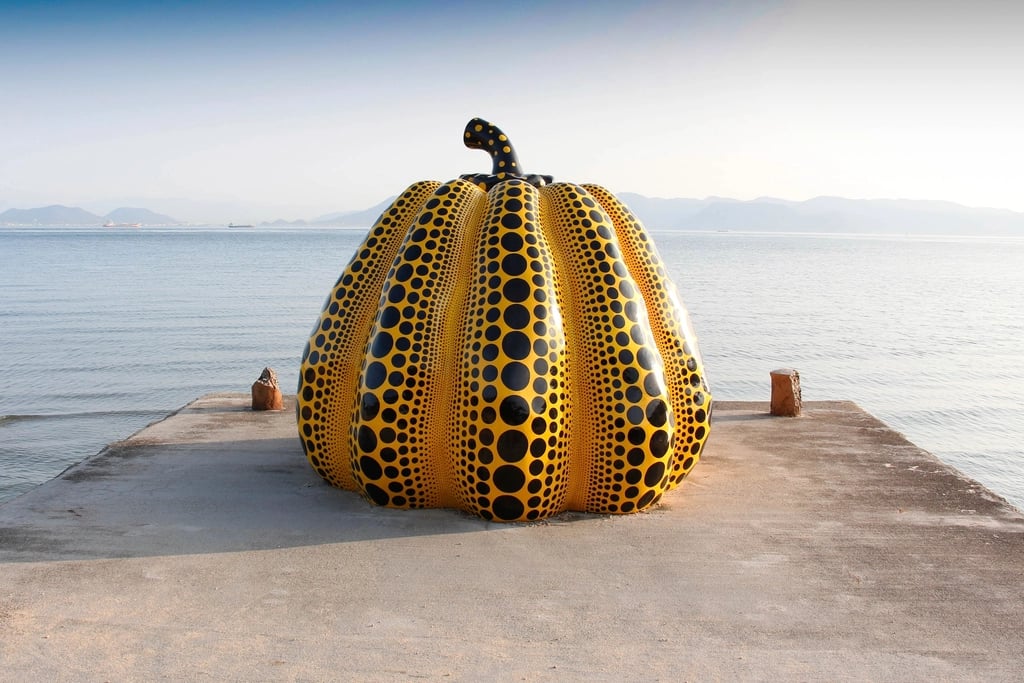
Yayoi Kusama spent seventy years painting the same dot over and over. Millions of people paid money to stand in rooms full of those dots and take photographs of themselves surrounded by those dots. She became famous for it. The art world called it genius. Instagram called it content.
This is not a coincidence. Kusama’s obsession with repetition—infinite polka dots stretching into every corner of a white room—is exactly what social media demands from us. We are all Kusama now, except our medium is the like button and our canvas is a feed that never ends.
Her immersive installations became pilgrimage sites for people who wanted to experience art while simultaneously experiencing themselves experiencing art. The selfie was the real artwork all along. Kusama understood something about human nature that took the rest of us sixty years to accidentally weaponize: we don’t want to see beauty. We want to see ourselves seeing beauty, infinitely reflected back at us until we disappear into the pattern.
The polka dots are not abstract. They are a perfect metaphor for algorithmic validation—each one identical, each one necessary, each one meaningless without the others. Stand in a Kusama room and you are not observing art. You are observing yourself becoming indistinguishable from the background. You are the dot now.
Kusama created infinity machines before we had the technology to scale them globally. We simply took her vision, added engagement metrics, and called it a platform. She was the artist. We are the installation.