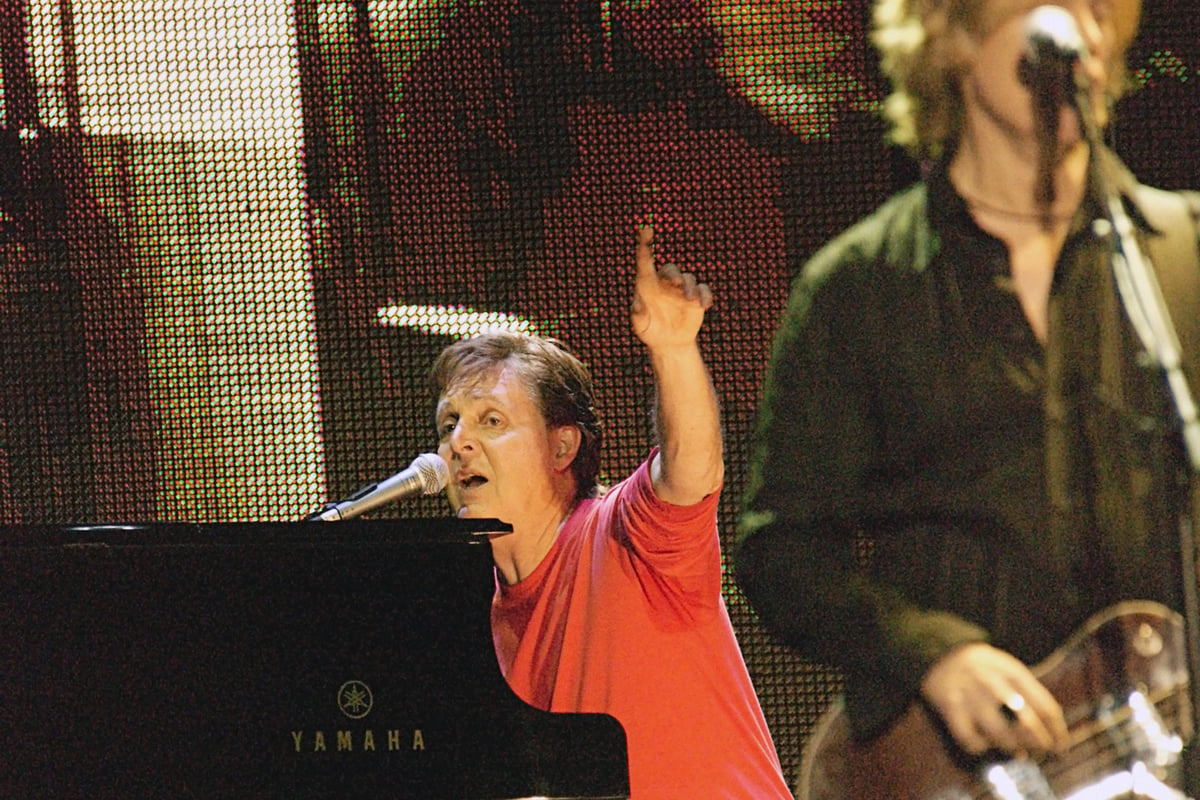
A bus full of Beatles fans achieved what decades of therapy could not: collective euphoria over watching a man in his eighties wait for a red light to change. Sir Paul McCartney was spotted at a Liverpool traffic junction, stationary in his vehicle, doing what all humans do at traffic junctions—existing horizontally behind glass.
The fans’ response suggested they had witnessed the Second Coming, not a septuagenarian musician commuting. Phones emerged. Screams were screamed. Someone probably fainted. The bus pulled alongside his car like a synchronized swimming routine choreographed by people who had never seen a traffic light before.
This is what we have become: a civilization that treats proximity to famous people as a substitute for actual experience. The encounter lasted roughly as long as it takes to read this sentence. No words were exchanged. No music played. One man was simply present at coordinates, and that was enough to generate the kind of emotional intensity usually reserved for births, marriages, and the final season of a streaming show.
The real miracle is that nobody tried to film it vertically.