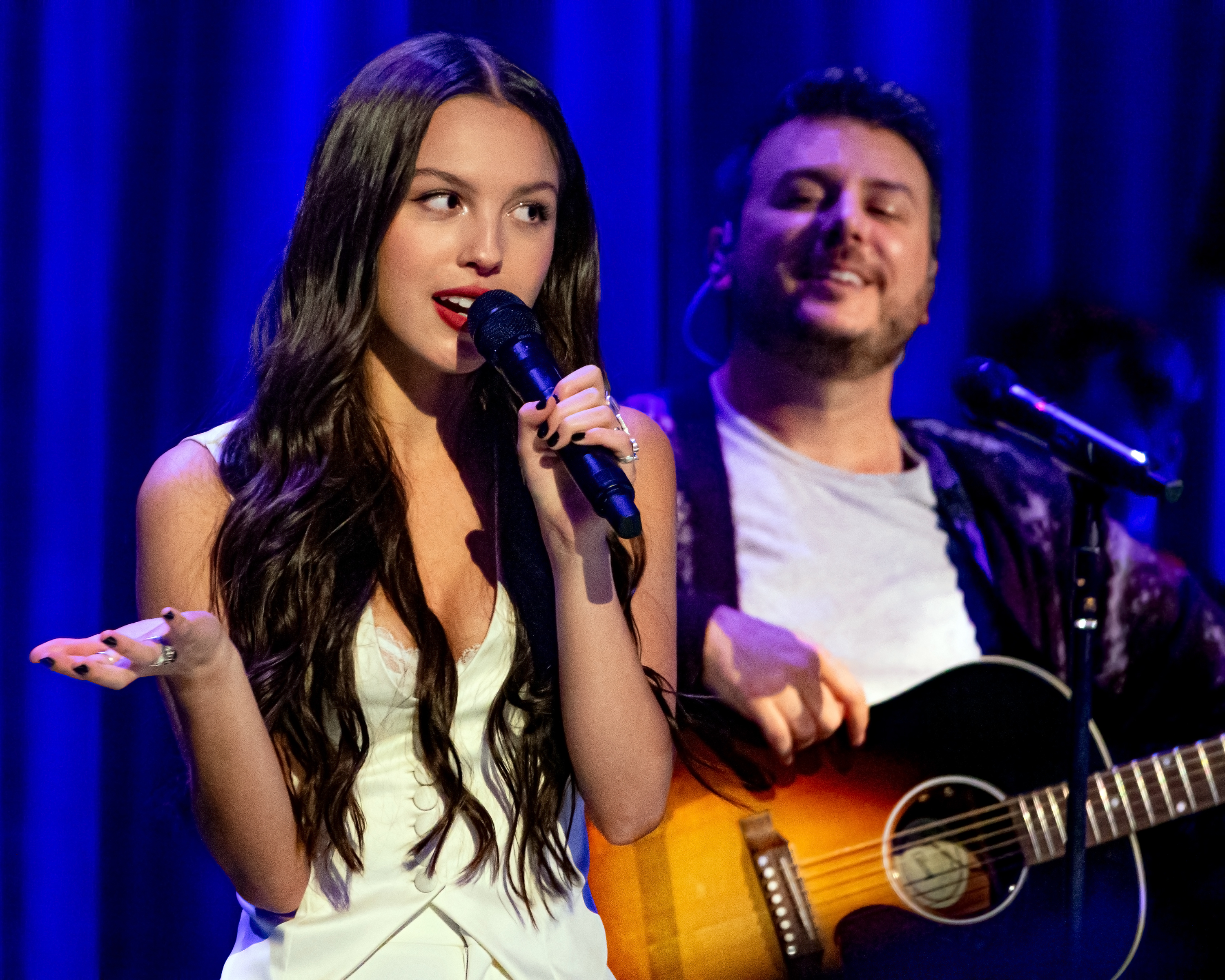
Olivia Rodrigo has discovered a creative problem that most artists would kill for: she cannot write convincingly about heartbreak anymore because she is too busy being happy. The pop star, whose entire brand was built on the premise that love is a catastrophic mistake, recently confessed that composing melancholic ballads has become nearly impossible. The reason is straightforward and deeply inconvenient. She is planning a wedding.
This is not a subtle irony. Rodrigo’s discography exists in a state of permanent emotional emergency—every song a document of betrayal, anguish, and the specific pain of being nineteen and wronged. Her fans did not sign up for contentment. They signed up for devastation set to piano ballads. Now she is out here selecting napkin colors and trying to force genuine despair into lyrics while her Spotify listeners wait for the next installment of her grief catalog.
The real problem emerged at Glastonbury, where Rodrigo experienced an anxiety attack before performing. Not because of stage fright or technical failure, but because she could not access the emotional authenticity required to sing songs about someone who destroyed her soul. Her fiancé was probably in the audience. How do you perform “brutal” when the person you are supposedly singing about is helping you decide between a three-tier and four-tier cake?
She has already chosen her wedding song. The cognitive dissonance here is not metaphorical. It is structural. A wedding song is the opposite of every artistic principle that made her famous. It is a commitment device disguised as a love ballad. It is the sound of someone closing the door on the very material that built her career.
Rodrigo will eventually solve this problem. She will write happy songs and they will do fine. The internet will move on. But somewhere in the gap between her Spotify catalog and her wedding reception, there is a very specific kind of artistic death happening, and she is live-tweeting the whole thing.