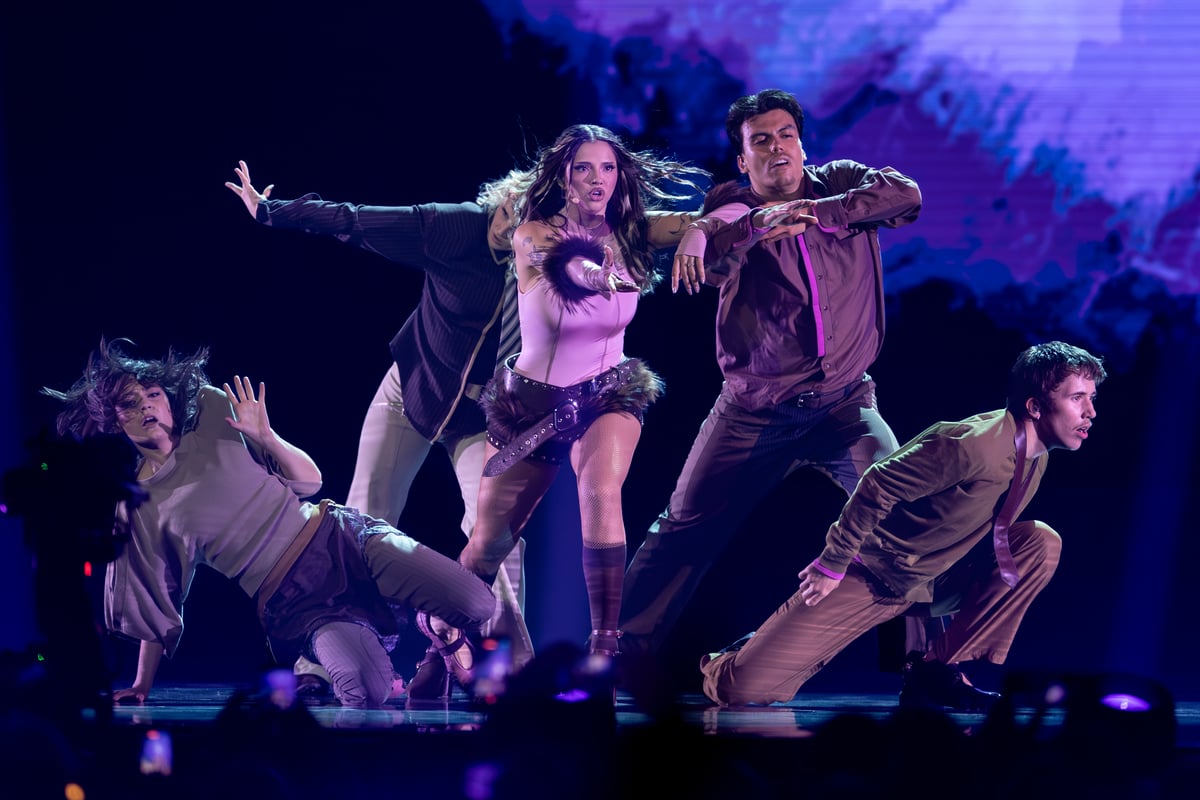
Dara almost quit Eurovision twice. Then she won it. This is the entire narrative arc that will define her career for the next eighteen months until the algorithm moves on to something else.
The Bulgarian singer’s Vienna victory came perilously close to not existing, which is the only genuinely interesting thing about it. She wanted out. Twice. The pressure of performing a song in front of 160 million people while maintaining a specific facial expression apparently exceeds the breaking point of human endurance, even for people who signed up for this explicitly.
What’s remarkable isn’t that she persevered—it’s that perseverance in a singing competition now qualifies as a cultural moment worth documenting. Eurovision has always been a machine that converts three-minute performances into international incidents, but the machine now also requires the winner’s origin story to include a crisis point, preferably two. The audience doesn’t just want a song anymore. They want the near-quit, the doubt, the tearful phone call to a parent, the moment when someone almost threw it all away before throwing it all away in a different direction by actually winning.
Dara is now obligated to discuss these quitting impulses in every interview for the foreseeable future. She will be asked about them on podcasts, in magazine profiles, during award show appearances she didn’t win. The near-quit has become her brand asset, more valuable than the actual trophy. In six months, nobody will remember her song. They will remember that she almost didn’t perform it.