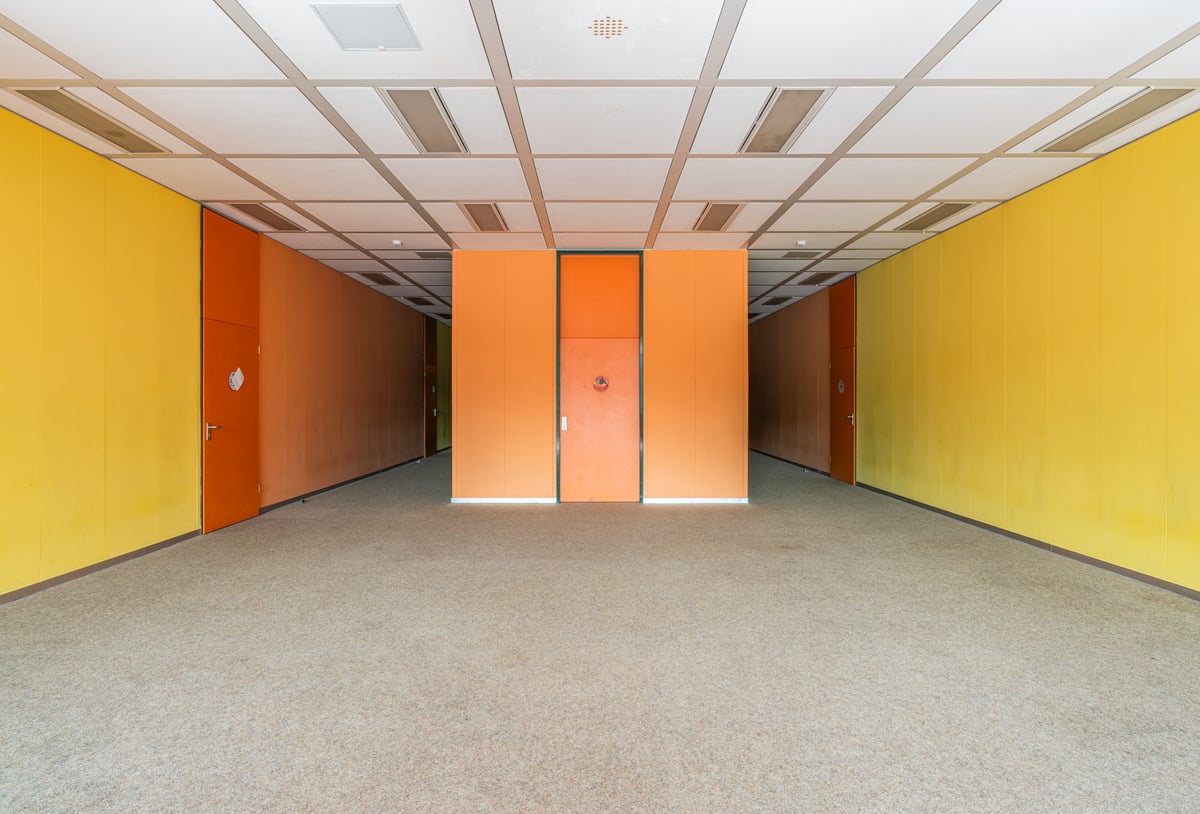
A YouTuber filmed himself walking through yellow hallways. Hollywood saw IP. Now there’s a theatrical release with a nine-figure budget and a composer who has never heard of the original concept.
The Backrooms started in 2019 as a 4chan post—the kind of thing that gets 47 replies and vanishes forever. Instead, it metastasized. Someone made a YouTube series. Someone else made a video game. A subreddit formed. The premise is absurd by design: you clip through reality and end up in infinite beige corridors filled with the hum of fluorescent lights and the smell of old carpet. No monsters. No explanation. Just endless walking.
Then Hollywood noticed.
A studio greenlit a feature film. The budget is undisclosed but clearly substantial—you don’t get theatrical distribution and a marketing push without spending eight figures on a concept that originated as an internet joke about liminal spaces. The film has a director, a cinematographer, and presumably people whose job is to explain to investors why a meme about walking through hallways will generate opening-weekend revenue.
Why does this keep happening? Because the internet generates more raw creative material in a week than traditional development departments generate in a year, and studios have stopped pretending they have taste. They just scrape what’s already virally validated and bolt a three-act structure onto it. The risk calculation is perverse: a meme already has an audience, a visual language, and free marketing. By the time it reaches production, the work of cultural discovery is finished. All that remains is execution and money.
The Backrooms adaptation is particularly honest about this. The source material has no narrative. It’s a vibe. A feeling of wrongness. The horror is the absence of anything to be horrified by. So the film will need to add things—monsters, presumably, or a reason the protagonist is trapped, or a third act where they escape through an elaborate metaphor about capitalism or trauma. The studio will sand down every edge until the uncanny becomes comprehensible. The yellow corridors will have better lighting. The hum will have a soundtrack. The walking will have a destination.
This is how you kill a meme without actually killing it. You legitimize it. You give it production value and narrative closure and a runtime and credits. You turn it into content for people who don’t know it was ever a meme. You monetize the exact moment when something stops being interesting and becomes a product.
The YouTuber who started this probably made decent revenue from views and sponsorships. The studio will make significantly more. The film will open to moderate box office, get mixed reviews from critics who don’t understand why a meme needed a feature adaptation, and immediately vanish into streaming. Three years later, someone will make a TikTok about how the movie ruined the original concept. That TikTok will go viral. A different studio will option it.
The cycle is now permanent. There is no bottom to this.
What’s genuinely absurd is not that Hollywood adapted a meme—it’s that this is now the dominant creative pipeline. Studios no longer develop original properties. They acquire memes, subreddits, Discord servers, and viral TikToks and hand them to writers who have to somehow stretch a joke into 110 minutes. The Backrooms is just the most literal example. It’s a meme with almost no plot, adapted into a film with, presumably, a plot. The gap between concept and execution has never been wider.
The film will probably be competent. Competence is the worst possible outcome for a meme. A meme thrives on being incomprehensible to the mainstream. The moment it’s professionally produced, lit correctly, and given a coherent narrative, it stops being a meme and becomes a movie. The original appeal—that uncanny wrongness, the sense of finding something that wasn’t meant to be found—gets replaced by the comfort of knowing exactly what you’re watching.
Someone at the studio probably pitched this as “capturing the essence of the original.” They will have failed. The essence was that it was weird and small and unexplainable. Now it’s a $60 million film with a release date. The essence is gone. What remains is content.
The Backrooms will open to a theater near you sometime in the next few years. You will probably not see it. The people who do see it will mostly be people who never knew it was a meme. They will find it moderately unsettling, probably because it’s a horror film and that’s the job. They will forget it by the time they reach their car. The internet will move on to the next meme, and in six months, that meme will have a studio interested in the rights.