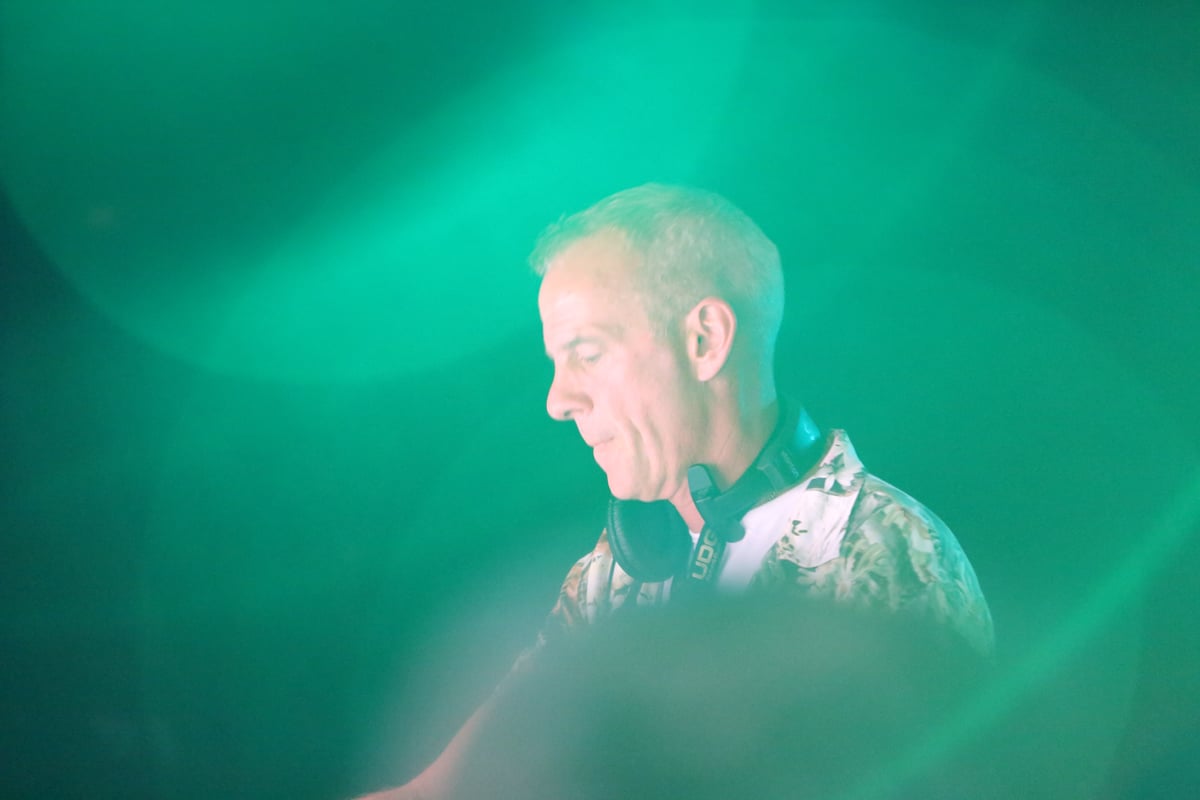
Fatboy Slim closed out Radio 1’s Big Weekend in Sunderland last weekend by doing what he has done for three decades: playing loud music while people bounced. The crowd went wild. The BBC called it triumphant. Everyone went home feeling momentarily less afraid of climate collapse, economic instability, and the slow death of meaning in late-stage capitalism.
This is what we have agreed to call a solution.
The veteran DJ’s return to the booth—he’s been touring steadily for years, but the media needed a narrative arc—arrived at precisely the moment when society has run out of actual answers. We cannot fix housing. We cannot fix wages. We cannot fix the fact that most people under thirty will never own property or retire. But we can absolutely turn up the bass and pretend that dancing is a form of resistance.
Rave culture, the mythology goes, was born as a counterculture movement. Kids in warehouses rejecting the system, finding community in darkness and strobe lights. That story is now forty years old. The kids are now middle-aged. The warehouses are now festivals with corporate sponsorships and branded water stations. The rebellion has been repackaged, ticketed, and scheduled for the third weekend in May.
Why does Fatboy Slim still matter? Because he is a living reminder that the 1990s existed, that there was a moment when electronic music felt genuinely transgressive, when the future seemed open-ended rather than predetermined. Booking him is not about the music—his catalogue is available on every streaming platform for the price of a subscription. It is about the emotional archaeology. It is about telling yourself that if you can feel what your younger self felt while dancing to ‘Praise You,’ you can briefly forget that the world has become incrementally worse in almost every measurable way.
The absurdity deepens when you consider what ‘rave culture’ is actually supposed to accomplish. It promises community. It delivers sweating strangers in a field. It promises transcendence. It delivers dehydration and ringing ears for three days. It promises escape. It delivers you back to Monday morning with a hangover and the same problems you left behind.
Does rave culture actually solve anything? Of course not. It is a three-hour intermission from the permanent crisis of modern existence, marketed as a lifestyle choice.
And yet people will queue for hours to experience it again. They will pay £200 for a ticket, another £40 for a t-shirt, another £15 for a bottle of water, and walk away feeling like they have done something meaningful. The BBC will broadcast it. TikTok will fill with clips of people dancing. Everyone will agree that this is exactly what we needed. And then Tuesday will arrive, and the systems that make life increasingly unlivable will resume their normal operations, completely undisturbed.
Fatboy Slim will play the same tracks he has played a thousand times. The crowd will recognize every beat. They will dance like it matters. And for ninety minutes, it will feel like the most important thing happening anywhere.
Then the sun will set. The music will stop. And everyone will go home to scroll through their phones until they fall asleep, waiting for the next scheduled escape to become available.