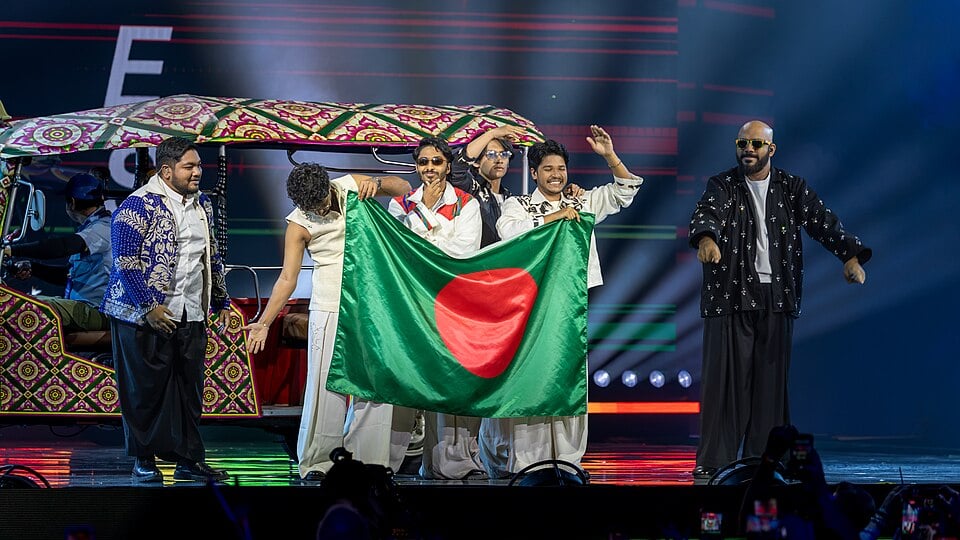
Eurovision is going to Asia on Saturday, and the organisers have described it as a leap into unknown territory. That is an accurate phrase for a show that has spent seven decades sending a sequinned man in a jumpsuit to sing about a cat, then calling the result diplomacy.
The contest’s logic is simple. Take a continent, add a glitter cannon, and wait for the points to tell you who your friends are. Nobody has asked whether the rest of Asia wanted a key change and a wind machine at the end of a long week. The dance break is not optional. Nothing in Eurovision is optional, including the costume that appears to be held together by one nervous decision.
Is this cultural exchange? Technically, yes. Technically, it is an exchange in which only one side gets to bring the pyrotechnics.
The coverage calls it a bridge. Bridges usually carry traffic in both directions. This one has a stage, a scoreboard, and a production budget that has never once been required to justify its outfits.
The broadcasters have promised a “celebration of unity.” The unity is being voted on by juries that have spent years trading douze points with their neighbours, and the neighbours are now expected to learn the rules by Saturday.