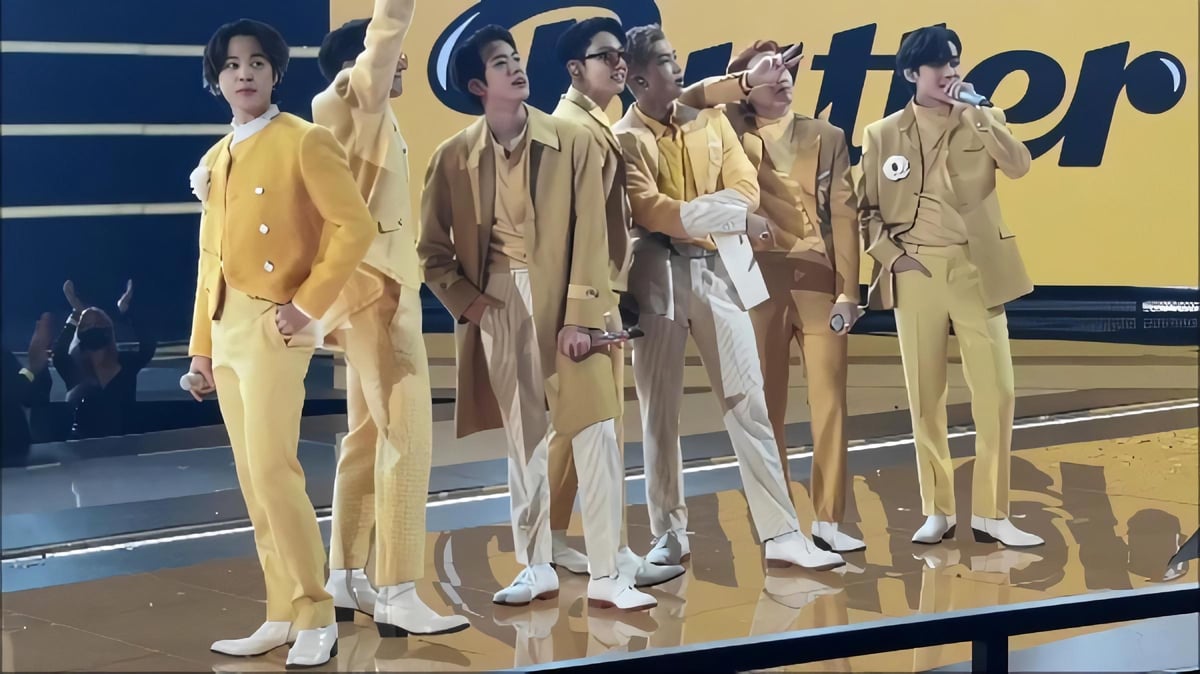
The American Music Awards have spoken, and the message is clear: nostalgia for the 2000s is officially dead, replaced entirely by the relentless present tense of K-pop dominance. BTS won big. The Black Eyed Peas reunited. These two facts exist in the same sentence the way a mastodon and a smartphone exist in the same museum—one is what we’re supposed to care about now, and the other is what we’ve moved past.
Let’s establish what happened here. A band that spent the better part of two decades selling out stadiums and dominating radio decided 2026 was the year to come back together. The Black Eyed Peas are banking on the theory that enough time has passed that people will forget they ever left, or more charitably, that a generation of people who grew up on “Boom Boom Pow” now has disposable income and nostalgia is a renewable resource. They’re not entirely wrong about that last part. Nostalgia moves units.
But at the same exact awards show, BTS—a band that didn’t even exist when the Black Eyed Peas were at their commercial peak—won the big prizes. BTS, which emerged from South Korea with a business model that made Western pop labels look like they were running their operations out of a garage, took home the recognition. This isn’t a metaphor for cultural shift. This is the cultural shift, documented in real time, with trophy presentation as evidence.
The real absurdity isn’t that BTS won. It’s that we’re supposed to treat both things as equally relevant developments in pop music, when they represent entirely different eras of how music gets made, distributed, and consumed. The Black Eyed Peas reunited because that’s what bands from that era do—they tour, they remind people they exist, they sell tickets to people who want to hear the songs they already know. BTS operates on a different plane entirely: dedicated global fanbase, algorithmic optimization, content strategy that treats music as one piece of a larger ecosystem. They’re not competing in the same sport. They’re not even in the same building.
What makes this genuinely funny is that the Black Eyed Peas’ reunion isn’t actually a failure. They probably made money. They probably reminded people that those songs exist and still hit. But they’re competing for cultural real estate that has fundamentally changed ownership. The AMAs gave them a stage. BTS got the awards. That’s the gap between a comeback and actual relevance in 2026.
The other winners tell the story too. Katseye made the list—a K-pop group under HYBE, the same company that manages BTS. Golden won for a film called “K-Pop Demon Hunters,” which is either the most cynical piece of IP extension ever created or a genuine artifact of how completely K-pop has absorbed Western pop culture infrastructure. Possibly both. Sabrina Carpenter won because she represents the current operating system of pop stardom: young, algorithmic, TikTok-native, infinitely reproducible.
The Black Eyed Peas aren’t bad. Their reunion probably slaps for the people who care. But they’re operating in a world where their peak cultural moment—the era when “I Gotta Feeling” was genuinely inescapable—is now a historical artifact that gets referenced the way we reference 2000s fashion. The difference is that fashion cycles. Music consumption doesn’t work that way anymore. Once a generation of listeners moves on to the next algorithm, the previous one doesn’t come back. It gets nostalgia tours and streaming catalog rights and that’s the deal.
BTS won because they represent the future that already happened. The Black Eyed Peas reunited because they represent the past that’s still trying to collect residuals. Both things occurred at the same awards show, and somehow that’s the least absurd part of this entire story.